How to Wash Your Car Engine Safely
Washing your car engine safely can feel like a daunting task, and you’re definitely not alone if you find it tricky. Many people struggle with knowing how to clean their engine without causing damage or electrical issues.
The good news is, with the right approach and tools, you can keep your engine looking great and running smoothly.
To wash your car engine safely, start by gathering the right tools like degreasers and soft brushes. Make sure the engine is cool and disconnect the battery to avoid electrical issues.
Cover sensitive components with plastic bags and avoid using high-pressure water.
After washing, dry the engine with microfiber towels and compressed air. Keep an eye out for unusual noises or leaks, as these could signal bigger problems.
Stick around for more tips on maintaining a clean engine.
Key Takeaways
- Ensure the engine is cool and disconnect the battery to prevent electrical issues before starting the cleaning process.
- Use a degreaser specifically designed for engines and avoid harsh chemicals to protect components.
- Cover sensitive electrical parts with plastic bags to prevent water damage during cleaning.
- Rinse with low-pressure water to avoid forcing moisture into connections and components.
- Thoroughly dry the engine using microfiber towels or compressed air to prevent rust and corrosion.
Why Cleaning Your Engine Matters
Cleaning your engine may seem unnecessary, but it plays an important role in maintaining your vehicle’s overall health. Regular engine maintenance isn’t just about oil changes and filter replacements; it also involves keeping your engine clean. Dirt, grease, and grime can accumulate over time, leading to overheating and reduced performance. By washing your engine, you help prevent these issues, ensuring everything runs smoothly.
A clean engine can also lead to performance improvement. When components are free of debris, they can operate more efficiently, which can improve fuel economy and responsiveness. Plus, a clean engine makes it easier to spot leaks or other problems before they escalate. So, taking the time to clean your engine isn’t just about aesthetics. It’s an important step in safeguarding your investment and ensuring your vehicle performs at its best. Remember, a clean engine today means fewer headaches tomorrow.
Must-Have Tools for a Successful Engine Wash
To wash your engine safely, you’ll want to have the right tools on hand to make the job easier and more effective. First, gather all the essential cleaning supplies—think degreasers, brushes, and microfiber cloths.
And hey, don’t forget to gear up for protection! Gloves and safety glasses will keep you safe from any harsh chemicals or debris.
Once you’ve got everything ready, you’re all set to dive into a successful engine wash. It’s simpler than you might think!
Essential Cleaning Supplies
When preparing to wash your car engine, having the right supplies makes all the difference. Start with a degreaser specifically designed for engines; this’ll help break down grime without damaging any components. You’ll also need a soft brush to gently scrub away stubborn dirt. A microfiber cloth is essential for drying and polishing after cleaning.
Don’t forget a bucket for mixing your cleaning solution and a garden hose with a spray nozzle for rinsing.
Avoid common engine cleaning myths like using a pressure washer since that can cause more harm than good. Following these engine maintenance tips will guarantee your engine stays in top shape while looking great. With the right supplies, you’ll make the process both effective and safe.
Protective Gear Required
Wearing the right protective gear is essential for a safe and successful engine wash. Start with protective gloves to shield your hands from harsh chemicals and grime.
Safety goggles are a must to protect your eyes from splashes and debris. A face mask will help you avoid inhaling any harmful fumes.
Don’t forget a sturdy work apron to keep your clothes clean and provide an extra layer of protection. Since you’ll be working around wet surfaces, wear non-slip shoes to prevent any slips or falls.
If you’re dealing with particularly tough cleaning agents, opt for chemical-resistant boots for added safety. Equip yourself properly, and you’ll be set for an effective and safe engine wash!
Preparing Your Vehicle for Engine Cleaning
Before you plunge into cleaning your car engine, it’s essential to prepare your vehicle properly. Start by ensuring your engine is cool; working on a hot engine can lead to burns or damage. Disconnect the battery to prevent any electrical mishaps and safeguard your vehicle safety.
Next, remove any debris around the engine bay, like leaves or dirt, which can interfere with your cleaning process. Cover sensitive components, such as the air intake and exposed wiring, with plastic bags to avoid water damage.
Check your vehicle’s manual for specific engine maintenance recommendations. Make sure to have all your cleaning supplies ready, so you can work efficiently. Finally, park your car in a well-ventilated area to allow for proper drying. By following these steps, you’ll set the stage for a safe and effective engine cleaning experience.
Step-By-Step Guide to Washing Your Engine
Now that your vehicle is all prepped, it’s time to turn your attention to washing the engine. First things first, make sure the area around your engine is clean and clear of any debris. Once that’s done, we’ll walk through some effective cleaning techniques that will keep everything safe and looking shiny.
Prepare Your Engine Area
To guarantee a safe and effective wash, start by gathering the necessary materials and preparing your engine area. Begin with a thorough pre-cleaning inspection to identify any loose wires or parts that could be damaged during washing.
Next, focus on engine bay organization by clearing out any debris or clutter.
Here are some essential items to have on hand:
- Plastic bags or covers for electronics
- Degreaser and brushes for cleaning
- Towels for drying and wiping down surfaces
Cleaning Techniques Overview
In relation to washing your engine, following a step-by-step approach makes the process straightforward and effective. Start by disconnecting the battery to avoid any electrical mishaps. Next, cover sensitive components like the air intake and exposed wiring with plastic bags.
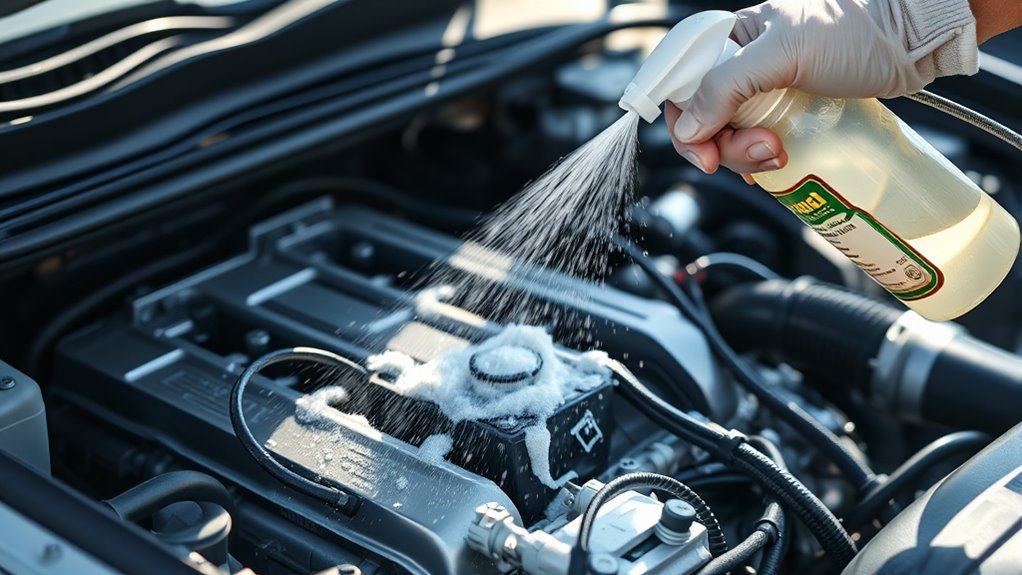
Use a degreaser specifically designed for engines and apply it generously to the dirty areas. Let it sit for a few minutes to break down grime. After that, use a soft brush to scrub stubborn spots gently.
Rinse with low-pressure water, making sure you don’t soak electrical parts. Finally, dry everything thoroughly to prevent rust. Regular engine maintenance is essential, so aim to clean your engine every few months or as needed, depending on your cleaning frequency.
Best Practices for Protecting Electrical Components
Protecting your car’s electrical components during an engine wash is essential for maintaining performance and longevity. To guarantee safety, start by covering sensitive areas with plastic bags or cling wrap. This helps prevent moisture and keeps water away from critical parts.
Protect your car’s electrical components during an engine wash by covering sensitive areas to prevent moisture and ensure long-lasting performance.
Here are some best practices to follow:
- Inspect electrical insulation: Check for any wear or damage before washing to prevent short circuits.
- Avoid high-pressure water: Use a gentle spray so you don’t force water into electrical connections.
- Dry thoroughly: After washing, make sure to dry any damp areas to reduce the risk of corrosion.
Choosing the Right Cleaning Solutions
When you’re picking out a cleaning solution for your car engine, it’s best to go with eco-friendly options that won’t harm the environment. You definitely want to steer clear of harsh chemicals—they can damage engine parts or leave behind harmful residues.
Eco-Friendly Options Available
Choosing the right cleaning solutions for your car engine doesn’t have to be complicated. You can opt for eco-friendly cleaning products that are both effective and safe for the environment. Look for biodegradable solutions that break down naturally, minimizing harm to local ecosystems.
Here are some options to evaluate:
- Citrus-based cleaners: Natural and powerful, these effectively cut through grease.
- Plant-based degreasers: Tough on grime but gentle on the planet.
- Vinegar and baking soda: A homemade option that’s safe and affordable.
Using these alternatives not only helps you maintain your engine but also supports a healthier environment. With these eco-friendly choices, you can clean your engine without the guilt!
Avoid Harsh Chemicals
While it might be tempting to grab that bottle of heavy-duty cleaner, you should avoid harsh chemicals when washing your car engine. These products can damage sensitive components and harm the environment.
Instead, opt for biodegradable cleaners that are effective yet gentle. Safe alternatives like vinegar or baking soda can tackle grime without the risk of corrosion.
When choosing a cleaner, always check the label for eco-friendly certifications. You’ll protect your engine and contribute to a healthier planet.
Common Errors to Avoid for a Safe Engine Wash
To guarantee a safe engine wash, you should steer clear of common mistakes that could damage your vehicle. Many people fall for engine wash myths that can lead to costly repairs. Here are a few errors you need to avoid:
Ignoring Electrical Components: Always cover sensitive parts like the battery and fuse box to prevent water damage.
Using a High-Pressure Washer: This can force water into areas where it shouldn’t go, risking electrical issues and corrosion.
Washing When the Engine’s Hot: A hot engine can cause rapid evaporation and may damage components, so let it cool down first.
Drying Your Engine: Best Practices
Once you’ve rinsed your engine, drying it properly is essential to prevent rust and corrosion. Start by using a microfiber towel to wipe down accessible areas, ensuring you absorb as much moisture as possible. For those tricky spots, consider using compressed air to blow out water from crevices and components. This is one of the most effective engine drying techniques.
If you have a leaf blower, that can work wonders too. Just keep it at a safe distance to avoid damaging any parts. After drying, applying a light coat of protectant can improve your engine’s appearance and offer additional protection.
Signs Your Engine Needs More Than Just Cleaning?
How can you tell if your engine needs more than just a simple cleaning? If you’ve noticed any of these maintenance indicators, it might be time to dig deeper. A clean engine is crucial for peak engine performance, but sometimes, underlying issues require attention.
Unusual noises: If you hear knocking or grinding sounds, something more serious could be wrong.
Fluid leaks: Puddles of oil or coolant under your vehicle can point to leaks that need fixing.
Warning lights: If the check engine light is on, it’s a clear signal that you should investigate further.
Ignoring these signs can lead to more significant problems down the road. Regular cleaning is important, but don’t overlook these warning signs that suggest your engine needs more than just a wash. Taking action early can save you money and keep your engine running smoothly.
Tips for Keeping Your Engine Clean
Keeping your engine clean is crucial for maintaining its performance and longevity. Dirt and grime can accumulate over time, so regular maintenance helps prevent potential issues. Plus, it improves your vehicle’s efficiency.
Here are some tips to keep your engine in top shape:
| Tip | Description |
|---|---|
| Regular Inspections | Check for leaks, corrosion, and dirt build-up. |
| Use Engine Covers | Protect against dust and debris when parked. |
| Clean Air Filters | Replace or clean them to guarantee proper airflow. |
Frequently Asked Questions
Can I Use a Pressure Washer on My Car Engine?
You can use a pressure washer on your car engine, but you need to be careful. Start by covering sensitive components like the battery and air intake.
Use a low-pressure setting to avoid damaging anything. Engine cleaning with a pressure washer can be effective, but make certain you’re not soaking electrical parts.
After washing, let the engine dry completely before starting your car again. Always follow safety precautions to protect your vehicle.
How Often Should I Clean My Engine?
You should clean your engine about once a year, depending on your driving conditions. If you often drive in dusty areas or do heavy towing, more frequent cleaning is beneficial.
Regular engine cleaning helps prevent dirt buildup, which can lead to overheating and mechanical issues. By maintaining a clean engine, you’ll improve performance and extend its lifespan.
Is It Safe to Wash a Hot Engine?
No, it’s not safe to wash a hot engine. You might think a quick rinse will cool it down, but doing so can cause engine overheating or damage electrical components. The sudden temperature change could crack parts or create shorts.
Instead, let your engine cool down completely before cleaning. This way, you protect your vehicle and guarantee a thorough, safe wash that won’t lead to costly repairs down the line.
What Should I Do if Water Gets Into My Engine?
If water gets into your engine, act quickly to prevent engine damage. First, turn off your engine and avoid starting it again.
Then, remove excess water by using a wet/dry vacuum or absorbent towels. You might need to take it to a mechanic for thorough water removal and inspection.
They’ll check for any internal damage or moisture in critical components. Don’t wait too long; prompt action can save you from costly repairs.
Are There Any Eco-Friendly Cleaning Products Available?
Yes, there are plenty of eco-friendly options available! Look for biodegradable cleaners specifically designed for automotive use. These products break down naturally and reduce harmful impacts on the environment.
Brands like Simple Green and EcoSmart offer effective solutions that won’t harm your engine or the planet. Just remember to follow the instructions and rinse thoroughly to guarantee no residue remains, keeping both your car and the environment safe.
Conclusion
Now that you know how to wash your engine safely, imagine your car humming like new, gleaming under the sun. But before you plunge in, double-check those electrical components. A single misstep could lead to costly repairs.
Picture the satisfaction of a pristine engine bay, but also the tension of what could go wrong if you rush. With patience and care, you’ll not only clean your engine but also extend its life.
Are you ready to get started with washing your car engine safely?