What Happens If I Use Dish Soap to Wash My Car?
If you’re like many car owners, you want your vehicle to look spotless without spending a fortune. But choosing the right cleaning products can be confusing, and it’s easy to make mistakes that harm your car’s finish. You’re not alone—lots of people struggle with finding effective and safe car wash solutions.
Using dish soap to wash your car can seriously damage its finish. It’s not designed for automotive use and can strip away wax, leaving your paint vulnerable to scratches and UV damage.
Over time, harsh chemicals can lead to fading and peeling. Plus, regular use makes cleaning harder and can result in costly repairs.
Instead, consider using pH-balanced car soaps to protect your vehicle. There are many alternatives that keep your car looking great while safeguarding its surface.
Key Takeaways
- Dish soap can strip away wax and sealants, leaving your car’s paint vulnerable to scratches and UV damage. This means your car might get damaged more easily.
- Harsh chemicals in dish soap can degrade the paint over time. This causes fading and peeling, which no one wants to deal with.
- Regular use of dish soap makes cleaning more difficult. That can lead to costly repairs down the road.
- Dish soap is not pH-balanced, which can harm the vehicle’s finish and the environment. So, it’s not the best choice for your car or nature.
- Opt for car-specific shampoos to maintain paint quality and protect against damage. They’re designed to keep your car looking great without the risks.
Is Dish Soap Safe for Your Car?
Is dish soap really safe for your car? While it might seem convenient, using dish soap for car maintenance isn’t the best choice. Dish soap is designed to cut grease and grime, but it lacks the gentle formulation specifically created for automotive finishes.
When you wash your car with dish soap, you risk stripping away essential wax or sealants that provide surface protection. Without this protection, your paint is more vulnerable to scratches, UV damage, and environmental contaminants.
If you care about keeping your car looking its best, it’s wise to invest in a dedicated car wash soap. These products are formulated to clean effectively while preserving your car’s protective layers.
How Dish Soap Damages Your Car’s Finish
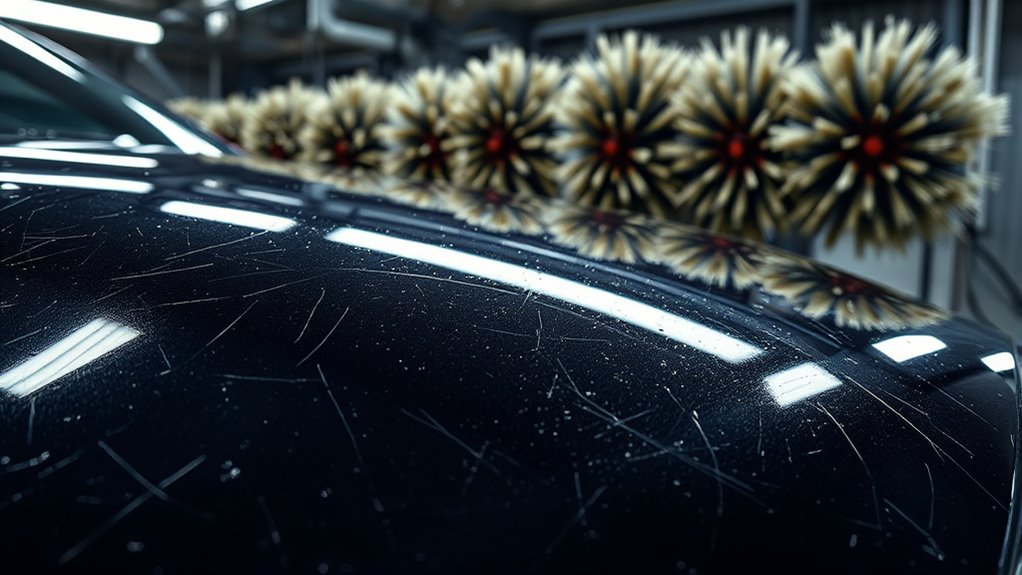
Using dish soap might seem harmless, but it can greatly damage your car’s finish. The harsh chemicals in dish soap strip away essential surface protection, leaving your paint vulnerable. With regular use, you’ll notice paint degradation, which shows up as fading, dullness, and even peeling over time.
Dish soap isn’t designed for automotive finishes. Its powerful surfactants can break down the wax and sealants that protect your car’s paint. Without these protective layers, dirt and grime can embed into the surface, making it harder to clean.
You might think a quick wash is fine, but the long-term effects can be costly. In the end, investing in a proper car wash soap guarantees your vehicle remains shiny and protected, preserving its value. So, skip the dish soap and opt for products specifically formulated for your car’s needs. Your finish will thank you!
Misconceptions: Can Dish Soap Clean Your Car Safely?
How can something as common as dish soap lead to misconceptions about car cleaning? Many folks believe that if dish soap can tackle grease on dishes, it should work wonders on cars too. This is one of the prevalent dish soap myths.
While it may remove dirt, it’s not formulated for car care. Dish soap strips away essential wax and protective coatings, leaving your paint vulnerable to damage.
You might think a quick wash with dish soap is a harmless shortcut, but that’s where misunderstandings arise. Car care requires products specifically designed for automotive surfaces. These soaps maintain shine and protect against environmental elements.
Risks of Using Dish Soap on Your Car
While you might think dish soap is a quick fix for cleaning your car, it comes with significant risks that can harm your vehicle’s finish. Using dish soap can strip away protective wax, leaving your paint vulnerable to scratches and environmental damage.
Moreover, harsh chemicals in dish soaps can lead to fading and discoloration over time.
Here’s a quick breakdown of the risks:
| Risk | Impact |
|---|---|
| Strips Wax | Reduces paint protection |
| Causes Fading | Dulls color and shine |
| Harsh Chemicals | Damages finish and clear coat |
Instead of using dish soap, consider safer alternatives specifically designed for cars. Use proper car wash techniques, like microfiber cloths and two-bucket methods, to keep your vehicle looking great without risking damage.
What Can You Use Instead of Dish Soap?
If dish soap isn’t the way to go, there are plenty of alternatives that will clean your car without causing damage. You might want to try car-specific shampoos, which are designed to be gentle on your vehicle’s finish while effectively removing grime.
Another option is using biodegradable soap, which serves as an eco-friendly alternative that’s safer for the environment. You can also investigate natural cleaners, like a mixture of vinegar and water, or baking soda combined with water.
These alternative cleaners not only help in lifting dirt but also minimize harm to your car’s surfaces.
Choosing the Right Car Wash Soap
When you’re choosing a car wash soap, it’s a good idea to think about its pH balance because that helps protect your paint. You’ll want to steer clear of harsh chemicals since they can harm your vehicle and the environment. The good news is, there are lots of eco-friendly options out there that get the job done without putting safety at risk.
Importance Of pH Balance
pH balance plays an essential role in selecting the right car wash soap, guaranteeing your vehicle gets clean without risking damage. When you choose a soap with a balanced pH, you protect your car’s paint and finish from harmful effects.
Using pH indicators can help you determine if the soap’s acidity or alkalinity is appropriate for your vehicle. Before washing, consider performing pH testing on the soap to guarantee it falls within the safe range.
A pH level around neutral (7) typically works best, as it won’t strip away wax or protective coatings. By keeping pH balance in mind, you’ll maintain your car’s appearance and longevity, making your wash routine more effective and safe.
Avoiding Harsh Chemicals
Choosing the right car wash soap means steering clear of harsh chemicals that can damage your vehicle’s finish. Instead, opt for products specifically designed for automotive care. These soaps maintain the paint’s integrity and guarantee a spotless shine.
You might also consider natural alternatives, like biodegradable soaps or homemade solutions, which can effectively clean without causing harm. When using these products, focus on gentle cleaning techniques, such as using microfiber cloths or soft sponges, to avoid scratches.
Eco-Friendly Options Available
While you might think that effective car cleaning requires harsh chemicals, eco-friendly options are available that can deliver impressive results without harming the environment. Look for car wash soaps specifically labeled as eco-friendly alternatives, which often use biodegradable ingredients.
These products effectively break down dirt and grime while being gentle on your vehicle and the planet. Choosing sustainable car care isn’t just about the soap; consider using water-efficient techniques like rinseless washes or foam cannons to minimize water usage.
Moreover, opting for a local car wash that prioritizes eco-friendly practices can further reduce your environmental impact. By making these choices, you’ll keep your car clean while contributing to a healthier planet.
Why pH-Balanced Products Matter
Using pH-balanced products is super important for keeping your car’s finish looking great and protecting it from damage. When you pick the right soap, you’re not just taking care of your vehicle—you’re also thinking about how your cleaning routine affects the environment. So, let’s dive into why this balance really matters for both your car and the planet.
Importance Of pH Balance
Understanding pH balance is essential when selecting car wash products, as it directly affects your vehicle’s finish. pH-balanced soaps guarantee that the cleaning agents effectively remove dirt without stripping away protective wax or damaging the paint.
When you use a soap with improper pH levels, you risk altering the delicate balance required for safe cleaning. Soap chemistry plays an important role here; if the pH is too high or low, it can lead to fading, dullness, or even corrosion.
Effects On Car Finish
The effects of using non-pH-balanced products on your car’s finish can be detrimental, leading to unsightly damage over time. Dish soap strips away essential oils and protective layers, like car wax, leaving your paint vulnerable to scratches and oxidation.
Without proper surface protection, your vehicle’s finish may dull, and you might notice discoloration or even peeling. This damage not only affects the car’s appearance but also reduces its resale value.
Environmental Impact Considerations
While it might seem convenient to grab dish soap for a quick car wash, the environmental consequences can be significant. Dish soap isn’t pH-balanced, meaning it can harm local ecosystems when it runs off into storm drains.
Harmful chemicals can disrupt aquatic life and contribute to water pollution. Instead of risking this damage, consider using pH-balanced, biodegradable options specifically designed for car washing.
These sustainable alternatives break down naturally, minimizing their impact on the environment. By choosing the right products, you not only protect your vehicle’s finish but also help preserve nature.
Tips for Washing Your Car at Home
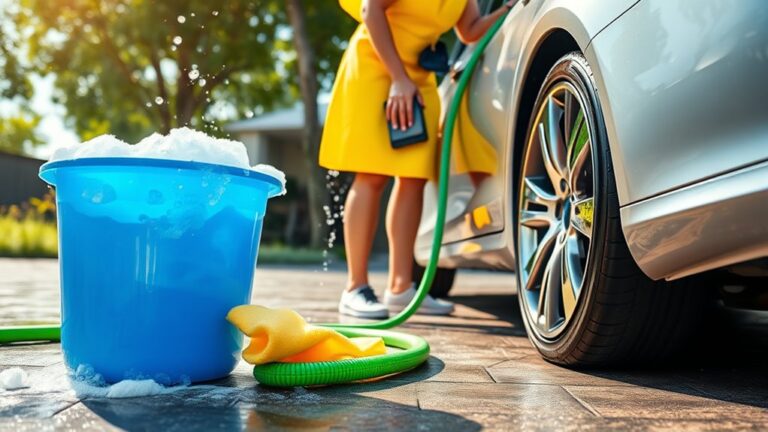
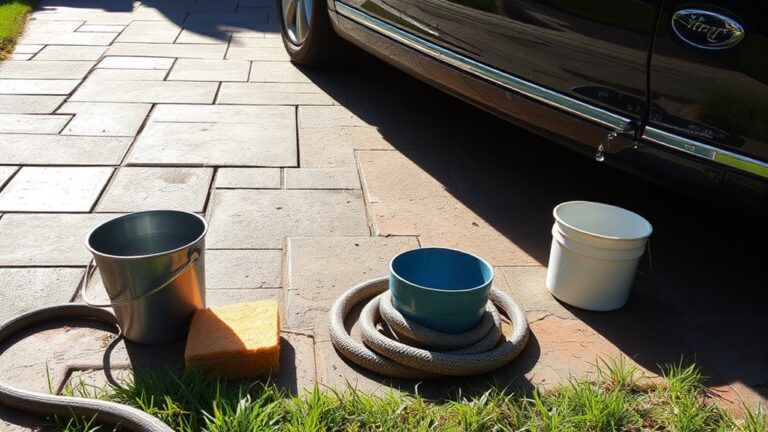
Washing your car at home can be a rewarding experience, especially when you see the shine that results from your efforts. To get started, gather your supplies: a bucket, a microfiber wash mitt, and a pH-balanced car soap. Avoid dish soap, as it can strip wax and damage your paint.
Begin with effective car washing techniques. Rinse your car first to remove loose dirt. Use the two-bucket method: one for soapy water and another for rinsing your mitt. Wash from top to bottom, making sure you don’t scratch the surface.
For those detailing tips, pay extra attention to wheels and tires, as they often collect grime. After washing, dry your car with a soft microfiber towel to prevent water spots. Finally, consider applying a wax or sealant for added protection and shine. Enjoy the satisfaction of a clean, gleaming vehicle!
What to Do If You’ve Used Dish Soap?
If you’ve accidentally used dish soap to wash your car, don’t panic. There are steps you can take to restore your vehicle’s finish. First, rinse your car thoroughly with water to remove any soap residue.
Next, consider using a pH-balanced car wash soap as a dish soap alternative. This helps restore the protective layer on your paint.
Here’s a quick guide to help you through the process:
| Step | Action | Emotion Evoked |
|---|---|---|
| 1. Rinse | Remove soap with water | Relief |
| 2. Wash | Use pH-balanced soap | Comfort |
| 3. Dry | Use microfiber towels | Satisfaction |
| 4. Wax | Apply a protective wax | Confidence |
| 5. Regular Care | Follow car care tips regularly | Peace of mind |
Expert Recommendations for Car Maintenance Products
When it comes to washing your car, using the right products really makes all the difference. Experts often recommend pH-balanced car wash soaps because they help protect your vehicle’s paint. So, let’s take a closer look at some top choices that can keep your car looking great without causing any damage.
Recommended Car Wash Soaps
Choosing the right car wash soap is essential for maintaining your vehicle’s shine and protecting its finish. Unlike dish soap, which can strip away wax, quality car wash soaps preserve the protective layers.
Here’s a quick comparison of some recommended products:
| Soap Brand | Key Features |
|---|---|
| Meguiar’s Gold Class | Boosts shine, pH-balanced |
| Chemical Guys Mr. Pink | High lubricity, safe for wax |
| Turtle Wax Car Wash | Strong cleaning, adds wax benefits |
These options not only clean effectively but also complement the car wax benefits, ensuring your vehicle looks its best. For a thorough detailing products comparison, consider factors like pH balance and additional protective ingredients.
Importance of pH Balance
Understanding the importance of pH balance in car maintenance products can greatly impact your vehicle’s longevity and appearance. Using products with appropriate pH levels helps protect your car’s finish and prevents damage.
Dish soap often has a high pH level, which can strip wax and harm the paint. So, it’s better to avoid it for washing your car.
Consider these soap alternatives for a better wash:
- pH-balanced car wash soaps: Designed specifically for automotive finishes.
- Natural soaps: Gentle on paint while being effective.
- Eco-friendly options: Safe for the environment and your car.
- Detailing sprays: Quick solutions for maintenance without harsh chemicals.
Choosing the right products protects your investment and keeps your vehicle looking its best. Remember, a balanced pH means a happier car!
Frequently Asked Questions
Can Using Dish Soap Void My Car’s Warranty?
Yes, using dish soap can potentially void your car’s warranty. Most manufacturers expect you to use products designed specifically for vehicles.
Dish soap contains harsh chemicals that can leave soap residues, damaging your car’s paint and finish. If the damage leads to issues covered by your warranty, the manufacturer might deny your claim.
To stay safe, always use car-specific cleaning products to avoid warranty implications and keep your vehicle in top condition.
How Often Should I Wash My Car?
Think of your car as a canvas; it deserves regular care to keep its masterpiece intact. You should wash your car every two weeks to maintain its shine and paint protection.
However, if you’re driving through harsh conditions or in a salty environment, you might want to increase that frequency. Keeping your ride clean not only improves its appearance but also prolongs its life, ensuring it dazzles on every drive.
Is It Safe to Wash My Car in Direct Sunlight?
It’s best to avoid washing your car in direct sunlight. The sun exposure effects can lead to soap drying too quickly, leaving spots and streaks on your paint.
Instead, aim for ideal washing times early in the morning or later in the evening when temperatures are cooler. This way, you’ll keep your car looking great without the hassle of dealing with unwanted residue or damaged surfaces from the harsh sun.
What Tools Do I Need for Washing My Car?
To wash your car effectively, you’ll need a few key tools: a soft sponge, a bucket, a hose, and a microfiber towel. Think of it like preparing for a dance; each tool plays its part.
You might consider soap alternatives specifically designed for car washing to avoid damaging the paint. Don’t forget protective wax for that shiny finish! Master these cleaning techniques, and your car will sparkle like it just stepped off the showroom floor.
Can Dish Soap Harm My Car’s Interior Surfaces?
Yes, using dish soap can harm your car’s interior surfaces. It strips away the protective coatings designed to safeguard against dirt and UV damage. Over time, this can lead to interior damage, making your surfaces look dull and worn.
Instead, opt for products specifically made for car interiors to guarantee you maintain their luster and protection. You want to keep your vehicle looking great, so choose wisely when cleaning!
Conclusion
Using dish soap to wash your car might seem like a quick fix, but it can seriously harm your vehicle’s finish. You might think it’s just soap, but the harsh chemicals can strip away protective wax and damage paint over time.
Instead, opt for pH-balanced car wash products designed specifically for automotive care. Your car deserves better! By investing in the right supplies, you’ll keep it looking great and save on costly repairs down the road.
So, what happens if you use dish soap to wash your car? It might clean temporarily, but the long-term damage isn’t worth it. Stick to products made for cars to protect your investment.