Safely Pressure Wash Your Car: A Step-by-Step Guide
If you’ve ever tried pressure washing your car, you know it can be tricky to get it right without causing damage. You’re not alone—many people struggle with finding the balance between a powerful clean and protecting their car’s finish. That’s why knowing the best way to pressure wash your car safely is key to keeping it looking great.
To safely pressure wash your car, start by choosing a suitable pressure washer with adjustable settings, aiming for 1200-1900 PSI. Prep your vehicle by removing loose debris and inspecting for scratches.
Use eco-friendly cleaners and a wide-angle nozzle to avoid paint damage. Rinse thoroughly and dry with a microfiber towel to prevent spots. Also, keep a safe distance and be cautious of vulnerable areas.
There’s more you can do to protect your car’s finish while cleaning.
Key Takeaways
- Choose a pressure washer with adjustable settings between 1200-1900 PSI for effective and safe car cleaning.
- Inspect your car for damage and remove loose debris before starting the pressure washing process.
- Use a wide-angle nozzle for gentle cleaning. Make sure to keep a distance of at least 2 feet from the car’s surface.
- Rinse thoroughly to eliminate soap residue and dry with microfiber towels to prevent water spots.
- Regularly wash and wax your car to protect its paint and enhance its shine.
Benefits of Pressure Washing Your Car
Pressure washing your car offers several key benefits that can improve its appearance and longevity. First, it boosts performance by removing dirt and grime that can affect your vehicle’s efficiency. Regular cleaning not only elevates your car’s look but also helps with paint protection, preventing rust and corrosion.
You’ll appreciate the time savings, as pressure washing is quicker than traditional methods, allowing you to get back on the road faster. Moreover, pressure washing is cost-efficient; it reduces the need for frequent professional detailing. By adopting a cleaning frequency that suits your schedule, you can maintain your car’s value over time.
Also, consider the environmental impact. Using less water compared to hose methods while effectively cleaning your vehicle makes pressure washing a greener option. Finally, following maintenance tips can guarantee your pressure washer remains effective for future washes, making it a smart investment for your car care routine.
Choosing the Right Pressure Washer for Car Washing
When you’re picking out a pressure washer for washing your car, it’s really important to think about the different types that are out there. You want to find one with adjustable pressure settings so you can be gentle or strong depending on the job.
Also, make sure it comes with a nozzle that’s right for your vehicle’s finish—this helps avoid any damage. Choosing the right pressure washer means you’ll get a safe and effective wash every time, making your car look great without any hassle.
Pressure Washer Types
Choosing the right pressure washer for car washing can make all the difference in achieving a spotless finish. You’ll typically choose between electric pressure washers and gas pressure washers.
Electric models are lightweight, quieter, and perfect for home use. They usually deliver adequate pressure for washing cars without risking damage to the paint.
On the other hand, gas pressure washers provide more power and are ideal for tackling tough dirt and grime. However, they can be heavier and noisier, making them less convenient for car washing.
Think about your needs: if you want portability and ease, go electric. If you need power for larger jobs, a gas model might be your best bet.
Key Features To Consider
Finding the right pressure washer for car washing involves considering several key features that can improve your experience. First, look for adjustable pressure settings; a lower PSI (around 1200-1900) is ideal for car safety precautions, preventing damage to paint and trim.
Moreover, a wide spray nozzle lets you customize the water flow, ensuring thorough cleaning without risking scratches. Consider the weight and portability of the unit, as you’ll want something easy to maneuver.
A detergent tank can also be beneficial for applying soap efficiently. Finally, check for safety features like thermal relief valves that protect the machine from overheating.
With these pressure washer features in mind, you’ll be ready to clean your car safely and effectively.
Essential Tools and Supplies for Pressure Washing
To get the best results when pressure washing your car, you’ll want to have the right tools and supplies on hand. First, pick a pressure washer that suits your needs. Next, gather some essential cleaning solutions along with protective gear. Once you’ve got everything together, you’ll be all set to tackle the job with confidence.
Pressure Washer Selection Tips
In relation to pressure washing your car, selecting the right equipment is essential for achieving the best results. Start by researching reliable pressure washer brands known for durability and performance.
Look for models that offer adjustable pressure settings, as this feature allows you to customize the intensity based on your car’s surface. A minimum of 1,500 PSI is recommended for effective cleaning without damaging the paint.
Furthermore, consider a washer with a detergent tank, which simplifies the process of using cleaning solutions. Also, check for accessories like nozzle tips that improve versatility.
Ultimately, choosing a pressure washer with the right features guarantees a safe and efficient car wash experience.
Necessary Cleaning Solutions
While pressure washing your car can rejuvenate its appearance, using the right cleaning solutions is essential for ideal results. You’ll want to choose effective cleaning agents that suit your vehicle’s needs while being mindful of the environment.
Eco-friendly solutions not only protect your car’s finish but also reduce environmental impact.
Here’s a quick reference table for your cleaning options:
| Cleaning Agent | Eco-Friendly Option |
|---|---|
| Car wash soap | Biodegradable car soap |
| Degreaser | Vinegar and baking soda |
| Wheel cleaner | Citrus-based cleaner |
| Bug and tar remover | Soap and water mix |
| All-purpose cleaner | Castile soap |
Select the right solutions to guarantee a safe and effective wash!
Protective Gear Essentials
When pressure washing your car, wearing the right protective gear is essential for your safety and comfort. Start with protective gloves to shield your hands from harsh chemicals and water pressure.
Safety goggles are a must; they’ll protect your eyes from splashes and debris. Don’t forget non-slip footwear to keep you stable on wet surfaces, preventing any slips or falls.
Opt for protective clothing, like long sleeves and pants, to guard your skin from potential irritants. Finally, ear protection is important if you’re using a high-powered pressure washer, as the noise can be damaging.
Get Your Car Ready for Pressure Washing
Before you start pressure washing your car, take a few moments to prepare it properly. This guarantees a safe and effective cleaning process. Begin with a thorough car surface inspection to identify any scratches or dents that might get worse during washing.
Next, gather your supplies for pre-wash preparation, including a soft brush, microfiber cloths, and your pressure washer.
Here’s a quick checklist to help you prepare:
| Task | Purpose | Notes |
|---|---|---|
| Inspect the surface | Identify damage | Look for scratches and dirt |
| Remove loose debris | Prevent scratches | Use a soft brush |
| Close windows and sunroof | Avoid water entry | Check all openings |
Completing these steps will guarantee your car is ready for a thorough and safe pressure wash.
Understanding Pressure Settings and Nozzle Types
When you’re pressure washing your car, it’s really important to know the right pressure settings and which nozzle to use. Different nozzles create different spray patterns, and this can make a big difference in how well you remove dirt without harming your paint.
Also, don’t forget to keep a safe distance while washing. This helps make sure you don’t accidentally damage your vehicle while getting it clean.
Pressure Settings Overview
Understanding pressure settings and nozzle types is essential for effective car cleaning. Different pressure settings influence how well you can clean your vehicle without causing damage. Generally, a lower pressure (around 1200-1900 PSI) is ideal for cars, as it prevents scratches and dents.
Here’s a quick overview to help you with nozzle adjustment:
| Pressure Level | Recommended Use |
|---|---|
| Low (1200-1900 PSI) | Washing cars |
| Medium (2000-2500 PSI) | Cleaning tougher surfaces |
| High (3000+ PSI) | Heavy-duty cleaning (not for cars) |
To achieve the best results, always adjust your nozzle and pressure settings based on the task. This guarantees a safe and thorough clean without risking damage to your vehicle.
Nozzle Types Explained
Choosing the right nozzle is essential for effective pressure washing. Different nozzles offer distinct functionality suited for various cleaning tasks.
Here’s a quick breakdown of common nozzle types:
- 0-degree nozzle: Delivers a concentrated stream for tough stains; use with caution.
- 15-degree nozzle: Great for stripping paint and heavy-duty cleaning. It’s especially effective for concrete surfaces.
- 25-degree nozzle: Ideal for general cleaning tasks. It’s safe for cars and driveways.
- 40-degree nozzle: Perfect for delicate surfaces. Gentle enough for windows and painted areas.
Safe Distance Guidelines
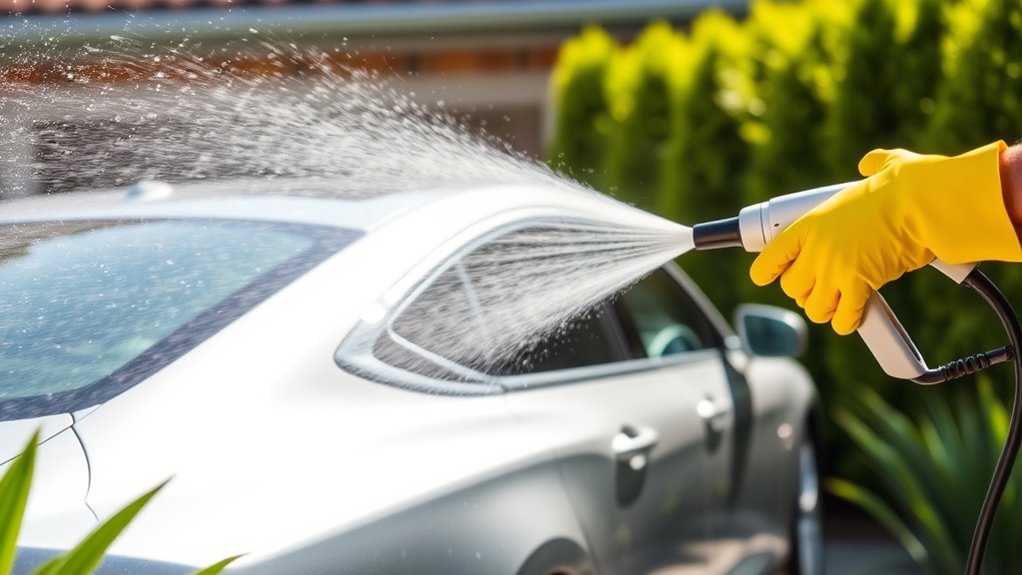
Selecting the right nozzle is just the first step in pressure washing your car; knowing how far to stand while using it is just as vital. Keep the nozzle distance at least 2 feet away from your vehicle to prevent any damage.
The pressure distance matters too. Higher pressures can cause paint chipping or scratches if you’re too close. Use a wide-angle nozzle for gentle cleaning, maintaining that safe distance to protect your car’s finish.
For stubborn spots, you can gradually move closer, but always start at a safe distance and assess the impact. Remember, it’s better to be cautious. Adjusting pressure and distance can keep your car looking great while avoiding costly repairs.
Step-by-Step Guide to Pressure Washing Your Car
Pressure washing your car can make a world of difference in its appearance, and following a simple step-by-step guide guarantees you do it safely and effectively. Here’s how to get started with the best car wash techniques while ensuring pressure washing safety:
Pressure washing your car enhances its look, and a step-by-step guide ensures a safe and effective wash.
- Choose the Right Equipment: Select a pressure washer with adjustable settings, ideally between 1200-1900 PSI.
- Prep Your Car: Rinse off loose dirt and debris. Use a car-specific soap in the pressure washer attachment.
- Wash in Sections: Start from the top and work your way down. Use a wide spray nozzle for even coverage.
- Rinse and Dry: Thoroughly rinse the car to remove soap, then dry it with a microfiber towel to prevent water spots.
Avoid These Common Pressure Washing Mistakes
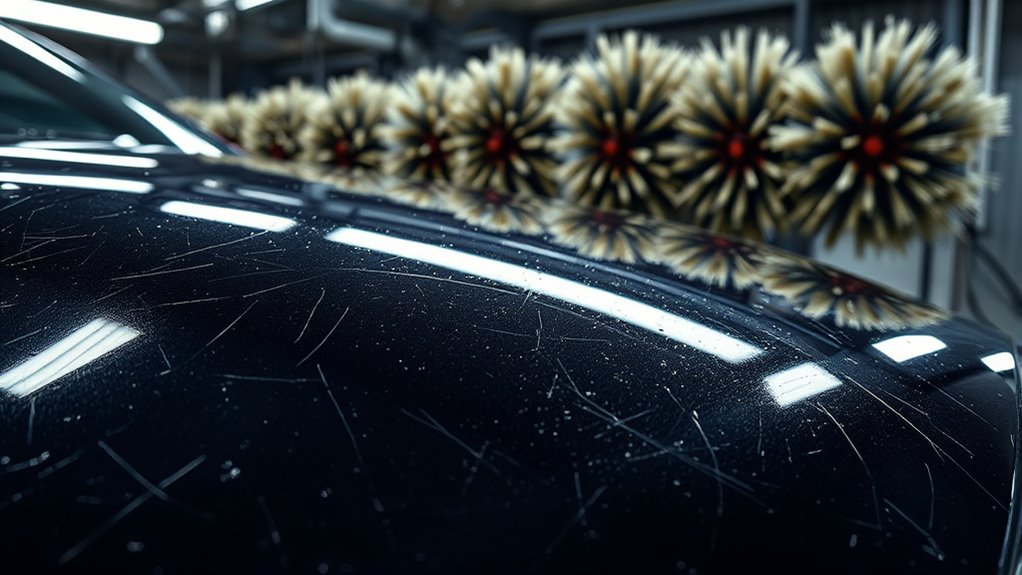
Even with the right techniques in place, it’s easy to make mistakes while pressure washing your car. One of the most common pitfalls is using too much pressure. High pressure can damage your paint and strip protective coatings. Always start with a lower setting and gradually increase if necessary.
Another mistake is neglecting to rinse thoroughly. If soap residue remains, it can leave streaks and cause damage over time. Be sure to rinse your car completely.
Additionally, don’t forget to protect vulnerable areas like the windshield and mirrors. Avoid directing the spray directly at these surfaces to prevent cracking or shattering.
Lastly, skipping the pre-wash step can lead to scratches. Always remove loose dirt and debris before pressure washing. By steering clear of these common pitfalls, you’ll guarantee a safer and more effective pressure washing experience for your car.
Effective Techniques to Protect Your Car’s Paint and Finish
To maintain your car’s paint and finish, it’s essential to adopt effective techniques that shield it from wear and tear. By using these paint protection and detailing methods, you can keep your vehicle looking pristine for years.
Maintaining your car’s paint requires effective techniques to protect it from wear, ensuring it stays pristine for years.
- Wax Regularly: Apply a high-quality wax every few months to create a protective barrier against UV rays and contaminants.
- Use a Soft Cloth: When drying, choose a microfiber cloth to prevent scratches and swirl marks that can damage the paint.
- Avoid Harsh Chemicals: Stick to pH-balanced car shampoos because harsh cleaners can strip away protection and harm the finish.
- Seal the Paint: Consider a ceramic coating or sealant for improved durability and a long-lasting shine.
How to Clean Hard-to-Reach Areas While Pressure Washing
When you’re pressure washing your car, getting into those hard-to-reach areas can feel like a challenge. To tackle those tough spots effectively, use specific tools and cleaning techniques tailored for each area.
For wheel wells and undercarriage cleaning, a wide-angle nozzle can help blast away dirt without risking damage.
For the engine bay, switch to a narrower nozzle for better precision. Detailing brushes are perfect for crevice cleaning; they can get into tight spots where dirt loves to hide.
Don’t forget to apply maintenance tips, like starting from the top and working your way down, to guarantee dirt flows away from clean areas.
Post-Wash Tips for a Lasting Shine
After you’ve pressure washed your car, taking a few extra steps can guarantee a lasting shine. Follow these tips to keep your vehicle looking its best:
- Drying Techniques: Use a microfiber towel to dry your car thoroughly. This prevents water spots and helps maintain the finish.
- Wax Application: Apply a high-quality wax once the car is dry. This adds a protective layer and boosts the shine.
- Buffing: After the wax sets, buff the surface with a clean microfiber cloth. This step brings out the gloss and smoothness.
- Regular Maintenance: Keep your car clean by washing it regularly and reapplying wax every few months. This routine protects the paint and extends the shine.
Frequently Asked Questions
Can I Pressure Wash My Car in Direct Sunlight?
You shouldn’t pressure wash your car in direct sunlight. The sunlight can cause soap and water to dry too quickly, leading to streaks and spots.
For better results, try to wash your car in the shade or during cooler parts of the day. Keep these pressure washing tips in mind to avoid damaging your paint.
Protect your car’s finish by ensuring it’s cool and shaded while you work.
How Often Should I Pressure Wash My Car?
You should pressure wash your car every two to four weeks, like a refreshing change for your vehicle. Regular car maintenance keeps dirt and grime at bay, ensuring your paint stays pristine.
If you drive in harsh conditions or often take road trips, consider washing it more frequently. A pressure washer can effectively remove stubborn debris, helping your car shine bright and last longer on the road.
Is It Safe to Pressure Wash My Car’s Wheels?
Yes, it’s safe to pressure wash your car’s wheels if you use the right technique. Start with a lower pressure setting to avoid damaging the wheel finish. Focus on wheel cleaning products that help break down brake dust and grime.
Make certain to keep the nozzle at a safe distance to prevent any chips or scratches. Always rinse thoroughly to guarantee no soap residue remains, leaving your wheels sparkling clean.
What Should I Do if My Pressure Washer Leaks?
If your pressure washer leaks, first turn it off and disconnect it from the power source. Check all hoses and connections for damage or loose fittings. Tighten any loose parts and replace worn-out seals or hoses as needed.
Regular pressure washer maintenance can prevent leaks, so keep everything clean and inspect it frequently. If you can’t fix the leak yourself, consider consulting a professional for leak troubleshooting and repairs.
Can I Use Soap in My Pressure Washer?
Absolutely, you can use soap in your pressure washer, but not just any soap. Think of it as a magical potion for your cleaning quest! Different pressure washer types handle soap differently, so check your manual.
If you’re feeling adventurous, consider soap alternatives like vinegar or baking soda, which can be surprisingly effective. Just remember to rinse thoroughly afterward, or you might end up with a sudsy disaster instead of a shiny car!
Conclusion
By pressure washing your car, you not only save time but also improve its resale value. Did you know that a well-maintained vehicle can retain up to 60% of its original value?
Following these steps guarantees your car shines while protecting its finish. Remember to choose the right pressure settings and techniques to avoid damage.
With a little care, you’ll keep your ride looking fresh and gleaming for miles to come! Safely pressure wash your car to maintain that showroom shine every time.