What Happens When I Wash My Car With Dish Soap?
Washing your car is a chore many people struggle with, especially when it comes to choosing the right cleaning products. You want your vehicle to look shiny and new without causing damage, but with so many options, it’s easy to feel overwhelmed.
You’re not alone in wondering if common household items like dish soap are safe to use on your car’s paint.
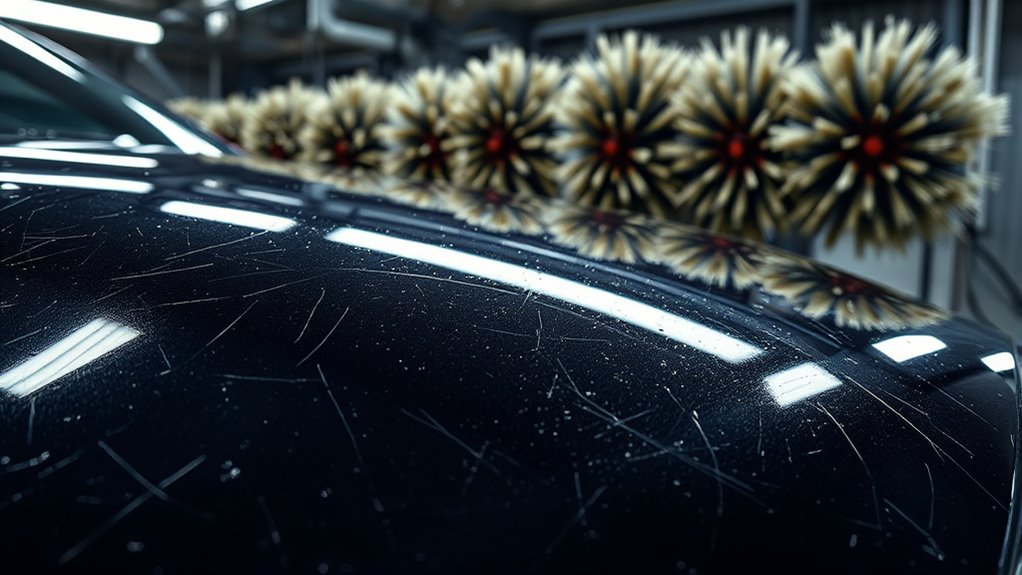
When you wash your car with dish soap, you’re stripping away essential wax and protective coatings. This leaves your paint vulnerable to fading, scratches, and environmental damage.
You’ll notice a dull finish, with increased visibility of scratches and swirls.
Plus, the harsh chemicals break down wax layers, making it necessary to wax more frequently.
To protect your vehicle’s finish, it’s best to use pH-balanced products.
Uncover better washing techniques and alternatives to keep your car looking great.
Key Takeaways
- Dish soap strips away protective wax and coatings, exposing paint to scratches and environmental damage. This leaves your car more vulnerable to wear and tear.
- The harsh chemicals in dish soap degrade existing wax layers, leaving surfaces unprotected and vulnerable. So, your car loses its shield against dirt and grime.
- A dull finish, increased visibility of scratches, and faded colors are signs of damage from using dish soap. You might notice your car doesn’t look as shiny as before.
- Regular use of dish soap speeds up wax removal, meaning you’ll need to wax and detail your car more often to keep it protected.
- Using pH-balanced car wash soaps is essential to maintain your vehicle’s finish and prevent damage. They clean effectively without stripping away that important protective layer.
Why You Should Avoid Dish Soap for Car Washing
When you wash your car with dish soap, you might think you’re saving time and money, but you’re actually risking damage. Dish soap is designed to cut through grease and grime on dishes, not the delicate surfaces of your vehicle. Using it can strip away essential wax and protective coatings, leading to faded paint and increased vulnerability to scratches.
Instead of dish soap, consider specialized soap alternatives formulated for car care. These products are pH-balanced and gentle, ensuring your car’s finish remains intact while effectively removing dirt. They help maintain your vehicle’s shine and longevity, ultimately saving you money in the long run.
How Dish Soap Affects Wax and Protective Coatings
Using dish soap on your car can actually strip away its wax, which isn’t great for the paint. When that wax is gone, the paint becomes more vulnerable. Over time, this can wear down any protective coatings you’ve applied, leaving your vehicle open to scratches and environmental damage. So, if you’re not careful, these long-term risks might lead to expensive repairs and a dull finish. It’s definitely something to keep in mind when choosing how to wash your car.
Wax Removal Process
Although you might think dish soap is a quick fix for a dirty car, it can strip away wax and protective coatings more effectively than you’d expect. When you wash your car with dish soap, the harsh chemicals start breaking down the wax layer, which is essential for protecting your paint.
This process not only removes existing wax but can also disrupt any sealant application you’ve done. If you’ve invested time in proper waxing techniques, using dish soap negates that effort, leaving your car vulnerable to the elements.
In short, while it may seem convenient, using dish soap can lead to an unprotected surface, requiring you to reapply wax or sealant sooner than planned.
Protective Coating Degradation
While you might not realize it, dish soap can considerably degrade protective coatings on your car. These coatings are designed to shield your vehicle’s paint from scratches, UV rays, and environmental pollutants. But they don’t stand a chance against the harsh chemicals found in most dish soaps.
When you use dish soap, you strip away these essential layers, leaving your paint vulnerable. The long-term effects can be significant, leading to accelerated fading, oxidation, and even rust. Instead of a shiny finish, you might end up with a dull and damaged exterior.
To maintain your car’s appearance and longevity, it’s best to use products specifically formulated for automotive care. This way, your protective coatings remain intact and effective for years to come.
Long-Term Damage Risks
Dish soap doesn’t just strip away protective coatings; it also wreaks havoc on the wax that helps maintain your car’s shine. When you use dish soap, you’re not just removing dirt; you’re also eliminating essential wax layers that protect your paint.
Over time, this can lead to dullness and increased vulnerability to scratches and environmental damage. The long-term consequences of this practice can be costly, as you’ll find yourself needing more frequent waxing or even professional detailing to restore your car’s finish.
Regular car maintenance becomes even more critical when you neglect proper washing methods. So, if you care about your vehicle’s appearance and longevity, stick to products designed specifically for automotive care. Your car will thank you!
What Are Better Alternatives for Car Wash Soaps?
In regard to keeping your car’s finish in top shape, choosing the right soap makes a significant difference. Instead of dish soap, consider these better alternatives that effectively clean without causing harm.
Eco-friendly options are available that are gentle on your vehicle and the environment. Using a foam cannon can improve your washing experience, allowing for a thicker lather that lifts dirt away more effectively.
| Type of Soap | Benefits |
|---|---|
| pH-balanced Car Wash | Safe for all finishes |
| Eco-Friendly Soap | Biodegradable ingredients |
| Waterless Wash | Saves water and time |
| Foam Cannon Soap | Thick foam for better lift |
| Clay Bar Lubricant | Prepares surface for waxing |
Opting for these alternatives not only protects your car’s finish but also guarantees a more enjoyable washing process. Make the switch and see the difference!
How Dish Soap Can Damage Your Car’s Finish
Using dish soap might seem like a convenient choice for washing your car, but it can lead to serious damage over time. Dish soap is designed to cut grease, which means it strips away essential wax and protective coatings on your car’s finish. Without this protection, your car paint becomes vulnerable to environmental factors like UV rays, dirt, and pollutants, which can cause fading and oxidation.
Additionally, dish soap often leaves behind soap residue that can dull your car’s shine. This residue can attract dirt and grime, making your car look dirty faster. Over time, this can lead to unsightly scratches and a less appealing appearance.
If you care about preserving your car’s finish and maintaining its value, it’s best to avoid dish soap and opt for products specifically designed for automotive care. Protecting your investment means sticking to the right cleaning solutions.
How to Wash Your Car Without Dish Soap
When it comes to washing your car effectively and safely, choosing the right products makes all the difference. Instead of dish soap, consider eco-friendly options or DIY solutions that won’t harm your vehicle’s finish. Here’s how you can achieve a sparkling clean without compromising your car’s health:
Choosing eco-friendly options and DIY solutions ensures your car stays pristine without harming its finish.
- Biodegradable car wash soap: Gentle on surfaces, tough on grime.
- Baking soda and vinegar mix: A powerful, natural cleaner that’s easy to make.
- Microfiber cloths: Soft and absorbent, perfect for detailing without scratches.
Using these alternatives not only protects your car but also benefits the environment. By opting for eco-friendly products, you contribute to a healthier planet while ensuring your car looks its best. So grab your supplies and get ready to wash your car the right way without dish soap!
Signs That Dish Soap Has Damaged Your Car?
If you’ve washed your car with dish soap, you might start to notice a few troubling signs. For example, the paint finish could look dull instead of shiny. You might also see more scratches and swirls appearing on the surface. Plus, any wax you’ve applied might wash off much faster than usual.
Dull Paint Finish
When you wash your car with dish soap, you might notice a dull paint finish as a telltale sign of damage. This lack of luster happens because dish soap strips away essential waxes and surface protection, leaving your paint vulnerable.
Look for these signs to confirm damage: a cloudy, muted appearance that lacks shine, faded colors that used to pop, and increased visibility of swirls and scratches.
To restore your car’s beauty, consider professional paint restoration. This process can revive the gloss and provide necessary surface protection.
Increased Scratches And Swirls
As you wash your car with dish soap, you might notice an increase in scratches and swirls on the surface. These imperfections can frustrate any car owner, especially if you prioritize scratch prevention and swirl reduction.
Dish soap is designed to cut grease, not care for your vehicle’s delicate finish. The harsh chemicals and abrasives in these soaps can strip away protective layers, making your paint more susceptible to damage.
When you scrub, the combination of grit and strong detergent can create micro-scratches, leading to that unwanted swirl effect. To maintain your car’s pristine look, consider using products specifically formulated for automotive finishes.
Taking this step not only protects your car but also improves its overall appearance.
Accelerated Wax Removal
Using dish soap to wash your car can lead to accelerated wax removal. This becomes evident through several signs. You might notice your vehicle’s shine diminishing, indicating rapid degradation of the protective layer.
Pay attention to these signs:
- Faded paint that looks dull and lifeless
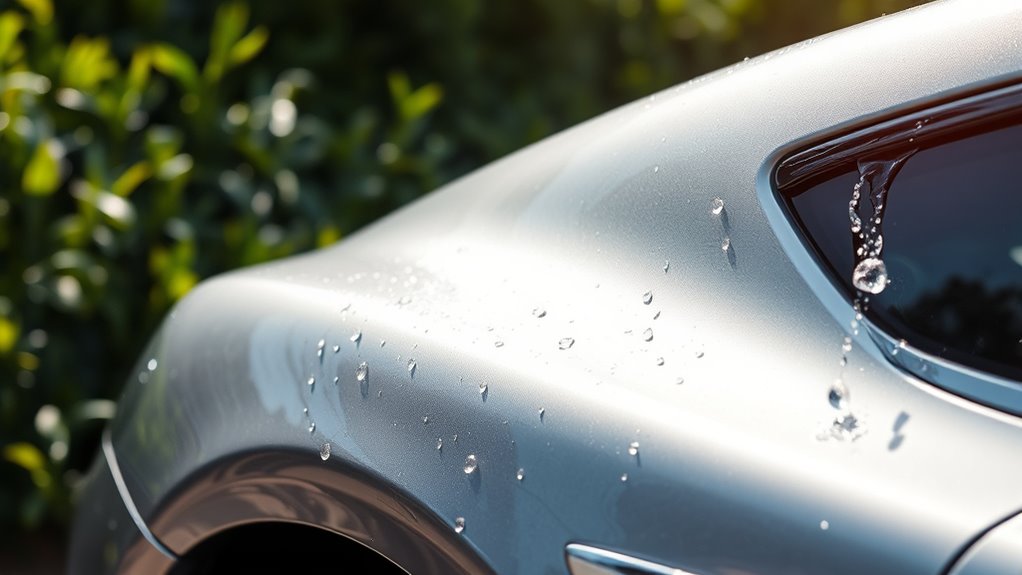
- Water beading that’s less effective, showing accelerated wear
- Rough texture on the surface, feeling gritty instead of smooth
These indicators suggest that dish soap is stripping away your car’s wax, leaving it vulnerable to the elements. As the protective barrier weakens, your paint can suffer further damage from dirt and UV rays.
It’s time to rethink your car washing routine to preserve that glossy finish!
Why pH-Balanced Products Are Crucial for Car Care
pH-balanced products are essential for car care because they help maintain your vehicle’s finish and prevent damage. When you use a product with the wrong pH levels, it can strip away protective coatings and lead to corrosion.
Most car paints and finishes are designed to thrive in a neutral pH environment. If the product formulation is too acidic or alkaline, it can degrade the surface, leaving your car vulnerable to environmental elements.
How Often Should You Wash Your Car?
Maintaining your car’s finish requires not just the right cleaning products but also a consistent washing routine. How often you wash your car depends on several factors, including your environment and driving habits. Following frequency guidelines can help keep your vehicle looking its best.
If you live in a dusty area, aim to wash your car every week. After heavy rain or snow, clean off any residue to prevent damage. For light use in moderate climates, every two weeks should suffice.
Regular washing offers multiple benefits, like protecting your paint from dirt, grime, and harmful contaminants. Plus, keeping your car clean improves its resale value. So, set a schedule that works for you, and don’t forget to enjoy that freshly washed shine!
What Gear Makes Car Washing Easy and Safe?
To make washing your car easy and safe, it’s important to have the right gear ready. You’ll want to gather all the essential supplies before you start.
Using safe techniques is just as important as having the right tools. Plus, choosing recommended cleaning products can make a big difference.
With the right setup, you can get your car thoroughly clean without worrying about causing any damage. It really makes the whole process smoother and more enjoyable!
Essential Washing Supplies
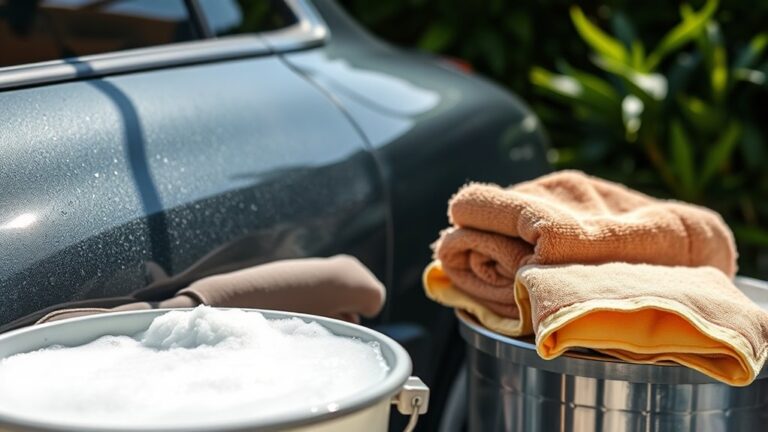
In regard to washing your car, having the right supplies can make all the difference. You’ll want to gather a few essential items to guarantee a safe and effective wash. Here’s a quick list to help you get started:
- Car wash buckets: One for soapy water and another for rinsing, preventing dirt from scratching your paint.
- Microfiber towels: Soft and absorbent, they’re perfect for drying without leaving streaks or lint.
- Car wash soap: Specifically formulated to lift dirt without damaging your car’s finish.
With these supplies on hand, you’ll not only make the washing process easier but also protect your vehicle’s exterior. Happy washing!
Safe Washing Techniques
Having the right supplies sets the stage for effective washing, but using safe techniques is just as important. Start by choosing a shaded area to prevent soap from drying too quickly, which can leave spots.
Use a soft sponge or microfiber cloth to avoid scratching the paint. When rinsing, always use a gentle stream of water instead of a high-pressure spray; this helps protect seals and windows.
Work from the top down, allowing dirt and grime to flow downward, and always rinse your sponge frequently to prevent dirt buildup. Finally, remember to dry your car with a microfiber towel to avoid water spots.
Recommended Cleaning Products
What gear makes car washing easy and safe? Choosing the right cleaning products can make all the difference. Instead of dish soap, opt for specialized car wash solutions that are gentle yet effective.
Here are some essential items you should consider:
- pH-balanced car wash soap: Protects your paint while providing a deep clean.
- Microfiber wash mitts: Soft and gentle, they prevent scratches and swirl marks.
- Eco-friendly tire cleaner: Safely cleans tires without harming the environment.
For the best results, follow professional recommendations, like using a two-bucket method to avoid dirt contamination. By using eco-friendly options, you can keep your car looking great while being kind to the planet.
How to Fix Damage Caused by Dish Soap
Although using dish soap might seem like a quick fix for cleaning your car, it can lead to unintended damage, such as stripped wax and dull paint. To start the repair process, conduct a damage assessment. Look for signs of fading or rough texture on the surface.
If you notice these issues, a good car restoration begins with a thorough wash using a pH-balanced car shampoo to remove any lingering residue. Next, consider applying a clay bar treatment to eliminate embedded contaminants. This step will restore the paint’s smoothness.
After that, you’ll want to polish the surface to bring back its shine and depth. Finally, apply a high-quality wax or sealant to protect your car’s finish. This multi-step approach will help restore your vehicle’s appearance and shield it from future damage.
Frequently Asked Questions
Can I Use Dish Soap on My Car in a Pinch?
Yes, you can use dish soap on your car in a pinch, but it’s not ideal. While it’ll clean your car, it can leave soap residue and strip away protective wax.
If you don’t have any car wash alternatives handy, just make sure to rinse thoroughly to minimize residue. Ideally, stick to products specifically designed for vehicles to keep your paint job in top shape and maintain that shine!
What Are the Long-Term Effects of Using Dish Soap on Paint?
Using dish soap on your car can lead to paint deterioration over time. The harsh chemicals strip away protective wax, leaving your paint vulnerable to scratches, fading, and oxidation. You might notice the surface dulling and losing its shine.
While it’s okay in a pinch, regular use can cause significant damage. To keep your car looking its best, stick to products specifically designed for automotive care. Your car will thank you!
How Does Dish Soap Compare to Laundry Detergent for Car Washing?
When you compare dish soap to laundry detergent for car washing, you’ll find both are car wash alternatives, but they differ in detergent properties. Dish soap effectively cuts grease, but it can strip wax and damage paint over time.
Laundry detergent, while gentler, may not remove grime as well. Ultimately, neither is ideal; using products specifically formulated for cars will protect your vehicle’s finish and keep it looking great longer.
Is It Safe to Use Dish Soap on Tinted Windows?
Using dish soap on tinted windows isn’t the best choice. While you might think it’ll clean effectively, it often leaves soap residue that can dull the tint.
For ideal tinted window care, stick to products specifically designed for tinted surfaces. These cleaners won’t strip the tint or cause damage.
You want your windows to shine, not be clouded by leftover soap. Choose wisely, and your tinted windows will thank you!
What Should I Do if I Accidentally Used Dish Soap?
If you accidentally used dish soap, rinse your car thoroughly with water to remove any residue. Dish soap can strip wax and damage surfaces, so follow up with a proper car wash using soap alternatives designed for vehicles.
Consider applying a wax or sealant afterward to restore protection. For better car care tips, always keep dedicated car cleaning products on hand to avoid similar mishaps in the future!
Conclusion
In short, washing your car with dish soap can lead to significant damage, stripping away wax and protective coatings. For instance, imagine a car owner named Jake who used dish soap regularly, only to find his paint dull and faded after a few months.
By switching to a pH-balanced car wash soap, he restored his vehicle’s shine and protection. Remember, treating your car right not only keeps it looking great but also preserves its value in the long run.
So, if you want to keep your car looking its best, avoid washing your car with dish soap.