Essential Steps to Do Your Self Car Wash
Washing your car yourself can feel like a daunting task, especially when you want it to look spotless without spending a fortune. You’re not alone—many people struggle with knowing the best way to clean their vehicle without causing damage.
If you’re looking for effective tips to get that professional shine at home, this guide to essential steps for your self car wash will help you get started with confidence.
To wash your car yourself, start by gathering supplies like quality soap, microfiber cloths, and a vacuum.
Prep your vehicle by removing personal items and inspecting for damage. Rinse from top to bottom, then hand wash using the two-bucket method to avoid scratches.
Dry with a microfiber towel to prevent spots. Don’t forget to wax for shine and protection.
Maintain a regular cleaning routine for best results; there’s more you can do for a thorough clean.
Key Takeaways
- Gather necessary supplies like car wash soap, microfiber cloths, and a vacuum for both exterior and interior cleaning.
- Prepare your vehicle by inspecting for dirt, removing personal items, and assessing for any damage.
- Rinse the car thoroughly from top to bottom to remove loose dirt before hand washing.
- Use a two-bucket method for hand washing to prevent scratches and ensure effective soap rinsing.
- Maintain a regular washing routine, adjusting frequency based on environmental conditions to protect your car’s finish.
Gather Your Supplies for a DIY Car Wash
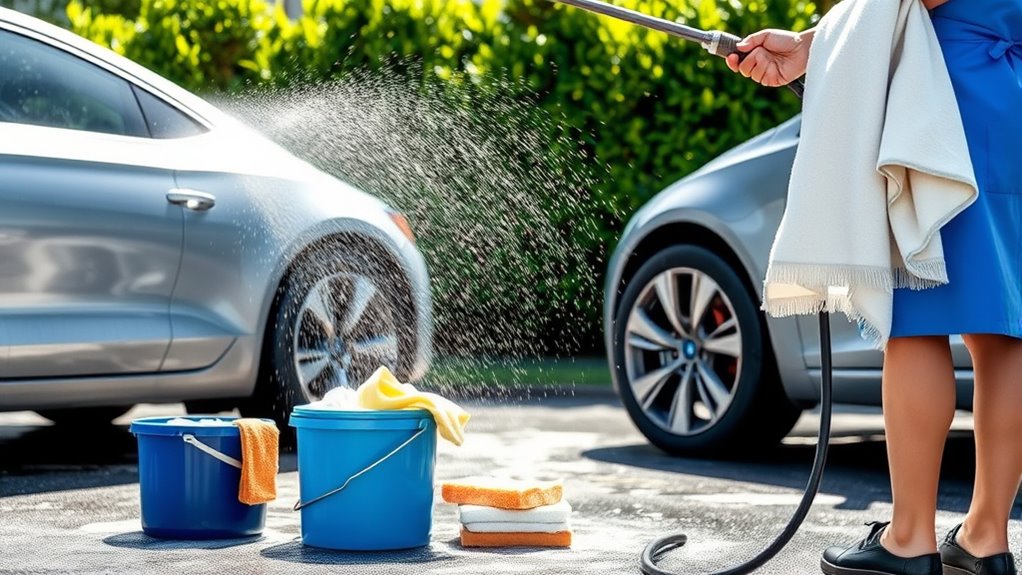
Before you get started on your DIY car wash, you’ll want to gather all the necessary supplies to make the process efficient and effective. Start by creating a supply checklist that includes essential tools. You’ll need a high-quality car wash soap, a bucket, and a sponge or wash mitt.
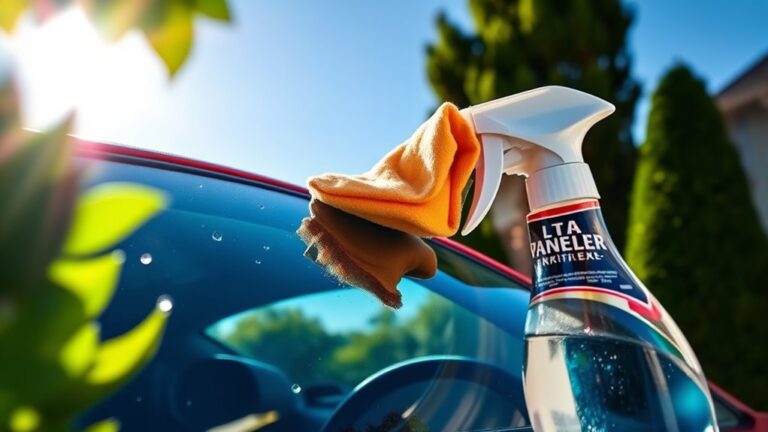
Don’t forget a microfiber cloth for drying and a wheel brush to tackle those tricky rims. A hose with a spray nozzle is vital for rinsing, while a vacuum can help clear out the inside of your car.
Remember to have a microfiber cloth for drying, a wheel brush for rims, and a hose with a spray nozzle for rinsing.
If you have them, grab some tire cleaner and wax for that finishing touch. Once you’ve gathered everything on your checklist, you’ll be ready to plunge into the washing process.
Having all your essential tools at hand will not only save you time but also guarantee your car shines bright after your hard work.
Pre-Wash Checklist: Preparing Your Vehicle
With your supplies ready, it’s time to prep your vehicle for a thorough wash. Start with a quick vehicle inspection. Walk around your car, checking for any visible dirt, debris, or areas that might need extra attention. Don’t forget to look under the wheel wells and around the tires.
Next, perform a damage assessment. Look for scratches, dents, or any other imperfections that might need special care during the wash. If you spot any areas that require touch-ups or repairs, make a note of them now.
Remove any personal items from the interior and clear out the trunk. This’ll make your wash process smoother and prevent any accidental damage to your belongings. Finally, roll down the windows slightly to avoid water getting inside.
With these steps complete, you’re ready to plunge into washing your car!
Rinsing Your Car Before Washing
Before you start washing your car, it’s essential to give it a good rinse first. This step helps get rid of loose dirt and grime, which makes your wash much more effective.
Importance Of Rinsing First
Rinsing your car first is crucial for achieving an effective wash. By using the right water pressure, you can effectively dislodge debris and dirt from your vehicle’s surface. This pre-wash benefit sets the stage for better dirt removal during the actual wash.
Effective rinsing techniques help guarantee that any loose particles are removed, reducing the chances of scratching the paint while you scrub. Pay attention to rinse timing; a thorough rinse before applying soap maximizes your washing efforts.
Not only does this step help in debris dislodging, but it also aids in surface protection. Skipping this critical step can lead to a less-than-stellar clean, so make rinsing your priority for best results.
Techniques For Effective Rinsing
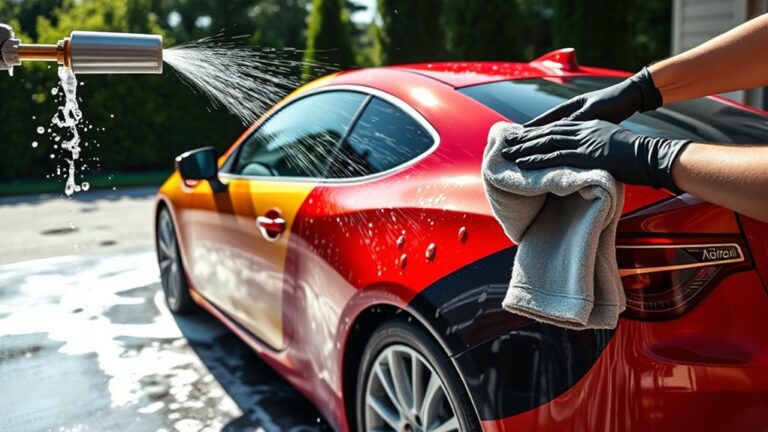
Effective rinsing techniques can make a significant difference in your car wash routine. Start by using a high-pressure nozzle or hose attachment to blast away loose dirt and grime. Focus on areas that typically collect more debris, like wheel wells and bumpers.
Utilize effective water usage by rinsing from the top down; this way, dirt flows downwards, preventing it from sticking to cleaner areas. Consider rinsing in sections, ensuring every part gets thorough coverage.
If you have a foam cannon, incorporate it for an extra layer of cleaning prior to washing. Remember, a good rinse sets the stage for a more effective wash, leaving your car cleaner and more polished.
Choosing the Best Soap for Your Car
When it comes to washing your car, picking the right soap is super important. You’ll want to think about the different types of car soaps out there and their pH balance. That way, you can make sure you don’t accidentally harm your paint. Using the right soap not only makes your car shine but also helps protect its finish.
Types Of Car Soaps
Choosing the right soap for your car can make a significant difference in how clean and shiny it looks. There are several car soap types to evaluate, each designed for specific needs.
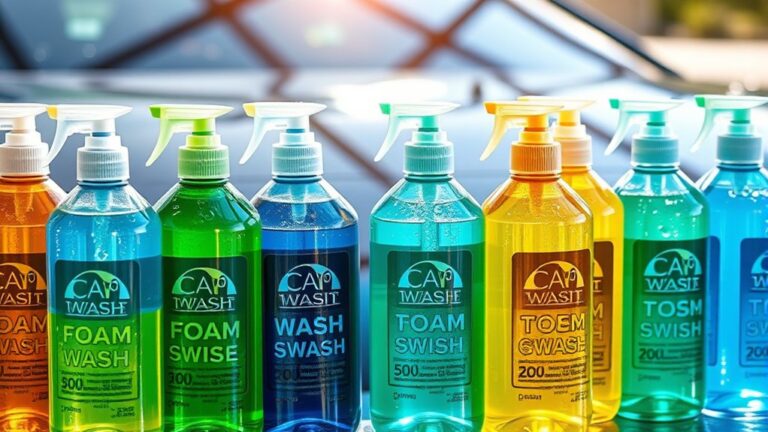
For instance, a foam wash is great for lifting dirt without scratching, while a wash-and-wax formula adds shine and protection. If you’re looking for environmentally friendly options, biodegradable soaps are available and effective.
Pay attention to soap ingredients, too; avoid harsh chemicals that can damage your paint. Instead, opt for pH-balanced soaps that are gentle yet effective. By selecting the right soap, you’ll guarantee your car not only looks good but is also protected from potential harm during washing.
pH Balance Importance
pH balance plays an essential role in selecting the best soap for your car. Understanding pH levels helps you choose a soap that effectively cleans without damaging your vehicle’s surface protection. Here are some key points to take into account:
- Water Hardness: Hard water can affect soap performance, so look for products specifically designed for your water type.
- Cleaning Frequency: If you wash your car often, choose a gentle pH-balanced soap to maintain your wax application.
- Environmental Impact: Opt for eco-friendly detailing products that minimize harmful runoff.
- Rinsing Techniques: Use proper rinsing methods to guarantee no soap residue harms your paint.
DIY Car Wash Techniques for Every Vehicle
Whether you drive a compact car, an SUV, or a luxury vehicle, mastering DIY car wash techniques can save you time and money while keeping your ride looking pristine. Start by gathering eco-friendly options like biodegradable soaps and reusable microfiber towels. These choices not only protect the environment but also guarantee your vehicle shines without harmful chemicals.
Consider seasonal factors, too. In winter, use a wash that prevents salt buildup; in summer, focus on removing pollen and tree sap. Always rinse thoroughly to avoid soap residue, especially during warmer months when it can dry quickly.
For compact cars, a simple bucket system works great, while SUVs might benefit from a foam cannon for hard-to-reach areas. Luxury vehicles deserve extra care, so consider hand washing with a gentle touch. By tailoring your approach to your vehicle type and the season, you’ll keep your car looking its best year-round.
Tips for Hand Washing Your Car Like a Pro
To wash your car like a pro, start by picking out quality supplies that really make a difference. Using the right tools and products will help you get that spotless finish you’re after.
Then, move on to the proper techniques—not just to clean, but also to protect your vehicle’s paint. Trust me, taking these steps makes all the difference!
Choose Quality Supplies
Choosing quality supplies is essential when hand washing your car, as the right tools can make all the difference. By investing in the best items, you’ll guarantee a thorough clean while protecting your vehicle’s finish.
Here are some essential tools to take into account:
- Quality microfiber washing mitts. They’re gentle on your car’s surface and effective at lifting dirt.
- Eco-friendly soap dispensers. Choose biodegradable soaps that won’t harm the environment.
- Wash buckets. Use two buckets: one for soapy water and another for rinsing to avoid scratching your paint.
- Soft drying towels. Opt for high-quality microfiber towels to prevent streaks and water spots.
Don’t forget your protective gear to keep yourself safe while you work!
Follow Proper Technique
With your quality supplies ready, it’s time to focus on the technique that will give your car that professional shine. Start by rinsing your car with a hose, using water conservation tips to minimize waste.
Use a two-bucket method: one for soapy water and the other for rinsing your sponge. This prevents dirt from scratching the surface. Choose eco-friendly products to protect the environment while cleaning.
Work from the top down, washing one section at a time. Rinse thoroughly before moving on to the next area. Don’t forget the wheels; they often hold grime.
Finally, dry your car with a microfiber towel to avoid water spots. With these techniques, you’ll achieve a spotless finish you can be proud of!
How to Dry Your Car Without Leaving Water Spots
Drying your car properly can prevent those pesky water spots from forming. By using effective drying techniques, you can achieve a spotless finish. Here’s how to do it right:
- Use a Microfiber Towel: These towels are super absorbent and gentle on your paint, making them ideal for drying.
- Start from the Top: Work your way down to avoid letting water drip onto already-dried areas.
- Blot, Don’t Wipe: Instead of dragging the towel across the surface, gently blot the water to minimize streaking and guarantee thorough water spot removal.
- Dry in Sections: Focus on one part of the car at a time, ensuring each section is completely dry before moving on to the next.
Following these steps will help you master your drying techniques and keep your car looking pristine, free from unwanted water spots.
Waxing Your Car for Extra Shine
After you’ve dried your car to perfection, it’s time to improve that shine with a good wax. You have two great options: carnauba wax and synthetic wax. Carnauba wax, made from Brazilian palm leaves, offers a deep, warm shine and excellent protection against UV rays. It’s perfect for a classic finish that many enthusiasts love.
On the other hand, synthetic wax provides durability and easier application. It creates a slick surface that repels water and dirt, making future washes easier.
To apply the wax, use a clean microfiber cloth or applicator pad. Work in small sections, applying a thin layer in circular motions. Let it sit for a few minutes until it hazes over, then buff it off with another clean cloth. This simple process not only improves your car’s appearance but also adds a protective layer, keeping it looking great for longer. Enjoy that fresh shine!
Interior Cleaning: A Step-by-Step Guide
Transform your car’s interior into a spotless sanctuary with a thorough cleaning. Follow these steps to guarantee every corner shines:
- Declutter: Remove all personal items, trash, and any loose change. This makes vacuuming easier and more effective.
- Vacuum Techniques: Use a vacuum with attachments to reach under seats and in crevices. Focus on high-traffic areas to pick up dirt and debris.
- Upholstery Care: Treat fabric seats with a suitable cleaner. Test any product in a hidden area first, then scrub gently to avoid damage.
- Finishing Touch: Wipe down hard surfaces with a microfiber cloth and an appropriate cleaner. Don’t forget the dashboard and door panels!
Maintaining Your Car Wash Routine for Optimal Results
Keeping your car clean inside is just the beginning. To maintain its appearance and longevity, establish a regular car wash routine. The ideal wash frequency depends on your environment; if you live in an area with a lot of dust or rain, aim for a weekly wash. For less demanding conditions, bi-weekly might suffice.
Regular washes not only improve your car’s look but also play an essential role in car maintenance. Dirt and grime can lead to corrosion, so don’t skip washing the undercarriage and wheel wells.
Incorporate waxing every few months to protect the paint and keep that shine. Remember to check the tires and windows too; they deserve attention as part of your routine. By sticking to your wash schedule, you’ll guarantee excellent results and keep your vehicle in top shape for years to come.
Frequently Asked Questions
How Often Should I Wash My Car?
You should wash your car at least once every two weeks for ideal paint protection. If you frequently drive in harsh conditions, like salt, dirt, or bird droppings, consider increasing your car wash frequency to weekly.
Regular washes help prevent damage to the paint and keep your vehicle looking great. Don’t forget to wax your car occasionally, too, as it adds an extra layer of protection and shine.
Can I Use Dish Soap for Washing My Car?
Using dish soap for washing your car is like using sandpaper on your skin. It might seem effective, but it can damage your paint. Instead, opt for car-specific soaps designed to be gentle yet effective.
There are plenty of dish soap alternatives that won’t strip wax or harm your finish. By using proper car wash techniques, you’ll keep your vehicle looking its best while protecting its surface. Stick to products made for cars!
What’s the Best Time of Day to Wash My Car?
The best time to wash your car is in the morning. Washing it early helps you avoid the heat of the day, reducing the chances of soap drying too quickly and leaving spots. Plus, cooler temperatures make it more comfortable for you.
On the other hand, washing in the evening can have drawbacks, like potential dew forming overnight, which might hinder your efforts. So, stick to mornings for the best results!
Are Waterless Car Wash Products Effective?
Yes, waterless car wash products are effective. They save water, reduce mess, and protect your car’s finish. By using these products, you’ll enjoy the waterless benefits of convenience and speed.
When you compare them to traditional washes, you’ll find they’re easier to use and often contain protective waxes. Just remember to choose a quality product for the best results, and you’ll keep your car looking great without the hassle of rinsing!
How Can I Remove Stubborn Stains From My Car’s Paint?
To remove stubborn stains from your car’s paint, start by using a dedicated stain removal product designed for automotive surfaces. Apply it gently with a microfiber cloth, working in circular motions. Rinse thoroughly afterward to avoid residue.
For added paint protection, consider applying a wax or sealant after the stain removal process. This not only improves your car’s appearance but also helps prevent future stains from sticking to the paint.
Conclusion
To sum up, keeping your car clean doesn’t have to be complicated. With a little preparation, the right supplies, and some simple steps, you can create a sparkling shine that turns heads.
By regularly refining your routine, you’ll not only improve your vehicle’s appearance but also protect its paint and value. So, roll up your sleeves, grab your gear, and enjoy the satisfaction of a freshly washed ride!
Your car deserves the best, after all! Follow these essential steps to do your self car wash and keep it looking great every time.