Are Automatic Car Washes Bad for Your Car?
If you’ve ever wondered whether automatic car washes are good or bad for your car, you’re not alone. Many people struggle with finding the right balance between convenience and protecting their vehicle’s finish.
It’s a common concern: you want your car clean without risking scratches or damage.
Automatic car washes can harm your car’s finish if used too often or with worn brushes, leading to scratches or swirl marks. However, they also save time and provide consistent cleaning.
Touchless washes reduce the risk of scratches and often include protective wax.
While the risks exist, occasional automatic washes can maintain your vehicle’s appearance and help prevent damage from dirt and grime.
Want to know more about the pros and cons? There’s plenty to investigate.
Key Takeaways
- Frequent use of automatic car washes can cause scratches and swirl marks, especially with worn brushes.
- Touchless car washes reduce the risk of paint damage compared to traditional brush washes.
- Harsh chemicals and recycled water in automatic washes may impact the longevity of your car’s paint.
- Automatic washes offer convenience and consistent cleaning, helping maintain your vehicle’s appearance over time.
- Occasional automatic washing poses minimal harm, particularly when protective wax layers are included in the service.
Are Automatic Car Washes Bad for Your Car?
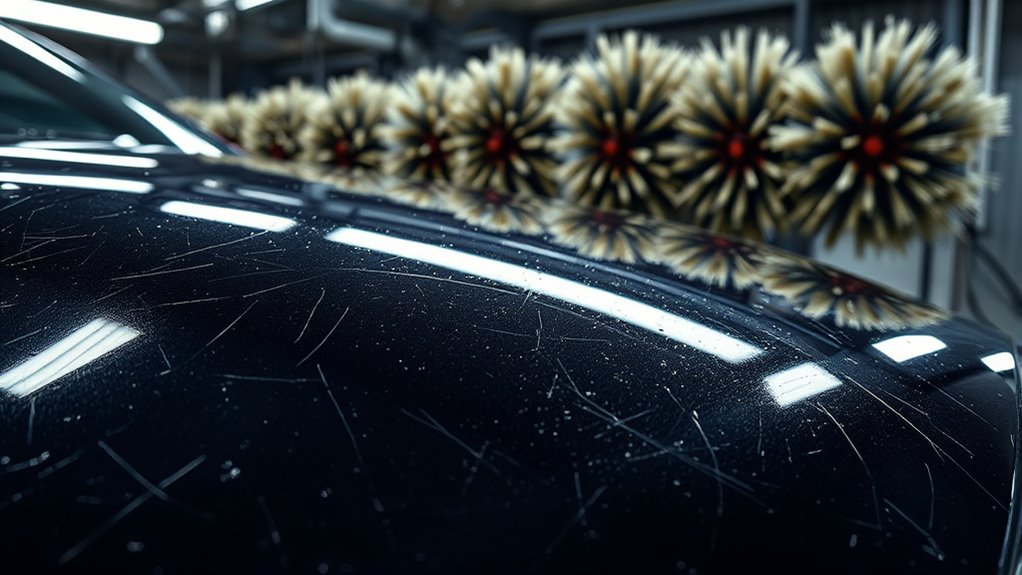
Many car owners wonder if automatic car washes are actually bad for their vehicles. While convenience is a major plus, you should consider how these washes impact your car’s overall health. Frequent use of automatic washes can lead to scratches and swirl marks, especially if the brushes are worn or dirty.
This can affect your paint job, requiring more extensive car maintenance down the line. However, if you keep a regular cleaning frequency and choose a reputable wash, the risks can be minimized. Touchless washes, for instance, use high-pressure water jets instead of brushes, reducing the likelihood of scratches.
Ultimately, it’s about balance. If you’re washing your car regularly and maintaining the exterior, an occasional visit to an automatic wash shouldn’t cause significant harm. Just be mindful of your vehicle’s condition and choose the right type of wash to keep it looking its best.
Why Choose Automatic Car Washes?
When you’re short on time, automatic car washes are a quick and efficient way to get your vehicle clean. Plus, you can always count on consistent results every time. That means your car looks great without any hassle.
Choosing this option lets you keep your car spotless, even when your schedule is packed. It’s a simple way to fit washing into your busy day without missing a beat.
Time Efficiency Benefits
Although you might love the feeling of a freshly washed car, finding the time to do it yourself can be challenging. Automatic car washes provide significant time savings, allowing you to focus on your busy schedule while ensuring your vehicle gets the routine maintenance it needs.
| Benefits | Automatic Car Washes |
|---|---|
| Speed | Wash in under 10 minutes |
| Convenience | Open 24/7 for your schedule |
| Consistency | Regular maintenance made easy |
| Less Effort | No need for manual labor |
Choosing automatic car washes not only keeps your car looking great but also maximizes your efficiency, letting you reclaim valuable time for what matters most.
Consistent Cleaning Results
Automatic car washes not only save you time but also deliver consistent cleaning results that manual washing often struggles to match. With automated systems designed to apply the same level of care and attention to every vehicle, you can trust that your car will come out looking great every time.
Unlike manual washes, where human error can lead to missed spots or uneven cleaning, automatic washes guarantee a uniform finish. This reliability comparison highlights the advantages of choosing an automatic wash, especially if you wash your car regularly.
You won’t have to worry about the quality fluctuating with different people or methods. In short, for dependable cleaning that meets your expectations, automatic car washes are a solid choice.
How Do Automatic Car Washes Work?
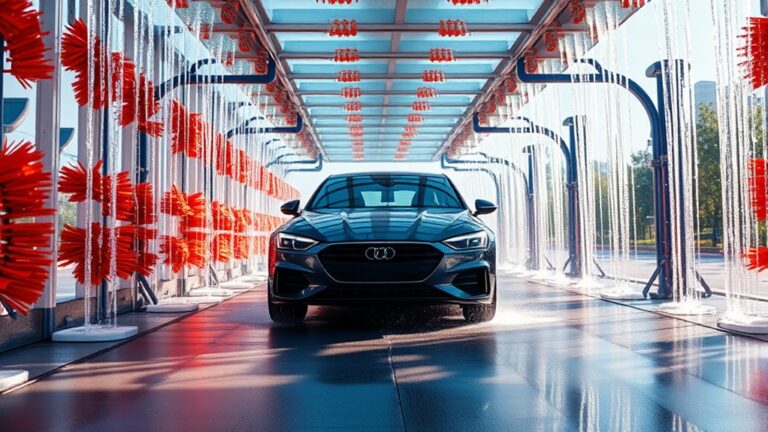
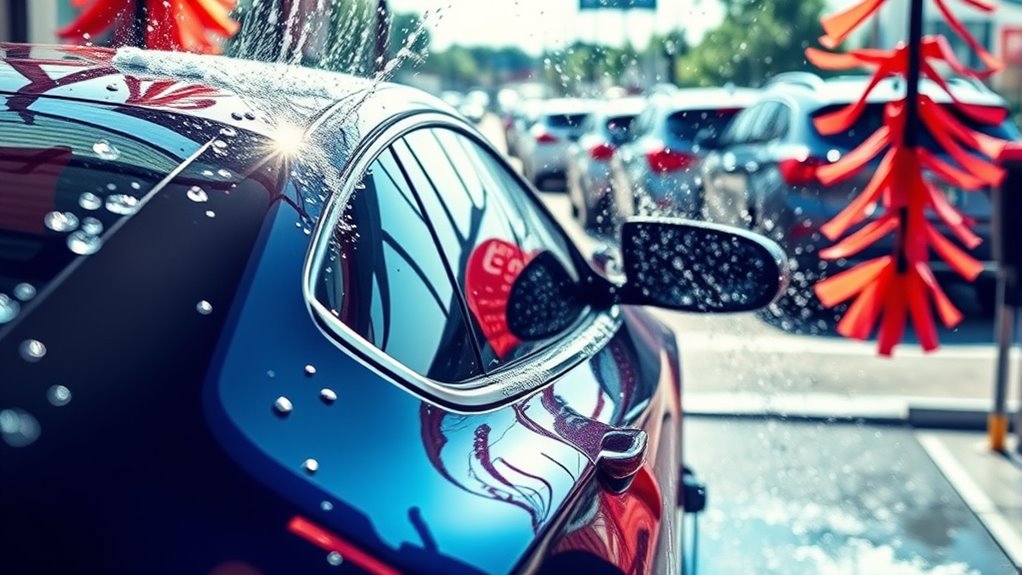
Most automatic car washes operate on a straightforward system designed to clean your vehicle efficiently. When you drive in, sensors detect your car’s position, guiding it through the wash. High-pressure jets spray water mixed with soap, loosening dirt and grime.
Then, rotating brushes, made of various brush materials, scrub the surface. These brushes can range from soft foam to more abrasive materials, depending on the wash type.
Here’s a quick overview of the process:
| Step | Description |
|---|---|
| Water Spray | High-pressure jets apply soap |
| Scrubbing | Brushes clean the vehicle surface |
| Rinse | Fresh water removes soap residue |
| Drying | Fans or cloths dry the car |
For ideal results, consider your cleaning frequency. Regular visits can help maintain your car’s appearance, but be mindful of the brush materials used to guarantee your finish stays intact.
Potential Risks to Your Car’s Finish
While you might appreciate the convenience of an automatic car wash, it’s important to understand the potential risks to your car’s finish. Regular use can lead to issues that compromise paint protection and finish longevity.
Consider these maintenance tips to minimize damage:
- Surface scratches from brushes or harsh materials
- Wax considerations that may strip protective layers
- Detailing differences compared to hand washes
- Environmental impact of harsh chemicals on your finish
To guarantee damage prevention, think about the frequency of washes and the quality of the facility. Automatic washes often use recycled water that can harbor dirt and debris, increasing the risk of scratches. Regular waxing and careful attention to your car’s surface can help maintain that glossy finish.
How Chemicals Affect Your Car’s Finish in Automatic Washes
When you choose an automatic car wash, the chemicals used can profoundly impact your car’s finish. Many washes rely on strong detergents to break down dirt and grime, but these substances can cause harmful chemical reactions with your vehicle’s paint. Over time, repeated exposure may lead to fading, dullness, and even peeling, markedly reducing paint longevity.
Additionally, some automatic washes use waxes and sealants that might seem beneficial but can leave a residue that attracts dirt quicker than before. This can create a cycle where you feel compelled to wash your car more frequently, further exposing it to potentially damaging chemicals.
To protect your investment, consider researching the specific products used at your chosen wash. Opt for washes that prioritize gentle, eco-friendly cleaners that clean effectively without compromising your car’s finish. Your car deserves a wash that maintains its shine and protects its paint for the long haul.
Touchless vs. Brush Washes: What’s the Difference?
When it comes to automatic car washes, you basically have two main options: touchless and brush washes. Each one uses different cleaning methods, and that can make a difference for your car’s paint protection and how much you end up spending. So, let’s dive into how these choices can affect both your vehicle and your wallet.
Cleaning Mechanisms Explained
Two main types of automatic car washes dominate the market: touchless and brush washes. Touchless washes rely on advanced cleaning technology, using high-pressure water jets and specialized detergents to lift dirt away without any physical contact. This method can be gentler on your car’s paint.
On the other hand, brush washes use rotating brushes that scrub the surface. This can be effective but may lead to micro-scratches over time.
Consider these features:
- High-pressure water blasts
- Specialized, wax-infused soaps
- Soft foam brushes
- Protective sealants
When choosing a wash, keep these maintenance tips in mind to protect your vehicle’s finish and guarantee it stays looking great longer. The right cleaning method can make all the difference!
Surface Protection Considerations
Choosing the right automatic car wash not only impacts cleanliness but also affects surface protection. When you consider touchless versus brush washes, you’ll notice key differences in their approach to safeguarding your vehicle’s finish.
Touchless washes use high-pressure water and soap, minimizing contact and reducing the risk of scratches. This method often incorporates surface protection methods like wax application, helping to shield your paint from the elements.
On the other hand, brush washes can be more abrasive. While they might clean your car more thoroughly, they can also leave micro-scratches that compromise surface protection.
Ultimately, the choice you make plays a crucial role in maintaining your car’s appearance and longevity. Prioritize the method that aligns with your surface protection goals.
Cost and Convenience Factors
Cost and convenience play a significant role in deciding between touchless and brush car washes. When you think about your options, consider a quick cost analysis. Touchless washes often come with higher price tags but minimize the risk of scratches. Brush washes are usually cheaper, but they may be harsher on your paint.
Here’s a convenience comparison to keep in mind:
- Speed: Touchless washes can be quicker without scrubbing.
- Accessibility: Brush washes are more common in many areas.
- Effectiveness: Touchless may miss stubborn dirt, while brushes tend to clean it better.
- Maintenance: Less upkeep needed for touchless systems.
Ultimately, weigh these factors based on your priorities, your car’s care and your wallet’s comfort.
Why Regular Automatic Car Washing Matters
While you might think that a quick rinse at home suffices, regular automatic car washing is essential for maintaining your vehicle’s appearance and longevity. The dirt, grime, and road salt that accumulate can damage your car’s finish over time.
By using an automatic wash, you’re ensuring a consistent maintenance frequency that’s tough to replicate at home. These washes often include wax and sealants, providing an extra layer of car protection against environmental elements.
Moreover, regular washing prevents corrosion and rust from developing, which can lead to costly repairs. When you keep your car clean, you not only improve its aesthetic appeal but also its resale value.
Water Conservation: Are Automatic Washes the Best Option?
How can you wash your car and still conserve water? Automatic car washes often use less water than DIY methods, making them a more eco-friendly choice. They’re designed to recycle water, minimizing overall water usage and reducing environmental impact.
Consider these benefits of automatic washes:
- Efficient water recycling: Many systems recycle water after each use.
- Controlled water flow: They use nozzles that optimize water pressure and flow.
- Less runoff: Automated systems manage runoff better, protecting local waterways.
- Quick process: A fast wash means less water wasted during rinsing.
DIY Car Wash: Is It Worth Your Time?
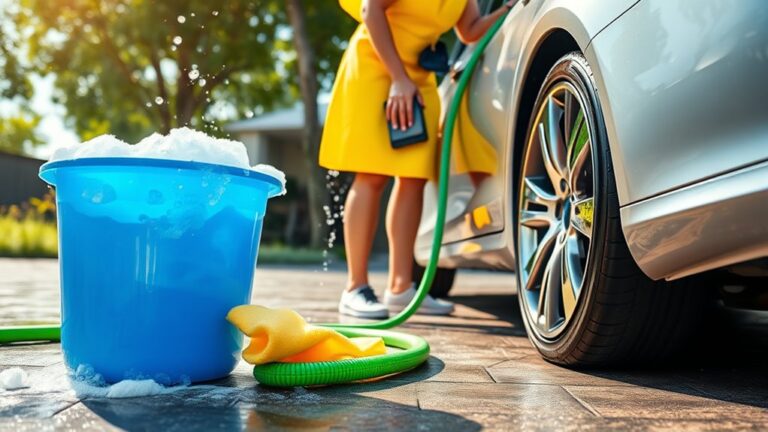
Is washing your car at home really worth the effort? It often depends on your personal preferences and time management. Using DIY equipment can save you money compared to commercial washes, making it a great option for a cost analysis. You can choose cleaning techniques that suit your vehicle and guarantee you’re using eco-friendly products, minimizing your environmental impact.
With some maintenance tips and product recommendations, you can achieve professional results right in your driveway. You’ll likely enjoy the satisfaction of a job well done, plus you can spend quality time outdoors. However, consider the time commitment. Washing a car can take a while, especially if you’re thorough. If you’re juggling a busy schedule, you might find that the convenience of automatic washes outweighs the DIY benefit. Ultimately, weigh the pros and cons to decide if a DIY car wash fits your lifestyle.
What Do Experts Say About Automatic Car Washes?
When it comes to automatic car washes, experts don’t always see eye to eye on how effective or safe they really are. You might be asking yourself whether brush systems or touchless ones are gentler on your car’s paint. And what about those underbody washes—are they worth it, or do they pose more risks than benefits? Let’s take a closer look at what the pros have to say about these popular choices.
Brushes vs. Touchless Systems
Many car owners wonder if brushes or touchless systems are better for their vehicles when using automatic car washes. Experts often point out that both options have their pros and cons.
- Brush materials can vary, affecting how gently or aggressively they clean your car.
- Touchless systems use high-pressure water and soap to avoid any physical contact.
Frequent washes can help maintain your car’s appearance but may wear down paint with brushes. Touchless systems are generally safer for delicate finishes.
Ultimately, it depends on your vehicle’s needs and your wash frequency. If you’re concerned about scratches, a touchless system might be the way to go. But if you prefer a deep clean, brushes could be effective, provided they’re made from gentler materials.
Potential Paint Damage
While automatic car washes can save you time, they might also pose risks to your vehicle’s paint. Experts warn that certain washes can lead to scratches, especially if the brushes are worn or dirty.
If you prioritize paint maintenance, consider how frequent automatic washes might impact your vehicle’s finish.
Here’s a quick overview:
| Wash Type | Risk Level | Wax Application Effect |
|---|---|---|
| Brush Wash | High | Can strip wax |
| Touchless Wash | Low | Preserves wax |
| Soft Cloth Wash | Medium | Minimal impact |
| DIY Hand Wash | Very Low | Improves protection |
Underbody Cleaning Benefits
Although you might worry about paint damage, automatic car washes offer significant benefits for your vehicle’s undercarriage. Regular underbody cleaning plays a crucial role in maintenance and rust prevention.
By removing road grime, salt, and debris, you help extend your car’s life and performance. Here’s what you can expect:
- Thorough removal of corrosive substances that can lead to rust
- Enhanced visibility of any potential issues needing attention
- Smoother operation of components like the exhaust and suspension
- Increased resale value by maintaining the overall condition
Opting for underbody cleaning in automatic washes not only keeps your car looking great but also protects it from the elements. This way, it stays in top shape for years to come.
Frequently Asked Questions
Do Automatic Car Washes Scratch the Paint?
Yes, automatic car washes can scratch your paint, especially if they use abrasive brush types. These brushes can trap dirt and grime, creating fine scratches on your car’s surface.
However, many modern washes offer softer brush alternatives or touchless options that minimize the risk. You should also consider wax options that provide additional protection, helping to guard against scratches while enhancing your car’s shine.
Regular maintenance can keep your paint looking its best.
How Often Should I Use an Automatic Car Wash?
You should use an automatic car wash every two to four weeks, depending on your environment and driving habits. If you live in a dusty area or frequently drive on roads with salt or debris, wash your car more often.
For maintenance tips, rinse off any road grime or bird droppings as soon as possible to protect the paint. Regular washes keep your vehicle looking great and help maintain its value over time.
Can I Wash My Car in Winter Automatically?
Yes, you can wash your car automatically in winter. In fact, winter washing helps remove salt and grime that can damage your vehicle.
Just be mindful of the wash frequency; you might want to wash it every few weeks, especially after heavy snow or ice. Make sure the facility uses heaters or warm water to prevent freezing, ensuring your car stays clean and protected during those chilly months.
Are There Specific Cars That Shouldn’T Use Automatic Washes?
Absolutely, some cars shouldn’t use automatic washes. For instance, about 70% of luxury vehicles can get scratches from harsh brushes.
If you own an older model, those paint finishes might be more vulnerable, too. The soft, delicate surfaces on these cars require gentler care.
You might want to stick to hand washes or touchless options to preserve their appearance. Always consider your vehicle’s specific needs to keep it looking its best.
What Should I Do if My Car Gets Damaged in a Wash?
If your car gets damaged in a wash, document everything. Take photos of the damage and the wash area. Report the incident to the car wash management and ask about their damage claims process.
Keep a record of your communication. If they refuse to take responsibility, consider contacting your insurance for help. In the future, look into wash alternatives like hand washes or touchless systems to reduce the risk of damage.
Conclusion
In the end, the choice of using automatic car washes comes down to your priorities. While they can save you time and help conserve water, be mindful of potential risks to your car’s finish.
As the saying goes, “you get what you pay for,” so if you opt for convenience, consider investing in a quality wash that protects your vehicle. Ultimately, keeping your car clean and well-maintained is worth it, whether you choose automatic car washes or DIY methods.