Are Automated Car Washes Bad for Your Vehicle?
Worried about whether automated car washes might be harming your vehicle? You’re not alone. Many people struggle with finding the right way to keep their cars clean without risking scratches or paint damage. It’s a common concern, especially with so many different types of car wash options out there.
Automated car washes can be rough on your vehicle if you’re not careful. They may cause scratches and paint damage due to abrasive brushes and harsh chemicals.
However, many modern facilities now offer touchless options that minimize contact and potential harm.
To keep your car in top shape, consider protecting the paint with wax and choose eco-friendly products.
Want to know how to pick the best wash and maintain your vehicle effectively? Let’s investigate further.
Key Takeaways
- Automated car washes can cause scratches and paint damage, especially with brush systems that use abrasive materials.
- Touchless washes minimize contact and reduce scratches, making them a safer option for delicate paint jobs.
- Chemicals in some automated washes may leave harmful residues that affect your vehicle’s long-term health and the environment.
- Regular waxing and protective coatings can help reduce damage from automated washes and keep your paint looking great longer.
- Hand washing gives you more control and thoroughness, which makes it a good choice if you’re worried about potential damage.
Common Concerns About Automated Car Washes: Scratches and Paint Damage
When you think about automated car washes, one of your first concerns might be the potential for scratches and paint damage. You want your vehicle to look its best, and the thought of swirling brushes or harsh chemicals can be unsettling.
Automated car washes can raise concerns about scratches and paint damage, leaving you anxious about your vehicle’s appearance.
To address these worries, many car washes now focus on scratch prevention and paint protection. Modern automated systems often use softer materials and gentler cleaning solutions designed specifically to minimize harm.
You should look for washes that offer touchless options, relying on high-pressure water jets instead of brushes. Additionally, applying a good wax or sealant beforehand can improve paint protection, creating a barrier against potential scratches.
Always inspect your vehicle after a wash to verify it’s free from damage. By choosing wisely and taking a few precautions, you can enjoy a clean car without compromising its finish.
Pros of Automated Car Washes
While concerns about scratches and paint damage are valid, the pros of automated car washes often outweigh these worries. For one, they offer a time-saving convenience that busy schedules crave. Instead of spending hours washing your vehicle at home, you can drive in, sit back, and let the machine do the work.
This efficiency means you can get back to your day without the hassle of rinsing, scrubbing, and drying. Additionally, automated car washes can be a cost-effective solution. Many facilities provide affordable packages that allow you to keep your car clean without breaking the bank.
Regular washes can help maintain your vehicle’s appearance and resale value, making it a smart investment in the long run. Plus, the consistent cleaning process often outperforms home washes, ensuring your car stays looking its best. Overall, the benefits of convenience and cost savings make automated car washes a practical choice.
Effects of Chemicals in Automated Car Washes
Automated car washes often rely on a range of chemicals to clean your vehicle effectively. It’s important to understand how these substances can impact both your car and the environment. Many of these chemicals can leave harmful residues on your vehicle’s surface, potentially leading to long-term damage.
Moreover, the environmental impact of these chemicals can be significant. They can contaminate water sources and harm local ecosystems.
Here’s a quick look at common chemicals, their effects, and alternative cleaning solutions:
| Chemical | Effects on Vehicle | Alternative Solutions |
|---|---|---|
| Sodium Lauryl Sulfate | May strip wax and sealants | Eco-friendly soaps |
| Phosphates | Contributes to water pollution | Plant-based cleaners |
| Surfactants | Can cause paint damage | Gentle, biodegradable soaps |
| Acids | Can etch surfaces | Vinegar and water mix |
| Bleach | Discolors and damages upholstery | Baking soda paste |
For better vehicle maintenance, consider these alternative cleaning solutions.
Touchless vs. Brush: Which Is Better?
Which cleaning method truly protects your vehicle better: touchless or brush? In terms of vehicle safety, touchless technology often takes the lead. These systems use high-pressure water jets and specialized detergents to remove dirt without any physical contact. This means less risk of scratches or damage to your paint.
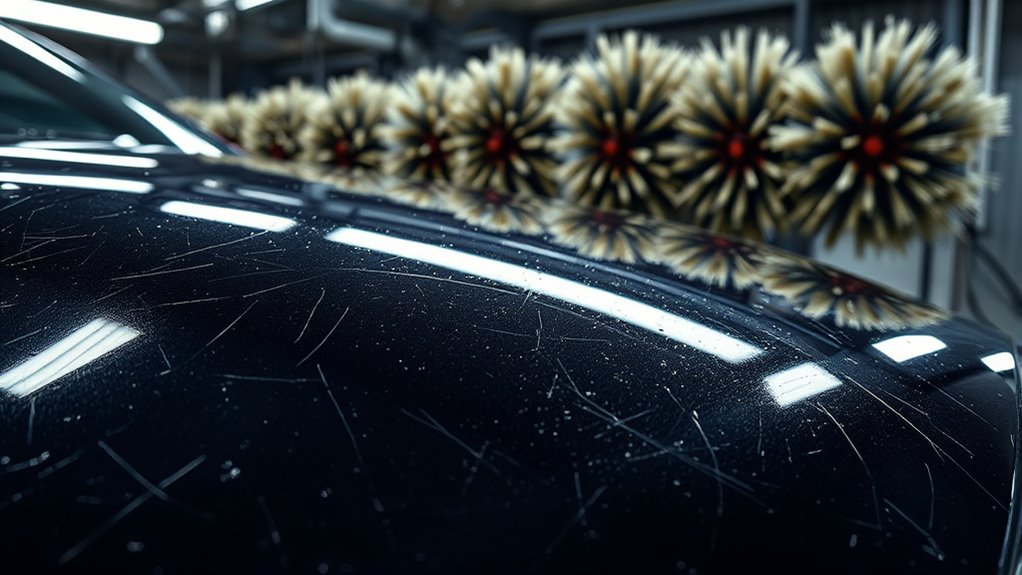
On the other hand, brush washes employ various brush materials that can be abrasive, potentially harming your vehicle’s finish over time. While they may offer superior cleaning effectiveness for heavy grime, they might leave micro-scratches that compromise your paint’s integrity.
Ultimately, if you’re looking for a gentle yet effective wash, touchless systems are generally your best bet. They prioritize your vehicle’s appearance while minimizing risks. If you frequently tackle tough dirt, though, a brush wash might still be worth considering. Just be mindful of the potential for scratches. Choose wisely, and keep your car looking its best!
Optimal Frequency for Using Automated Car Washes?
Many car owners wonder how often they should use automated car washes to maintain their vehicle’s appearance. A solid cleaning schedule can keep your car looking great while protecting its finish. Here’s a quick guide to help you decide:
| Wash Type | Recommended Frequency | Ideal Season |
|---|---|---|
| Basic Wash | Every 2 weeks | Spring/Summer |
| Wax Treatment | Once a month | All year round |
| Interior Cleaning | Every 3 months | All year round |
| Heavy-Duty Wash | Every week | Winter conditions |
| Touchless Wash | Every 2-4 weeks | All year round |
Adjust your routine based on your driving habits and local conditions. If you frequently drive on dirt roads or in snowy weather, you might want to wash more often. Keeping your car clean not only improves its look but also prolongs its lifespan.
DIY Alternatives: Hand Washing Your Car at Home
If you’re thinking about hand washing your car at home, you’ll want to gather a few essential tools first. It’s pretty straightforward once you have everything you need. With the right supplies and a simple step-by-step guide, you can get your car looking spotless—no need to deal with those automated washes. So, let’s take a closer look at what you’ll need and how to make your car shine like new.
Essential Tools Required
While automated car washes can do the job quickly, hand washing your vehicle at home offers a personal touch and a chance to care for your car more thoroughly. To guarantee effective car maintenance, gather a few essential tools before you start.
You’ll need a high-quality car wash soap, a soft sponge or wash mitt, and a microfiber towel for drying. A bucket with a grit guard can help prevent dirt from scratching your paint while rinsing.
Don’t forget a wheel brush to tackle those hard-to-reach areas. If you want to go the extra mile, consider using a clay bar and wax for added protection.
Having these essential tools on hand makes your DIY car wash both efficient and satisfying.
Step-By-Step Guide
To achieve a thorough clean when hand washing your car at home, start by gathering all your essential tools and materials. Follow these steps for effective results:
- Rinse your vehicle to remove loose dirt.
- Use a bucket of soapy water and a microfiber sponge to wash the exterior.
- Rinse again with clean water.
- Dry the car with a microfiber towel to prevent water spots.
- Don’t forget to clean the windows and tires.
For ideal vehicle maintenance, aim to wash your car every two weeks. Here’s a quick guide:
| Tool | Purpose |
|---|---|
| Microfiber Sponge | Safe washing |
| Bucket | Soapy water |
| Hose | Rinsing |
| Microfiber Towel | Drying |
| Glass Cleaner | Window cleaning |
These vehicle maintenance tips will keep your car looking great!
Tips to Minimize Damage in Automated Car Washes
When you choose to use an automated car wash, it’s essential to take steps to protect your vehicle from potential damage. By following these tips, you can maintain your car’s appearance and guarantee vehicle safety:
- Opt for protective coatings: Applying a sealant or wax can help shield your paint from scratches and wear caused by wash techniques.
- Choose your wash frequency wisely: Washing too often can lead to unnecessary wear; aim for every two weeks or as needed based on driving conditions.
- Inspect for debris: Before entering the wash, check for any loose items or dirt that might scratch your car during the process.
What to Look for in a Quality Automated Car Wash
How can you guarantee your vehicle gets the finest care in an automated car wash? First, look for a facility that uses quality materials in its cleaning equipment. Soft cloths or foam brushes are preferable, as they’re less likely to scratch your paint. Check reviews to see if the wash is known for its gentle yet effective cleaning methods.
Next, consider the wash frequency. If you drive in harsh conditions or frequently park under trees, you might need to wash your car more often. A quality automated car wash should offer different packages so you can choose one that fits your needs. Also, make sure they use high-quality soaps and waxes that protect your vehicle’s finish.
Finally, pay attention to the drying process. A thorough drying system helps prevent water spots and guarantees your vehicle looks its finest. Prioritize these factors for best care!
Final Thoughts on Automated Car Washes
When you’re thinking about using automated car washes, it’s really important to keep in mind how the equipment might affect your car’s paint. You’ll want to consider whether it’s gentle enough on your vehicle’s finish.
Also, take a look at how well the wash cleans the undercarriage—sometimes that part gets overlooked, but it’s pretty important. And don’t forget to check if the wash strips away any wax or sealant you’ve put on.
All these little things can add up and make a big difference in how your car looks and how long it stays in good shape.
Potential Paint Damage
While automated car washes offer convenience, they can pose risks to your vehicle’s paint. The brushes and chemicals used may compromise paint protection and surface durability.
To maintain your car’s finish, consider the following:
- Regular wax application: Helps protect against scratches and improves shine.
- Increased detailing frequency: Keeps your paint in top shape and minimizes long-term damage.
- Awareness of coating longevity: Choose washes that prioritize gentle methods to extend the life of your paint.
Be mindful of these longevity concerns. The environmental impact of harsh chemicals can also affect your finish maintenance. Ultimately, balancing convenience with care is key to preserving your vehicle’s aesthetic for years to come.
Undercarriage Cleaning Concerns
Although automated car washes provide a quick solution for keeping your vehicle clean, they often fall short when it comes to effectively cleaning the undercarriage. Many of these washes focus on the exterior, leaving significant buildup of dirt, grime, and salt underneath.
This neglect can lead to long-term issues like rust, especially if you live in areas where roads are salted in winter. Regular cleaning of your undercarriage is crucial for preventing rust.
If you’re serious about maintaining your vehicle’s health, consider hand washing or using specialized services that focus on undercarriage cleaning. Investing a little extra time can save you from costly repairs down the line. Prioritize your vehicle’s longevity by addressing this often-overlooked area.
Wax and Sealant Effects
When you choose an automated car wash, you might overlook how it affects the protective wax and sealant on your vehicle. The harsh chemicals and brushes used can diminish both wax longevity and sealant effectiveness. This might leave your paint vulnerable.
Consider the following impacts:
- Chemical Stripping: Strong detergents may strip away protective layers faster than hand washing.
- Brush Damage: Automated brushes can create micro-scratches, compromising the sealant’s ability to protect.
- Frequency of Application: Regular automated washes can mean you need to reapply wax and sealants more often.
To keep your vehicle’s shine and protection, weigh the convenience of automated washes against their potential drawbacks. A little extra care might go a long way in keeping your ride looking its best.
FAQs About Car Washes
Have questions about car washes? You’re not alone! Many car owners wonder about common car wash myths and best practices. Here are some FAQs to help you out:
| Question | Answer | Maintenance Tip |
|---|---|---|
| Do automatic washes scratch? | Not usually, if they’re well-maintained. | Regularly check brushes for wear. |
| How often should I wash? | It depends on your environment, but 1-2 times a month is ideal. | Avoid washing in direct sunlight. |
| Is wax necessary after? | Yes, it protects your paint. | Consider a sealant for longer-lasting protection. |
| Can I wash in winter? | Yes, but use a touchless option to avoid ice. | Rinse off salt and grime regularly. |
With this information, you can make informed decisions about keeping your vehicle clean while clearing up those car wash myths!
Frequently Asked Questions
Do Automated Car Washes Void My Vehicle’s Warranty?
No, automated car washes typically don’t void your vehicle’s warranty coverage. However, if you wash your car too frequently in a way that causes damage, it could lead to issues.
Always check your warranty terms for specifics, as some manufacturers might have recommendations about wash frequency. To keep your warranty intact, use gentle washes and avoid abrasive methods that can harm your vehicle’s finish.
Can I Wash My Car After a Fresh Paint Job?
Washing your car after a fresh paint job is like throwing water on a freshly baked cake. It’s risky! You should wait at least two weeks before washing to allow the paint to cure properly.
During this time, consider using paint protection products to shield the surface. Timing is essential because washing too soon can damage the finish. So, let that gorgeous new paint settle before diving into the suds!
Are Automated Car Washes Safe for All Vehicle Types?
Automated car washes can be safe for most vehicle types, but it depends on brush types and your wash frequency. Soft cloth brushes are generally gentler on paint than harsher bristle brushes.
If your car’s finish is delicate or has special coatings, consider washing less frequently to minimize wear. Always choose a wash that matches your vehicle’s needs, and check for any signs of damage before going through. Your car deserves the best care!
How Do Weather Conditions Affect Automated Car Wash Results?
Ever wondered how weather changes your car wash results? Temperature effects play a big role; hot days can cause soap to dry too quickly, leaving streaks.
In cooler weather, you might find dirt and grime don’t get washed away as effectively. Plus, if you’re washing frequently in harsh conditions, it might be better to hand wash instead.
Keeping an eye on the forecast can help you decide the best time for that automated wash!
What Are the Environmental Impacts of Automated Car Washes?
Automated car washes can greatly impact the environment. They often use large amounts of water and may contribute to chemical runoff if not properly managed.
You should be aware that many facilities must follow environmental regulations, but not all comply. This can affect local ecosystems, harming wildlife and water quality.
Conclusion
In the grand journey of keeping your car pristine, automated car washes can be a mixed bag. Picture your ride gliding through a tunnel of foamy suds, but remember to choose wisely.
With the right wash and a few precautions, you can keep your vehicle shining like a star. So, accept the convenience, but don’t forget to pamper your car with the love it deserves.
After all, when it comes to automated car washes, a little care goes a long way. A happy car makes for a happier drive!