What Happens If You Use Dish Soap to Wash Your Car?
Washing your car can feel like a never-ending chore, especially when you want it to look spotless without causing damage. If you’ve ever wondered whether using dish soap is a good idea, you’re not alone. Many people struggle with choosing the right cleaning products that protect their car’s finish while getting it clean.
If you use dish soap to wash your car, you might strip away its protective wax and sealants, leaving the paint vulnerable to scratches and UV damage. The harsh chemicals can compromise paint integrity over time, leading to costly repairs and dull finishes.
Your car’s trim and rubber seals could also suffer, becoming brittle and discolored. It’s best to steer clear of dish soap if you care about your vehicle’s appearance and longevity; there are safer options available.
Key Takeaways
- Using dish soap strips protective wax from your car, which makes it more vulnerable to scratches and UV damage.
- The harsh chemicals in dish soap can harm your car’s paint, leading to oxidation and costly repairs over time.
- Dish soap might also cause color fading and cracking in rubber seals and plastic trim, which means you could end up needing expensive replacements.
- Plus, the suds in dish soap can leave behind residue that dulls your car’s finish and attracts dirt.
- It’s better to use safe alternatives like car wash soap or biodegradable options that protect your vehicle and are kinder to the environment.
Why Using Dish Soap on Your Car Is a Bad Idea
While it might seem convenient to grab dish soap for a quick car wash, using it can actually do more harm than good. Dish soap isn’t formulated for car maintenance and can strip away the protective wax coating on your vehicle. This leaves your car vulnerable to scratches, UV damage, and rust. You might think it’s cleaning effectively, but it’s really compromising your paint’s integrity.
Instead of using dish soap, consider soap alternatives specifically designed for cars. These products not only clean but also protect your paint, ensuring a long-lasting shine. They’re formulated to break down dirt without harming your vehicle’s surface.
Investing in the right car wash soap can save you money in the long run by reducing the need for expensive paint repairs. So next time you wash your car, reach for the right soap and keep your vehicle looking great!
How Dish Soap Damages Your Car’s Paint
Using dish soap to wash your car can seriously damage its paint, as the harsh chemicals found in these products strip away essential protective layers. The formulation of dish soap is designed to cut through grease, not protect your vehicle.
When you use it, you risk removing the paint protection that helps defend against UV rays and environmental contaminants. This can lead to oxidation, fading, and even peeling paint over time, which is costly to repair.
Good car maintenance involves using products specifically designed for automotive finishes. These soaps are pH-balanced and gentle, ensuring that your car’s paint remains intact and well-protected.
The Effects of Dish Soap on Wax and Sealants
If you wash your car with dish soap, you’re not just risking its paint; you’re also jeopardizing the wax and sealants that protect your vehicle’s surface. Dish soap is designed to cut through grease and grime, which means it can strip away protective layers. This harshness can greatly reduce wax longevity, leaving your car vulnerable to environmental damage and UV rays.
When you use dish soap, you compromise the sealant integrity as well. Sealants are meant to provide a durable barrier against dirt and moisture, but the aggressive ingredients in dish soap can break them down. As a result, your car’s finish may not only look dull but also become prone to scratches and stains. In the long run, using dish soap can lead to costly repairs and more frequent reapplication of wax and sealants, ultimately defeating the purpose of protecting your vehicle.
How Dish Soap Messes With Your Car’s Trim
Using dish soap on your car can seriously mess with its trim. You might start to see the color fading, rubber seals breaking down, and plastic parts wearing out way faster than they should. And it’s not just about looks—these problems can end up costing you a pretty penny in repairs later on. So, it’s definitely worth skipping the dish soap when you clean your car.
Color Fading Issues
While many people might think dish soap is a quick fix for car cleaning, it can lead to serious color fading issues, especially on your car’s trim. Dish soap strips away essential waxes and protective coatings, leaving your car vulnerable to UV rays and environmental damage.
Over time, this exposure causes the trim to lose its vibrant color, leading to an unappealing, dull appearance. To maintain your car’s aesthetic, consider using dedicated automotive soaps that preserve color and shine.
Incorporating color preservation techniques, such as regular waxing, can also help. Combine this with paint protection tips like using sealants, and you’ll guarantee your car’s trim remains in top condition. Avoid dish soap to keep your car looking its best.
Rubber Seal Damage
Dish soap doesn’t just affect your car’s color; it can also wreak havoc on rubber seals. When you wash your car with dish soap, you strip away the essential oils that keep these seals flexible and intact. This can drastically reduce rubber longevity, making them prone to cracking and degradation.
Over time, you might notice leaks or drafts due to compromised seals. Regular seal maintenance is vital, and using the wrong cleaning products can lead to costly repairs. Instead of dish soap, opt for a gentle car wash solution designed for automotive use.
Protect your rubber seals and guarantee your car remains airtight and water-resistant by choosing the right cleaning products. Your vehicle will thank you in the long run!
Plastic Trim Deterioration
When you wash your car with dish soap, it doesn’t just harm the paint; it can also lead to plastic trim deterioration. Dish soap strips away essential oils and protective coatings from your car’s trim, making it brittle and prone to fading.
Over time, this can result in unsightly cracks and discoloration, which are tough to fix. If you want to maintain your car’s appearance, consider following proper maintenance tips.
Use products specifically designed for automotive care, including trim restoration solutions that can revive and protect your plastic pieces. By avoiding dish soap and opting for the right cleaners, you’ll keep your car looking great and prolong the life of its trim.
The Role of Suds in Effective Car Washes
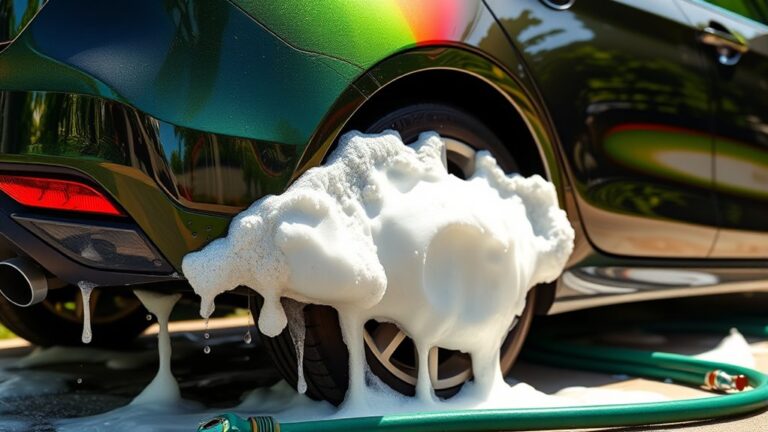
When you wash your car, suds play a key role in lifting dirt and grime off the surface. They work by surrounding the dirt particles, making it easier to wash them away without scrubbing too hard.
They also help protect your paint finish by providing a cushion during the wash process. This means less chance of scratches or swirl marks while you’re cleaning.
Plus, it’s worth thinking about the environmental impact of the suds you choose to use. Some soaps are biodegradable and eco-friendly, which is better for the planet and your local waterways. So, next time you grab your car wash soap, keep these things in mind!
Suds And Dirt Removal
Suds play an essential role in effectively removing dirt and grime from your car’s surface. When you wash your car, those suds increase the suds effectiveness by creating a barrier between the dirt and the paint. This barrier helps loosen and lift away stubborn grime, making it easier to rinse off.
The suds also improve dirt attraction, allowing them to cling to the soap instead of your car’s surface. As you scrub, the bubbles trap dirt particles, ensuring they’re washed away rather than smeared around.
Using dish soap might create a lot of suds, but it can lack the specific formulation needed for effective car cleaning. For best results, stick to products designed for automotive use.
Impact On Paint Finish
While suds help trap dirt and grime, their composition can profoundly impact your car’s paint finish. Using dish soap, which often contains harsh chemicals, can strip away protective wax layers and lead to dullness. This compromises your paint’s integrity and longevity.
Instead, opt for car-specific soaps that are formulated to clean effectively without damaging the finish. These products align with detailing best practices and improve your vehicle’s appearance.
Incorporating proper paint preservation techniques, like regular washing and waxing, can greatly prolong your car’s shine. Remember, maintaining your paint’s condition isn’t just about looks; it protects against rust and corrosion, too. So, choose your suds wisely for the best results.
Environmental Considerations Involved
Although many people enjoy the convenience of washing their car at home, it’s essential to consider the environmental impact of the soaps you use. Traditional dish soaps can harm local waterways and wildlife. Here are some things to keep in mind:
- Chemical runoff: Dish soap can contain harmful chemicals that pollute water sources.
- Biodegradability: Many dish soaps aren’t biodegradable, which leads to long-lasting environmental damage.
- Eco friendly alternatives: Look for car wash soaps made specifically to be gentle on the environment.
- Suds effectiveness: While suds help with cleaning, eco-friendly options can do just as well without harming ecosystems.
Choosing biodegradable options not only protects nature but also guarantees your car shines without guilt.
Debunking Myths About Using Dish Soap for Car Washing
Many car owners believe that using dish soap is a quick and effective solution for washing their vehicles, but this common misconception can lead to significant damage. Dish soap is formulated to cut through grease, making it harsh on your car’s paint and protective coatings.
While it may seem like a good idea for car care, using it can strip away wax and sealants, leaving your finish vulnerable to scratches and environmental damage.
Additionally, dish soap can create suds that are difficult to rinse off, potentially leading to residue buildup. This can affect your vehicle’s appearance and longevity. Instead of relying on these improper cleaning techniques, consider products specifically designed for car washing.
They’re formulated to clean effectively without harming your vehicle’s finish. By choosing the right products, you’ll guarantee your car looks great and stays protected.
Safe Alternatives to Dish Soap for Car Washing
Using dish soap can harm your car’s finish, so it’s smart to investigate safer alternatives for washing. Here are some eco-friendly options and homemade solutions that’ll keep your car looking great without causing damage:
- Car Wash Soap: Specifically designed for vehicles, it’s gentle on paint and effective at removing grime.
- Baking Soda: Mix with water to create a paste that cleans surfaces without scratching.
- Vinegar and Water: A mix of equal parts can help cut through dirt and is safe for most surfaces.
- Castile Soap: This plant-based soap is biodegradable and an excellent option for eco-conscious car owners.
These alternatives not only protect your car’s finish but also contribute to a healthier environment. Choose one that fits your needs, and you’ll be set for a safe wash!
Tips for Properly Washing Your Car Without Damage
When you’re washing your car, choosing the right soap really makes a difference to avoid any damage. It’s best to go for soaps that are specifically made for cars, so you don’t strip away the wax or harm the paint.
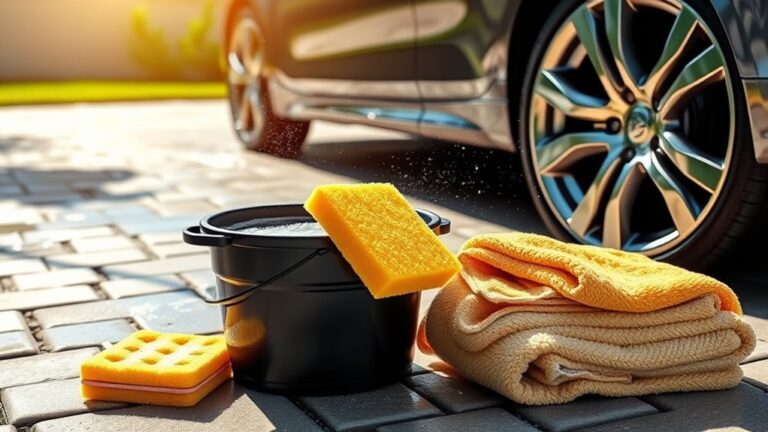
Also, make sure to use soft wash tools, like microfiber mitts or sponges. These help protect your paint from getting scratched while you clean. And don’t forget to rinse thoroughly once you’re done – leftover soap can leave a residue or dull the finish.
Following these simple tips will keep your car looking great without the risk of scratches or leftover grime. It’s pretty easy once you get the hang of it!
Choose Appropriate Car Soap
Choosing the right car soap is essential because the wrong product can damage your vehicle’s finish. Using dish soap might strip away protective wax and harm your paint.
To find a suitable car soap, consider these key factors:
- pH Balance: Look for soaps with a neutral pH to protect your car’s finish.
- Car Soap Ingredients: Check for gentle surfactants that clean effectively without harsh chemicals.
- Eco Friendly Options: Opt for biodegradable soaps that are safer for the environment.
- Foaming Action: Choose soaps that produce thick foam to help lift dirt without scratching.
Using the right car soap really makes a difference in maintaining your vehicle’s appearance and longevity.
Use Soft Wash Tools
Soft wash tools are essential for keeping your car’s surface safe during cleaning. To avoid scratches and swirl marks, opt for microfiber wash mitts or soft sponges. These materials are designed for gentle cleaning, ensuring dirt and grime are lifted without damaging the paint.
When using soft wash techniques, work from top to bottom, allowing dirt to flow downward rather than dragging it across the surface. Remember to use a separate bucket for rinsing your wash tool; this helps prevent contaminants from scratching your car.
Regularly rinse your mitt or sponge during the wash to maintain its effectiveness. By employing these soft wash tools and techniques, you’ll keep your car looking pristine while avoiding costly damage.
Rinse Thoroughly After Washing
After using soft wash tools to clean your car, rinsing thoroughly is key to preventing damage. A proper rinse technique guarantees that no soap residue remains, which can harm your paint. Here are some tips to improve your rinsing process:
- Use a high-pressure nozzle: This helps remove soap and dirt effectively.
- Start from the top: Rinse from the roof down to guarantee all contaminants flow off.
- Adjust water temperature: Warm water can help break down soap residue, making rinsing easier.
- Check for missed spots: Inspect your car after rinsing to confirm no soap is left behind.
Signs of Damage From Dish Soap on Your Car’s Finish
While it might seem convenient to grab dish soap for a quick car wash, the damage it can cause often isn’t immediately visible. One of the first signs you might notice is a dull or faded finish. Dish soap strips away essential wax and paint protection, leaving your car vulnerable to environmental factors.
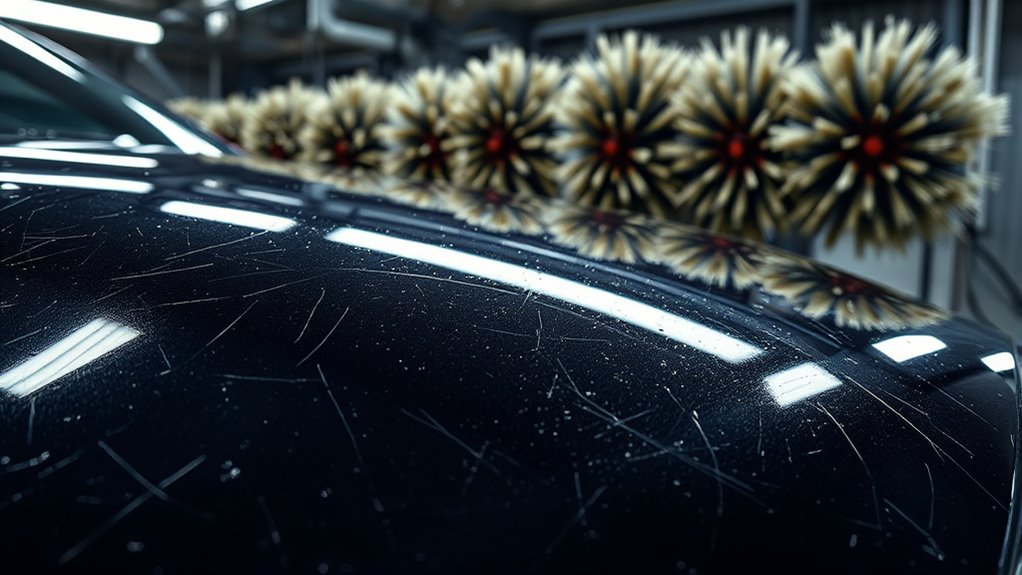
Over time, you may also see swirl marks or scratches appear, as the soap can compromise the clear coat. Long term effects can be more severe; if the paint protection is weakened, you might notice rust forming, especially in areas prone to moisture.
Moreover, the lack of proper cleaning agents can lead to a build-up of grime that’s harder to remove. If you see these signs, it’s essential to address them quickly to prevent further damage to your vehicle’s exterior.
What Should You Do If You’ve Already Used Dish Soap on Your Car?
If you’ve accidentally used dish soap on your car, don’t panic. There are steps you can take to fix the situation and protect your paint.
First, rinse your car thoroughly with plenty of water to wash away any leftover soap. This will help prevent more damage to the paint.
Next, wash your car with a proper car soap instead of dish soap. This will help restore the protective layer on your vehicle.
To protect your vehicle’s finish, always use a proper car soap after accidentally using dish soap.
After that, inspect your car for any signs of fading or dullness. If you see any issues, try applying a polish or wax.
Finally, if the surface feels rough, consider using a clay bar treatment. It can remove contaminants stuck on the paint and leave it smooth again.
Frequently Asked Questions
Can Dish Soap Affect My Car’s Interior Surfaces?
Yes, dish soap can affect your car’s interior surfaces. It’s harsh and can strip away essential interior protection, leading to surface damage over time.
When you use it on fabrics or plastics, you risk fading and cracking. Instead, opt for products specifically designed for automotive interiors; they clean effectively without compromising your vehicle’s aesthetic and protective qualities.
Protect your investment by choosing the right cleaning solutions for your car’s interior.
Will Using Dish Soap Void My Car’s Warranty?
Using dish soap to wash your car won’t automatically void your warranty, but it can lead to potential issues. Warranty policies often specify that improper care could affect coverage.
Soap residues left on the surface might damage the paint or clear coat, which could be considered negligence. Always check your warranty terms and consider using a dedicated car wash soap to avoid any complications down the line.
Your car deserves the best care!
How Often Should I Wash My Car?
You should wash your car every two weeks if you want it to look like a shiny spaceship rather than a neglected potato. Sure, you could wait until it’s covered in dirt, but why? Regular car wash frequency keeps that paint gleaming.
If you’re feeling adventurous, try soap alternatives like specialized car wash soap. Your vehicle will thank you, and you might even avoid that awkward “what happened?” conversation with your neighbors!
Is It Safe to Use Dish Soap on Motorcycle Helmets?
No, it’s not safe to use dish soap on motorcycle helmets. It can strip away protective coatings and damage the materials.
For proper helmet care, opt for mild soap alternatives specifically designed for helmets or a mix of water and vinegar. These options clean without compromising safety.
Always follow the manufacturer’s recommendations for cleaning and maintenance to guarantee your helmet stays in top condition and protects you effectively.
Can I Use Dish Soap on Other Vehicles Like Boats?
Imagine you’re sailing through clear waters, feeling the sun on your face. Regarding boat cleaning, you might think dish soap’s a quick fix. But hold on!
It can strip protective wax and damage surfaces, just like a storm can wear down a sturdy vessel. For proper vehicle maintenance, stick to products designed for boats.
Your watercraft deserves the best care, ensuring smooth sailing for years to come.
Conclusion
In the end, using dish soap on your car is like wearing shoes in a swimming pool; it’s just not right. It strips away essential protection and can leave your paint vulnerable to damage.
Instead, opt for a car-specific soap that’s gentle yet effective. Treat your vehicle with care, and it’ll shine like a star on a clear night.
If you’ve used dish soap, don’t panic. Just follow up with a thorough rinse and a protective wax to keep your car looking great. Using dish soap to wash your car isn’t the best choice, but you can fix it with the right steps.