7 Simple Steps to Wash Car Seats Effectively
Keeping your car seats clean can feel like an endless battle. Whether you’re dealing with spills, dirt, or stubborn stains, many people struggle to find an effective way to get their seats looking fresh again. You’re not alone in wanting a simple, reliable method to keep your car seats spotless and well-maintained.
To wash your car seats effectively, gather your cleaning supplies first, including a vacuum and appropriate cleaners. Next, vacuum the seats thoroughly, targeting seams and edges.
Tackle any stains gently before cleaning. Choose the right solution for your seat material—fabric or leather. Wash the seats carefully, then rinse and dry them completely.
Finally, maintain a regular cleaning schedule to preserve their condition. You’ll uncover more tips to keep your car seats looking great.
Key Takeaways
- Gather necessary cleaning supplies, including brushes, cloths, vacuum, and appropriate cleaners for fabric or leather seats.
- Vacuum seats thoroughly, using the right attachments for each material to remove dust and debris.
- Identify and treat stains promptly by blotting and applying a suitable cleaning solution.
- Wash seats with the correct cleaner, making sure to follow recommended frequencies based on the material type.
- Establish a regular maintenance schedule to inspect, clean, and protect your car seats from damage and stains.
Gather Your Cleaning Supplies
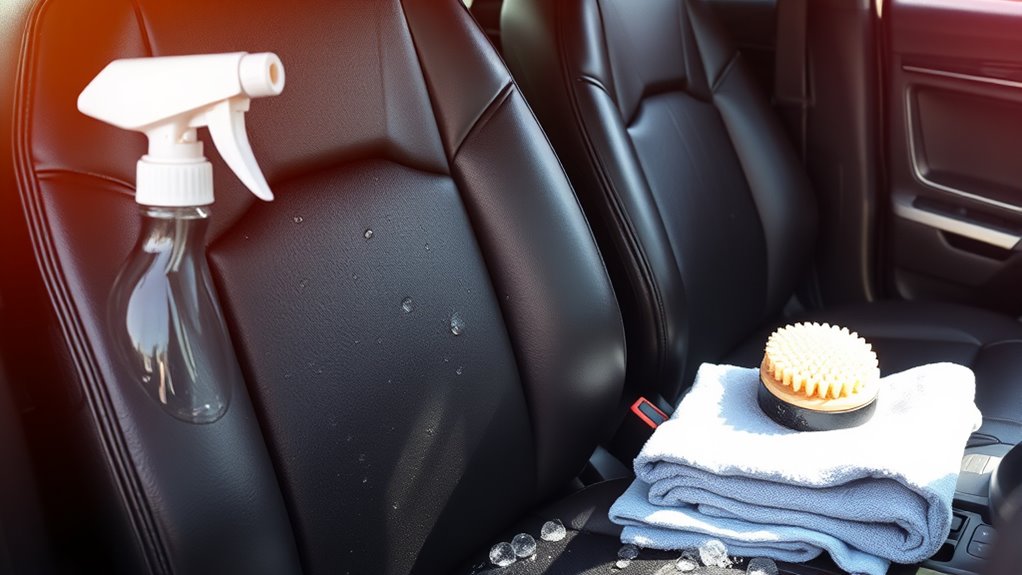
Before you immerse yourself in washing your car seats, you’ll need to gather a few essential cleaning supplies. Start with the right cleaning tools tailored to the fabric types of your seats. If your seats are fabric, grab a soft-bristle brush, microfiber cloths, and a vacuum cleaner.
For leather seats, a gentle leather cleaner and a soft cloth are key to avoid damage. Don’t forget a bucket and warm water for mixing your cleaning solution. A mild detergent works well for most fabric types, while a specialized leather conditioner will help maintain leather’s softness.
You might also want a spray bottle for easy distribution of your cleaning solution. Check your owner’s manual for any specific recommendations, ensuring you won’t harm your seats. With these supplies ready, you’re set to tackle the cleaning process effectively!
Vacuum the Car Seats Thoroughly
Now that you have your cleaning supplies ready, it’s time to tackle the vacuuming. This step is essential for removing dirt and debris before you immerse yourself in deeper cleaning.
Start by selecting the right vacuum attachment based on your upholstery types. For fabric seats, use a brush attachment, while leather seats benefit from a crevice tool.
Here’s a quick reference table for effective vacuum techniques:
| Upholstery Type | Best Attachment | Technique |
|---|---|---|
| Fabric | Brush Attachment | Use long, sweeping motions |
| Leather | Crevice Tool | Focus on seams and edges |
| Suede | Upholstery Brush | Gently vacuum to avoid damage |
| Vinyl | Hard Floor Nozzle | Quick passes for debris |
| Carpeted Seats | Carpet Brush | Go against the nap |
Tackle Stains Before Cleaning
To effectively clean your car seats, tackling any stains first is essential. Start by identifying the type of stain you’re dealing with, as different stains require different stain removal techniques. For example, a coffee spill might need a different approach than a grease mark. Blot the stain gently with a clean cloth, avoiding any rubbing that could spread it.
Next, try a mild detergent mixed with water or a specialized stain remover suitable for your seat material. Apply it using a soft cloth, and let it sit for a few minutes to penetrate the stain.
Once you’ve treated the stains, consider fabric protection tips to prevent future issues. A fabric protector can help repel spills and stains, making your cleaning routine much easier down the line. By addressing stains before the overall cleaning, you’ll achieve a more effective and satisfying result for your car seats.
Select the Best Cleaning Solution for Your Seat Material
Choosing the right cleaning solution for your car seats can make a significant difference in maintaining their appearance and longevity. Start by identifying your upholstery materials; fabric types and leather require different care.
For fabric seats, opt for a mild upholstery cleaner specifically designed for stain removal. Always check the label for compatibility with your fabric type. If you have leather seats, prioritize leather care products that nourish while cleaning.
Consider durability factors when selecting products; avoid harsh chemicals that can degrade materials over time. Follow the care instructions provided with your chosen cleaner for best results.
For ongoing maintenance, incorporate seat protection solutions to prevent future stains. Product recommendations often include pH-balanced cleaners that won’t harm your seats.
Wash Your Car Seats Properly
Start by vacuuming your car seats thoroughly to remove dust, dirt, and debris. This initial step is essential for effective upholstery care.
Next, select a cleaning solution that matches your fabric types. For fabric seats, use a gentle upholstery cleaner, while leather requires conditioning products for proper seat protection.
| Fabric Type | Recommended Cleaner | Cleaning Frequency |
|---|---|---|
| Fabric | Upholstery Cleaner | Monthly |
| Leather | Leather Conditioner | Every 3 months |
| Synthetic | All-Purpose Cleaner | Bi-monthly |
| Suede | Suede Brush and Eraser | As needed |
| Vinyl | Mild Soap and Water | Monthly |
Rinse and Dry Your Car Seats Effectively
After applying your chosen cleaning solution, it’s important to rinse and dry your car seats properly to avoid any residue or damage. Start by using rinse techniques that involve a damp microfiber cloth or a spray bottle filled with clean water. Gently wipe down the seats, ensuring you remove all cleaning agents.
If you have fabric seats, you might want to use a wet/dry vacuum to extract excess moisture effectively. Once you’ve rinsed, it’s time to focus on drying methods. Open your car windows for ventilation, and if it’s sunny outside, park in a sunny spot to speed up the drying process.
For quicker results, use a fan or a hairdryer on a low setting to help evaporate any remaining moisture. Remember, thorough drying helps prevent mold and mildew, keeping your seats fresh and clean for longer.
Regularly Maintain Your Car Seats
To keep your car seats looking fresh, it’s important to set up a regular cleaning schedule. Pick the right cleaning products and make sure you stick with them to get the best results. Also, don’t forget to check your seats for any damage now and then—catching issues early can save you a lot of trouble later!
Establish a Cleaning Schedule
Establishing a cleaning schedule not only helps keep your car seats looking fresh, but it also prolongs their lifespan. Start by determining a cleaning frequency that suits your lifestyle. If you often transport kids or pets, aim for bi-weekly cleanings; otherwise, monthly might suffice.
Consistency is key, so mark it on your calendar or set reminders on your phone. In addition to regular cleaning, consider using seat protection like covers or sprays to fend off stains and spills. These simple steps can save you time and effort in the long run.
Use Appropriate Cleaning Products
Keeping your car seats clean involves more than just a regular schedule. Using the right cleaning products makes a significant difference. Choosing products that suit your upholstery types and are safe for your vehicle can improve cleanliness and longevity. Here’s what you should consider:
Use eco-friendly cleaners to minimize environmental impact. Select products specifically designed for your upholstery type, whether fabric, leather, or vinyl. Avoid harsh chemicals that can damage or discolor your seats. And always test any new cleaner on a small, inconspicuous area first.
Inspect for Damage Regularly
Although you might focus on cleaning, regularly inspecting your car seats for damage is just as crucial. Keep an eye out for signs of seat wear, like fraying or discoloration.
Different fabric types react differently to sun exposure, so check for fading regularly. Moisture control is imperative; damp seats can lead to mold and stains.
Consider your cleaning frequency. More frequent cleanings can help you spot issues early. If you have pets, make sure you’re protecting your upholstery from scratches and fur.
Familiarize yourself with common stain types and their repair techniques. By prioritizing damage prevention alongside cleaning, you’ll extend the life of your car seats and maintain their appearance.
Regular checks can save you from costly repairs down the line.
Frequently Asked Questions
How Often Should I Wash My Car Seats?
You should wash your car seats every three to six months, depending on how often you use your car and how much dirt they’re exposed to. Regular cleaning helps keep the fabric in good shape and extends the life of your seats.
If you have pets or kids, you might want to clean them more often to avoid stains and odors. Always check your manufacturer’s guidelines for specific recommendations. Plus, use the right cleaning methods to make sure your seats stay looking great.
Can I Use Household Cleaners on Car Seats?
You can use some household cleaners on car seats, but be cautious. For fabric types like cloth, mild solutions work well, while leather requires specific products to avoid damage.
Always test a small area first to verify the cleaner doesn’t harm the material. Consider cleaning alternatives like vinegar or baking soda for tougher stains.
Just remember, it’s essential to follow up with a damp cloth to remove any residue afterward.
What if My Car Seats Have a Strong Odor?
If your car seats have a strong odor, you can tackle it with some effective odor removal techniques. Start by vacuuming the seats thoroughly, then sprinkle baking soda over them. Let it sit for a few hours to absorb the smell before vacuuming it up.
For a fabric refresh, mix equal parts water and vinegar in a spray bottle, lightly mist the seats, and wipe them down. This should help eliminate those stubborn odors!
Are There Specific Tools for Cleaning Car Seats?
Regarding cleaning car seats, think of your tools as your trusty sidekicks in a heroic battle against dirt. You’ll need a vacuum to banish crumbs, microfiber cloths for gentle scrubbing, and specific cleaning solutions tailored to your seat materials, be it fabric or leather.
Don’t forget a soft brush for those stubborn stains. With these tools in hand, you’re ready to restore your car’s interior to its former glory!
How Can I Prevent Future Stains on My Car Seats?
To prevent future stains on your car seats, consider using a high-quality fabric protection spray. This creates a barrier against spills and dirt.
Regularly vacuum your seats to remove debris before it embeds. You should also place seat covers or mats in high-traffic areas.
If you notice a spill, clean it immediately; don’t let it sit. By taking these steps, you’ll improve stain prevention and keep your car looking great.
Conclusion
By following these seven simple steps, you’ll keep your car seats fresh, clean, and inviting. Gather your supplies, vacuum thoroughly, tackle those pesky stains, choose the right cleaner, wash with care, rinse and dry effectively, and maintain regularly.
Each step builds on the last, ensuring your car’s interior shines while extending its life. So, get started today and enjoy the satisfaction of a spotless ride each time you hit the road.
With these tips, washing car seats effectively becomes easy and rewarding.