What Are the Bad Effects of Auto Car Washes on Your Car?
If you’re like many car owners, you want to keep your vehicle looking spotless without causing any damage.
But finding the right way to wash your car can be tricky. You’re not alone in worrying about how certain cleaning methods might actually harm your paint or finish over time.
Auto car washes can seriously harm your vehicle. Brushes can scratch your paint and strip off protective wax layers, while harsh soaps may dull finishes over time.
Hard water leaves mineral deposits that can corrode metal parts. Plus, automated washes often neglect your undercarriage, allowing salt and mud to cause rust.
Frequent washes can accelerate wear and tear. Want to protect your car better? Let’s investigate some safer alternatives and tips for maintaining that shiny finish.
Key Takeaways
- Harsh chemicals used in auto car washes can damage your car’s paint and harm local ecosystems.
- Mechanical brushes may scratch the paint surface and accumulate dirt, which leads to increased damage over time.
- Strong surfactants in car wash soaps can strip protective wax. This reduces paint protection and increases UV exposure.
- Hard water can leave mineral deposits that dull your car’s appearance and contribute to corrosion.
- Automated washes often neglect undercarriage cleaning, which can cause rust from salt and moisture buildup.
Why You Should Care About Auto Car Washes
When you think about keeping your car in top shape, you might not realize how auto car washes can impact its long-term health. While they seem like a quick solution, the environmental impact can be significant. Many washes use harsh chemicals that can harm local ecosystems, making you reconsider your choice.
Additionally, cost considerations come into play. Frequent visits to car washes can add up, particularly if you’re opting for premium services. Over time, the financial burden can outweigh the benefits of a clean car. Plus, the wear and tear from certain washing methods can lead to costly repairs down the road.
Taking the time to investigate alternatives, like hand washing or using eco-friendly products, might not just save you money, but also protect your vehicle’s finish and the environment. Being aware of these factors can help you make informed choices that benefit both your car and the planet.
How Brushes Can Scratch Your Paint
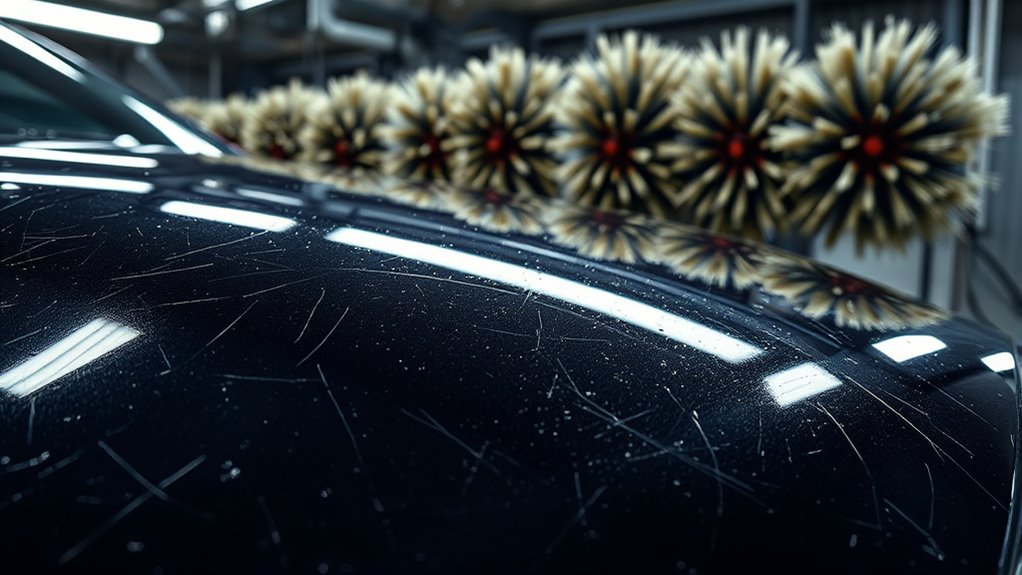
Auto car washes often rely on mechanical brushes that can do more harm than good for your vehicle’s paint. These brushes, depending on their types, can leave unsightly scratches that diminish your car’s appearance. Here’s what to weigh for scratch prevention:
Auto car washes with mechanical brushes can scratch your vehicle’s paint, diminishing its appearance. Consider alternatives for better protection.
- Material Matters: Some brush types, like those made from hard nylon, can be especially abrasive on your vehicle’s surface.
- Dirt and Grime: If brushes aren’t regularly cleaned, they can trap dirt, which creates a perfect storm for scratch damage during wash cycles.
- Pressure Applied: The force exerted by brushes can vary, with high pressure potentially causing more harm than gentle contact.
Choosing a touchless car wash or using soft microfiber cloths can help preserve your paint’s integrity. By being aware of these factors, you can better protect your vehicle from scratches and maintain its shine.
Are the Soaps Used in Car Washes Safe?
When you use an auto car wash, you might wonder if the soaps they use are safe for your vehicle. After all, the chemical makeup and pH levels of these soaps can really affect your car’s finish.
Plus, any leftover residue might cause some problems down the road. So, let’s take a closer look at how these factors can impact your car’s longevity and appearance.
Chemical Composition Concerns
Although you might rely on car washes for convenience, the chemicals in the soaps they use can raise concerns about your vehicle’s safety. Many of these soaps can lead to unwanted chemical reactions that harm your car’s finish, leaving behind product residues that can be difficult to remove.
Here are some key points to reflect on:
- Harsh Surfactants: Many car wash soaps contain strong surfactants that can strip away protective wax or sealants.
- Acidic Components: Some formulations may be too acidic, causing damage to the paint over time.
- Environmental Impact: Chemical runoff can harm local waterways and ecosystems, raising ethical concerns about your wash choice.
Being informed helps you make better decisions for your car’s care!
pH Levels Impact
The safety of car wash soaps largely hinges on their pH levels, which can greatly affect your vehicle’s paint and protective coatings. Maintaining a proper pH balance is essential; acidic solutions can strip wax and damage the finish, while overly alkaline effects can lead to surface reactions that dull your car’s shine.
Furthermore, the hardness of the water used can intensify these chemical interactions, making it important to choose the right cleaning agents. Frequent washes with harsh soaps can accelerate wear and tear on your car’s surfaces.
Ultimately, being mindful of the pH levels in car wash soaps helps preserve your vehicle’s aesthetic and prolongs the life of its protective coatings.
Residue and Rinsing Issues
While you might expect a car wash to leave your vehicle spotless, residue from soaps can create significant issues. If the rinsing efficiency isn’t up to par, you could face several problems:
- Residue Buildup: Over time, leftover soap can accumulate, dulling your car’s finish and attracting dirt.
- Paint Damage: Certain harsh chemicals can degrade your paint, leading to costly repairs.
- Water Spots: Ineffective rinsing can leave mineral deposits on your vehicle, resulting in unsightly stains.
To keep your car looking its best, it’s essential to choose a car wash that prioritizes proper rinsing techniques and uses gentle, biodegradable soaps. Regular maintenance and awareness can help you avoid these common pitfalls.
How Hard Water Affects Your Car
When you wash your car with hard water, you might not realize the potential damage lurking beneath the surface. Hard water contains high levels of minerals, like calcium and magnesium, which can lead to unsightly mineral deposits on your vehicle. These deposits form a stubborn film that can dull your car’s paint and make it look less appealing.
Over time, those mineral deposits can become increasingly difficult to remove. This risks scratches and swirls during future washes. Not only that, but if left untreated, they can lead to corrosion on metal parts, compromising your car’s integrity.
It’s essential to rinse your vehicle thoroughly with soft water after using hard water for washing. Investing in a water softener or using a high-quality car wash soap designed to combat hard water effects can help protect your investment. Taking these steps keeps your car looking its best and prolongs its lifespan.
What Automated Washes Miss: Undercarriage Damage
Automated car washes often overlook one critical area: your vehicle’s undercarriage. This neglect can lead to serious issues down the line, as dirt, salt, and grime accumulate. Over time, this increases the risk of corrosion. Here’s what you should know:
- Salt Buildup: In winter, road salt can cling to your undercarriage. If it’s not washed away, it promotes rust.
- Mud and Debris: Accumulated mud traps moisture, which leads to prolonged corrosion and structural damage.
- Limited Cleaning: Most automatic washes focus on the exterior. This leaves your undercarriage vulnerable and neglected.
How Car Washes Can Wipe Out Sealants and Wax
Many car owners may not realize that frequent visits to automated car washes can greatly diminish the effectiveness of sealants and wax on their vehicles. The harsh chemicals and high-pressure water used in these washes can strip away protective layers, leading to reduced sealant longevity.
Over time, this can leave your paint vulnerable to scratches, fading, and environmental damage.
Frequent automated washes can expose your paint to scratches, fading, and environmental harm over time.
If you rely heavily on automated washes, consider switching to wax alternatives that offer better durability against these aggressive methods. Some products are designed specifically to withstand harsher cleaning techniques, providing longer-lasting protection for your car’s finish.
Additionally, hand washing with gentle, pH-balanced soaps can help maintain the integrity of your sealants and wax. By being mindful of your cleaning methods, you can keep your vehicle looking its best while ensuring its protective layers remain intact.
How Frequent Washes Lead to Wear
Frequent auto car washes might be doing more harm than good to your vehicle’s protective layers. You see, each wash comes with the risk of brush damage. Plus, it tends to strip away the wax that shields your paint.
On top of that, those regular washes can leave tiny scratches on the surface. So, if you’re not careful, all this can add up and lead to some expensive repairs down the line. It’s definitely something to keep in mind when you’re deciding how often to wash your car.
Brush Damage Risks
While you might think that regular car washes keep your vehicle looking pristine, the reality is that brush damage can accumulate over time. Different brush types in automatic car washes can scratch and dull your paint, leading to costly repairs. Frequent washes might seem beneficial, but they can wear down your vehicle’s finish.
Consider these points:
- Soft vs. Hard Brushes: Soft brushes may be gentler, but hard brushes can cause micro-scratches.
- Debris Accumulation: Brushes can trap dirt and debris, which can further harm your car’s surface.
- Inadequate Maintenance Practices: Poorly maintained brushes can inflict more damage than you realize.
Being aware of these risks helps you make informed decisions about your car’s care.
Wax Strip Removal
Regular car washes can strip away protective wax layers, leaving your vehicle vulnerable to environmental damage. Each wash chips away at the wax durability, making it less effective in shielding your paint.
As you clean your car frequently, you might notice a decline in its paint protection. This wear compromises your vehicle’s finish, exposing it to harmful UV rays, bird droppings, and other contaminants that can cause fading and damage.
You may think that a clean car is worth it, but consider how often you wash your vehicle. Limiting washes can help maintain that essential wax layer, ensuring your car stays protected and looking great for longer.
Paint Surface Scratches
The constant removal of wax not only reduces your car’s protective barrier but also increases the risk of paint surface scratches. Frequent auto car washes can wear down your paint protection, making your vehicle more susceptible to damage. Here are three key factors to evaluate:
- Brush Materials: Many automatic washes use brushes that can harbor dirt and debris, leading to scratches during the wash process.
- Chemical Cleaners: Harsh chemicals may strip away protective coatings, exposing your paint to potential harm.
- Frequency of Washes: Washing your car too often can lead to cumulative wear on the paint, diminishing scratch prevention efforts.
To maintain your car’s finish, think about hand washing or using touchless options that prioritize paint protection.
Choosing the Right Car Wash: What to Look For
When you’re selecting a car wash, it’s essential to evaluate several factors that can impact your vehicle’s appearance and longevity. Start by considering the type of wash. A hand car wash often provides a more thorough clean, as professionals can spot and address problem areas. Plus, it reduces the risk of scratches that automated systems might cause.
If you prefer convenience, touchless options are a great choice. These washes use high-pressure water and specialized detergents to clean your vehicle without any physical contact, minimizing the chance of damage to your paint.
Additionally, look for car washes with good reviews. Customer feedback can give you insight into the quality of service and the care taken with vehicles. Finally, check if they use high-quality cleaning products, as these can make a significant difference in maintaining your car’s finish. Choosing wisely will keep your vehicle looking its best for years to come.
DIY Alternatives: Keeping Your Car Clean Safely
If you want to keep your car clean without the risks that come with automatic washes, doing it yourself is a fantastic option. You can grab some eco-friendly solutions, round up the essential tools, and learn some hand wash techniques that really work.
Eco-Friendly Cleaning Solutions
While many car washes rely on harsh chemicals, you can keep your vehicle spotless with eco-friendly DIY cleaning solutions. By using natural ingredients, you not only protect your car’s finish but also adopt sustainable practices.
Here are three effective eco-friendly products you can whip up at home:
- Vinegar and Water: Mix equal parts to create a great glass cleaner.
- Baking Soda Paste: Combine baking soda with water to tackle tough stains on upholstery.
- Castile Soap: Dilute this biodegradable soap in water for a gentle all-purpose wash.
These alternatives are not only safer for your vehicle but also kinder to the environment. You’ll feel good knowing you’re using sustainable practices while keeping your car in top shape!
Essential Tools For DIY
Using eco-friendly cleaning solutions is a great start, but having the right tools can make your DIY car cleaning even more effective. First, grab a microfiber wash mitt; it’s gentle on the paint and traps dirt well.
Next, a quality bucket with a grit guard helps prevent scratches by keeping contaminants at the bottom. You’ll also need a soft brush for wheels and tires, ensuring you tackle grime effectively without damaging surfaces.
Don’t forget a vacuum for the interior and a good glass cleaner for streak-free windows. Finally, a drying towel or squeegee will prevent water spots.
With these essential tools and proper DIY techniques, you can keep your car looking pristine while avoiding the downsides of commercial washes.
Effective Hand Wash Techniques
When you choose to hand wash your car, you’re not just cleaning; you’re protecting its finish and extending its life. The hand wash benefits are numerous, and using effective detailing techniques can make all the difference. Here are three essential steps to follow:
- Use Two Buckets: One for soapy water and another for rinsing your sponge. This minimizes dirt transfer and prevents scratches.
- Microfiber Cloths: Opt for high-quality microfiber cloths to avoid leaving lint or causing swirl marks on your paint.
- Drying Technique: Use a soft drying towel and pat your car dry instead of dragging it across the surface. This reduces the risk of scratches.
Pro Tips for Protecting Your Car During Washes
To keep your car looking its best during washes, it’s essential to follow some simple yet effective tips. First, consider your wash frequency; washing too often can strip protective coatings and lead to damage. Aim for a balanced schedule, washing your car every two to four weeks, depending on exposure to dirt and grime.
Before a wash, inspect your vehicle for scratches or chips that might worsen. If you’ve applied protective coatings, like ceramic or wax, make sure they’re reapplied as needed to maintain your car’s shine and protection.
When choosing a wash, opt for touchless systems or soft cloth options to minimize scratches. Always dry your car thoroughly afterward to prevent water spots. Finally, consider using a sealant for extra protection between washes. By following these tips, you’ll keep your car looking great while safeguarding its finish.
Frequently Asked Questions
Do Automatic Car Washes Damage Car Interiors?
Yes, automatic car washes can damage your car’s interior. The cleaning chemicals used might not just affect the exterior; they can also seep inside, leading to potential discoloration or wear on upholstery and surfaces.
If you frequently use these washes, you might notice increased interior wear over time. To protect your investment, consider hand washing or using gentle, eco-friendly products designed for interior care. It’ll help maintain that fresh look inside your vehicle.
How Often Should I Wash My Car Manually?
You should wash your car manually every two to four weeks, depending on your driving conditions. Manual washing offers benefits like a thorough clean and attention to detail, helping to maintain your car’s paint and finish.
Regularly washing your car can prevent dirt buildup and protect against rust. Combine it with other car maintenance tips, like waxing and interior cleaning, to keep your vehicle looking its best and lasting longer.
What Are the Best Tools for DIY Car Washes?
If you want your car to shine brighter than a supernova, you’ll need some key tools! Start with car wash essentials like a high-quality microfiber wash mitt and a sturdy bucket. Don’t forget a good car shampoo!
For detailing, grab a soft brush, clay bar, and a microfiber towel to finish. These tools will help you achieve that showroom shine while protecting your vehicle’s finish. Your ride deserves nothing less!
Can Wax Coatings Be Reapplied After Automated Washes?
Yes, you can reapply wax coatings after automated washes. Wax durability often depends on how frequently you wash your car.
If you wash your car a lot, you might need to reapply wax more often to keep that protective layer intact. Automated washes can strip away wax, so try to use a gentle wash method whenever possible.
Regularly checking your car’s finish will help you know when it’s time to refresh the wax for the best protection.
Are Touchless Car Washes Safer Than Traditional Ones?
Yes, touchless car washes are generally safer than traditional ones. They use high-pressure water and cleaning solutions instead of brushes, which means you won’t have to worry about brush wear scratching your paint.
However, be cautious; some touchless washes can leave water spots if not rinsed properly. Regular maintenance and drying your car after a wash can help you avoid these issues and keep your vehicle looking great.
Conclusion
In the grand journey of car ownership, think of auto car washes as a double-edged sword. While they promise convenience, they can also leave your vehicle vulnerable to scratches, harsh chemicals, and missed spots.
To keep your ride shining like a diamond, choose your wash wisely and consider DIY options. Treat your car with the care it deserves, and it’ll reward you with a longer, more brilliant life on the road.
Remember, understanding the bad effects of auto car washes can help you protect your investment better.