How Can You Safely Wash Your Car With a Pressure Washer?
Washing your car can be a real hassle, especially when you want it spotless without spending hours scrubbing. You’re not alone—many people struggle with finding the right way to get that professional clean at home.
Using a pressure washer can make the job faster and easier, but it can be tricky to know how to do it safely without damaging your paint or delicate parts.
To safely wash your car with a pressure washer, start by choosing the right model and a 25-degree nozzle to balance pressure and coverage. Use a pressure setting between 1,200 to 1,500 PSI and test it on a small area first.
Keep a safe distance of 2-3 feet from the surface and avoid sensitive parts like the engine bay. After washing, dry thoroughly and consider waxing for added protection.
There’s more to uncover about techniques and tools to improve your wash.
Key Takeaways
- Choose a pressure washer with a 25-degree nozzle to balance cleaning power and safety. Avoid zero-degree nozzles because they can scratch surfaces.
- Start with a pressure setting of 1,200 to 1,500 PSI. Test on an inconspicuous area first to make sure it’s safe for your car’s finish.
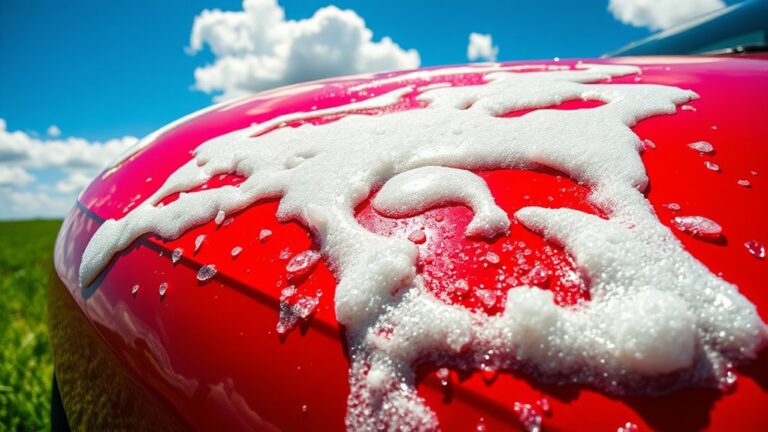
- Use a foam cannon with car-specific soap for even application. Let the foam sit for a few minutes before rinsing.
- Keep a distance of 2-3 feet from the car while rinsing. Be careful to avoid sensitive areas like the engine bay and decals.
- Always wear protective gear and dry the car thoroughly to prevent water spots. Also, consider waxing every three to six months for extra protection.
How to Use a Pressure Washer for Car Washing
Using a pressure washer to clean your car can be efficient and effective when done correctly. Start by selecting the right nozzle type. Typically, a 25-degree nozzle works well for car washing. This angle strikes a balance between cleaning power and safety, minimizing the risk of damaging your paint.
Next, attach a foam cannon to your pressure washer. This tool allows you to apply soap evenly across your vehicle, breaking down dirt and grime effectively. Fill the foam cannon with a car-safe soap and adjust the settings for ideal foam coverage.
Once you’ve foamed the car, let it sit for a few minutes. Then rinse off the soap using a broader spray pattern from your chosen nozzle. Remember to maintain a safe distance, about 2-3 feet, from the car’s surface to prevent any damage. Following these steps guarantees a thorough and safe wash for your vehicle.
Choosing the Right Pressure Washer for Car Washing
When selecting a pressure washer for car washing, it’s essential to take into account the machine’s specifications to guarantee you get the best results. You’ll typically choose between electric vs gas models. Electric pressure washers are quieter, lighter, and easier to handle, making them ideal for home use.
However, gas models deliver more power, which can be beneficial for tougher jobs but may be overkill for regular car washing. Next, consider nozzle types. A 25-degree nozzle is often the best choice for cars, as it provides a good balance of pressure and coverage without risking damage to the paint.
Avoid using zero-degree nozzles, as they can cause scratches. Ultimately, your choice should depend on your needs and comfort level with the equipment, ensuring you maintain your vehicle’s appearance without compromising its finish.
What Pressure Settings Should You Use?
To achieve the best results while washing your car, you need to pay attention to the pressure settings of your pressure washer. Start with a lower setting, ideally between 1,200 to 1,500 PSI. This range is gentle enough to avoid damaging your paint while effectively removing dirt and grime.
You’ll also want to choose the right nozzle types. A 25-degree nozzle is often perfect for washing cars, as it provides a fan spray that covers a larger area without being too harsh. Avoid using zero-degree nozzles, as they produce a concentrated stream that can strip paint and damage surfaces.
Always test the pressure on a small, inconspicuous area first. Adjust the pressure settings and nozzle types based on your car’s needs, ensuring a safe and thorough clean. Remember, patience pays off in relation to washing your vehicle safely!
Must-Have Tools for Safe Car Washing
A sturdy bucket is essential for safe car washing, ensuring you have the right tools at your fingertips. You’ll want to fill it with high-quality car wash soap that’s gentle yet effective. This helps prevent scratches while providing a thorough clean.
Next, invest in pressure washer accessories, like foam cannons or nozzles designed specifically for car washing. These accessories deliver soap evenly and create a thick foam that clings to your vehicle, lifting dirt without harsh scrubbing.
Don’t forget microfiber towels for drying; they’re soft and absorbent, reducing the risk of swirl marks. A soft-bristle brush can also be handy for tires and wheels, making sure you get into those tough spots without damaging the finish.
With these must-have tools, you’re set for a safe and effective car wash that keeps your vehicle looking pristine!
Pre-Washing Steps for a Thorough Clean
Before you start washing your car, it’s essential to prep the surface properly. Begin by removing any loose debris, like leaves or dirt, to prevent scratches during washing.
Next, apply a foam pre-soak to the entire car. This step is vital for effective dirt removal, as the foam clings to grime, breaking it down before the pressure washer does its work. Leave the foam on for a few minutes to allow it to penetrate stubborn spots.
While it’s sitting, you can grab a soft brush to gently scrub areas with heavy dirt buildup. Rinse off the foam thoroughly with water, ensuring no residue is left behind.
This pre-washing process sets the stage for a more effective cleaning, making your pressure washing much more efficient and safe for your vehicle’s surface.
Best Techniques for Pressure Washing Your Car
Five key techniques can improve your pressure washing game and guarantee your car looks its best. First, start from the top and work your way down to prevent dirt from flowing over clean areas. Next, maintain a distance of at least 2 feet to avoid damaging the paint.
Use a wide spray nozzle for a gentle wash and switch to a narrower one for stubborn spots.
To help you remember these pressure washer tips, check out the table below:
| Technique | Description | Benefit |
|---|---|---|
| Top-Down Approach | Wash from the roof down | Prevents dirt runoff |
| Maintain Distance | Keep 2 feet away | Protects paint integrity |
| Wide Nozzle Use | Start with a wider spray | Gentle cleaning |
Lastly, always use car-specific soap as part of your car care essentials for the best results. Happy washing!
Areas to Avoid When Pressure Washing
While pressure washing can rejuvenate your car’s appearance, certain areas require extra caution to avoid damage. Avoid spraying directly at sensitive spots like the engine bay, undercarriage, and any seals or gaskets. High-pressure water can force its way into these areas, causing costly issues.
When it comes to spray angles, always keep the nozzle at a safe distance and at a low angle, ideally around 30 degrees, to minimize risk. Be mindful of nozzle types too; a 40-degree nozzle is generally safer for delicate surfaces compared to a 0-degree nozzle, which can cause dents or scratches.
Also, steer clear of paint edges and areas with decals, as they are more susceptible to damage from the pressure. By being cautious and selecting the right equipment, you can effectively clean your car while preserving its integrity.
Protecting Sensitive Car Parts During Washing
To guarantee your car remains in top shape during washing, it’s crucial to protect sensitive parts that can easily be damaged. Using a pressure washer can be effective, but certain components need extra care. Here are some tips to keep in mind:
Cover sensitive components: Use protective coverings for areas like the engine bay and electrical connections.
Avoid direct spray: Steer clear of hitting delicate parts like mirrors and sensors directly with high pressure.
Choose the right nozzle: Opt for a wide-angle nozzle to distribute water more gently.
Test pressure: Start with a lower pressure setting and adjust as needed to prevent damage.
Post-Wash Care: Drying and Waxing Your Car
After washing your car, it’s really important to dry it properly so you don’t end up with those annoying water spots. You’ll also want to think about waxing—it’s great because it adds a protective layer and makes your car shine even more. So, let’s take a closer look at some effective drying techniques and why regular waxing matters.
Effective Drying Techniques
Once you’ve finished washing your car, drying it effectively is essential to prevent water spots and maintain that showroom shine. Use these drying techniques to achieve quick drying:
- Microfiber Towels: They’re super absorbent and gentle on your paint.
- Drying Racks: Set your towels on a drying rack to keep them clean and ready for next time.
- Air Drying: Utilize air drying as a complement, especially for hard-to-reach areas.
- Drying Products: Consider using specialized drying products to improve the process.
Remember these drying tips: start from the top and work your way down. And don’t forget to check for any missed spots. A thorough drying routine will eliminate water spots and keep your car looking pristine!
Importance Of Waxing
While drying your car is essential, applying wax afterward is just as important for protecting your paint and enhancing its shine. Waxing provides several benefits, including UV protection, which helps prevent fading and oxidation.
It also creates a barrier against dirt and grime, making future washes easier. To maximize these benefits, you should aim for a waxing frequency of every three to six months, depending on your environment and driving conditions.
If you often park outside or live in a harsh climate, you might want to wax more frequently. By incorporating waxing into your post-wash routine, you not only maintain your car’s appearance but also prolong its lifespan, ensuring it looks great for years to come.
Common Mistakes to Avoid When Pressure Washing
When you’re pressure washing your car, it’s easy to overlook essential details that can lead to mistakes. Avoiding common mishaps is vital for both your vehicle’s safety and your own. Here are some pitfalls to steer clear of:
Using the wrong nozzle: Always choose the appropriate nozzle to prevent damage.
Getting too close: Maintain a safe distance to avoid stripping paint or damaging surfaces.
Ignoring pressure washer safety: Always wear protective gear and follow the manufacturer’s guidelines.
Washing in direct sunlight: This can cause soap to dry too quickly, leaving spots.
Frequently Asked Questions
Can I Use a Pressure Washer on All Car Surfaces?
You can use a pressure washer on many car surfaces, but you need to be careful. For painted surfaces, keep the nozzle at least 18 inches away to avoid damage.
Avoid using high pressure on delicate areas like headlights or plastic trims. Use pressure washer tips that offer a wider spray pattern for sensitive spots.
Always check your car’s manual to guarantee you’re not harming any surface types. Safety and care are key!
What Type of Detergent Is Safe for Pressure Washing My Car?
When washing your car, nearly 80% of car owners overlook the importance of using the right detergent. You should always choose a detergent specifically designed for vehicles, as these are safe for your paint and finish.
Look for eco-friendly options that break down quickly and minimize environmental impact. Popular detergent types include biodegradable car wash soaps and pH-balanced formulas. These choices guarantee your car gets clean without harming the planet.
Should I Wash My Car in Direct Sunlight?
No, you shouldn’t wash your car in direct sunlight. The heat can cause soap to dry too quickly, leaving spots and streaks.
Instead, choose a cooler time of day, like early morning or late afternoon. This is one of the key car detailing tips you’ll want to remember.
Also, consider weather conditions; cloudy days can be ideal for a thorough wash without damaging your paint. Keep your car looking great with these simple adjustments!
How Often Should I Pressure Wash My Car?
You should pressure wash your car every four to six weeks, depending on your environment. Frequent washing helps remove dirt, grime, and harmful contaminants, protecting your car’s paint and finish.
If you drive in harsh conditions, like near saltwater or dirt roads, consider washing more often. Regular maintenance not only keeps your vehicle looking great but also extends its lifespan, making those frequency guidelines worth following for maximum washing benefits.
Can Pressure Washing Damage My Car’s Paint?
Pressure washing can definitely lead to a paint disaster if you’re not careful. It’s important to keep your pressure settings low, around 1,500 to 2,000 psi, which is often safe.
If you’ve got paint protection on your car, it helps safeguard against damage, but always maintain a good distance from the surface. Remember, you don’t want to throw caution to the wind; being mindful can keep your car’s finish looking sharp!
Conclusion
To sum up, washing your car with a pressure washer can be safe and effective if you follow the right steps. Did you know that using high-pressure water can reduce the time it takes to clean your car by up to 50%?
Just remember to choose the right settings and protect sensitive areas to avoid damage. With a little care and attention, you’ll keep your car looking great and extend its lifespan.
Happy washing your car with a pressure washer!