10 Essential Steps to Safely Wash Your Car Motor
If you’ve ever tried cleaning your car motor, you know it can feel overwhelming. You want to keep your engine spotless without risking damage, but figuring out how isn’t always straightforward. You’re not alone—many people struggle with safely washing their car motor and worry about causing electrical problems or missing hidden dirt.
To safely wash your car motor, start by gathering supplies like degreaser, a soft brush, and microfiber cloths. Disconnect the battery to avoid electrical issues.
Remove loose debris and cover sensitive parts. Apply the degreaser evenly and let it sit before rinsing thoroughly with warm water. After rinsing, dry your engine to prevent damage, then reconnect everything and check for leaks.
Maintaining a clean engine boosts performance and longevity. There are more tips to keep it running smoothly.
Key Takeaways
- Gather necessary supplies like degreaser, soft brushes, microfiber cloths, and safety gear before starting the engine cleaning process.
- Disconnect the battery to prevent electrical issues and protect vehicle systems during cleaning.
- Remove loose debris and cover sensitive components to avoid moisture damage and corrosion.
- Apply degreaser evenly, allowing it to sit before scrubbing and rinsing to ensure thorough cleaning.
- Reconnect all components and perform a final inspection to ensure everything is secure and functioning properly.
Gather Your Supplies for Engine Washing
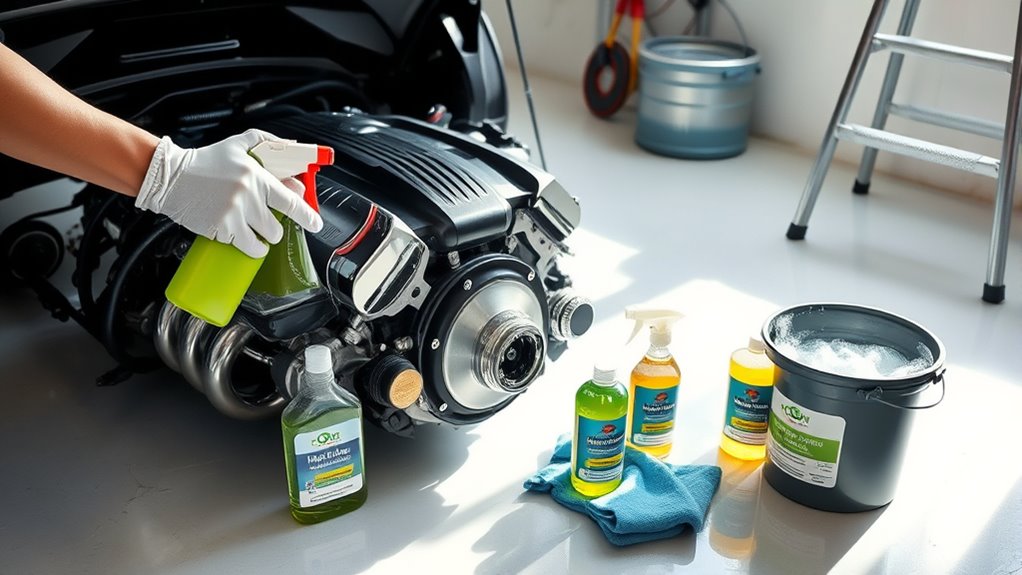
Before you plunge into washing your engine, it’s crucial to gather all the necessary supplies. Start by collecting a degreaser formulated for engine care, as this will help break down grease and grime effectively.
Gather essential supplies, including a suitable degreaser, to effectively tackle grease and grime before washing your engine.
You’ll also need a soft brush or sponge to scrub away stubborn residue without damaging any components. Don’t forget microfiber cloths for drying and wiping down surfaces afterward.
A bucket of water and a hose with a spray nozzle will be important for rinsing off the degreaser. If you’ve got compressed air, it can be handy for reaching tight spots and blowing out debris.
Finally, wear gloves and safety glasses to protect yourself during the process.
Following these maintenance tips will guarantee your engine not only looks great but runs more efficiently. With everything ready, you’re set to give your engine the care it deserves!
Ensure Safety First: Disconnect the Battery
Before you start washing your engine, it’s really important to disconnect the battery first. This helps prevent any electrical mishaps that could happen while you’re cleaning.
All you need is a wrench to safely remove the negative terminal. Just a simple step like this can make a big difference in keeping you safe throughout the whole process.
Importance of Disconnecting Battery
Disconnecting the battery is an essential step in car motor washing that you shouldn’t overlook. This simple action guarantees your safety and protects your vehicle from potential damage.
By disconnecting the battery, you greatly reduce the risk of electrical hazards, such as short circuits or sparks, which can occur when water comes into contact with electrical components. It’s vital for battery safety, especially when using high-pressure water or cleaning agents that could compromise electrical systems.
Taking this precaution not only safeguards you but also prolongs the lifespan of your vehicle’s electrical components. So, before you start washing, remember to disconnect the battery to keep everything running smoothly and safely.
Tools Needed for Safety
To guarantee your safety while washing your car motor, gather a few essential tools. Start with safety goggles to protect your eyes from splashes and debris. Wear rubber gloves to keep your hands safe from harmful chemicals.
Slip on protective coveralls to shield your skin from grime and potential spills. Non-slip shoes are a must to prevent accidents on wet surfaces.
A ventilation fan is vital to ensure fresh air circulates, reducing inhalation risks from fumes. Keep a fire extinguisher nearby, just in case of emergencies.
Finally, have a first aid kit on hand to address any minor injuries promptly. With these tools, you’ll create a safer environment for your car washing task.
Remove Loose Debris Before Covering Sensitive Components
Removing loose debris is essential before you cover any sensitive components of your car’s motor. Debris can trap moisture and dirt, potentially leading to corrosion or damage. Start by inspecting the engine bay for leaves, dirt, and grime.
Removing loose debris from your engine bay is vital to prevent corrosion and damage to sensitive components.
Use a soft brush or compressed air to gently remove any loose particles. This debris removal not only keeps your engine clean but also improves engine protection during washing.
Make sure to pay special attention to areas around electrical connectors and sensors. These components are particularly vulnerable and can be damaged if debris gets trapped.
After you’ve cleared away the debris, you can safely cover sensitive areas, ensuring they’re protected from water and cleaning solutions. Taking these steps will help maintain your engine’s integrity and longevity, making your washing process more effective.
Selecting Effective Engine Cleaning Products
After clearing away debris and protecting sensitive components, it’s time to choose the right engine cleaning products. You’ll want to look for degreasers specifically designed for automotive engines. These products typically offer strong cleaning power without being overly harsh on sensitive materials.
When selecting, consider product comparisons to see which brands have the best reviews for effectiveness. Look for those that highlight safe engine cleaning techniques, as some products may be more suitable for specific types of grime or engine materials.
Don’t forget to check for biodegradable options if you’re concerned about environmental impact. Also, consider whether you prefer a spray or a liquid concentrate. Both have their merits depending on your cleaning approach. By choosing the right products, you’ll guarantee a thorough clean while protecting your engine’s essential components.
Apply Engine Degreaser Evenly for Best Results
To get the best results when cleaning your engine, start by choosing the right degreaser that suits your needs. Once you’ve picked it out, go ahead and apply the product evenly and thoroughly across all surfaces. Make sure you don’t miss any spots!
Then, just let it sit for the recommended time so it can break down all that grime effectively. This way, you’ll get a much cleaner engine without any extra hassle.
Choose the Right Degreaser
How do you choose the right degreaser for your engine? Start by considering the types of degreasers available, such as solvent-based, water-based, or biodegradable options. Each type has its pros and cons, but biodegradable degreasers often align better with environmental considerations.
They’re less harmful to you and the planet, making them a smart choice. Look for products specifically designed for automotive use, as they’ll effectively break down grease and grime without damaging sensitive components.
Always check the label for safety instructions and compatibility with your engine materials. By selecting the right degreaser, you guarantee a cleaner motor while being mindful of your environmental impact. Keep these factors in mind to make an informed decision.
Apply Evenly and Thoroughly
Apply the engine degreaser evenly and thoroughly to guarantee ideal cleaning. This method not only improves the effectiveness but also fits into your overall engine cleaning techniques and preventive maintenance routine.
Start from the top and work your way down, ensuring every nook and cranny gets attention.
| Step | Action | Purpose |
|---|---|---|
| 1 | Spray Degreaser | Loosens grime |
| 2 | Use a Brush | Scrubs stubborn spots |
| 3 | Rinse with Water | Wash away residue |
| 4 | Dry Thoroughly | Prevents water spots |
Allow Time to Dwell
While waiting for the degreaser to work its magic, it’s essential to give it enough time to dwell on the engine surfaces. This step is vital for achieving peak engine cleanliness. Letting the degreaser sit allows it to break down grease and grime effectively, ensuring a thorough clean. Aim for about 10 to 15 minutes, but check the product instructions for specific guidance.
During this time, you can review some maintenance tips or prepare your rinsing gear. Make sure not to let the degreaser dry out, as this can hinder its effectiveness. Once the dwell time is over, rinse thoroughly to remove all residues.
Following this process will help keep your engine in prime shape for years to come.
Gently Scrub to Lift Stains Before Rinsing
Gently scrubbing your car’s motor is essential for lifting stubborn stains before rinsing. Start by choosing a soft-bristle brush or a microfiber cloth to avoid damaging sensitive components.
Using effective engine cleaning techniques, apply a degreaser to the stained areas and let it sit for a few moments to break down the grime. Then, using your brush or cloth, work in small circular motions to lift the stains gently.
For best results, follow these stain removal tips: focus on one section at a time, ensuring you don’t miss any hard-to-reach spots. If necessary, reapply the degreaser to more stubborn stains and give it another scrub.
This method not only keeps the motor clean but also helps maintain its performance. Remember, a gentle touch goes a long way in preserving the integrity of your engine while effectively removing unwanted stains.
Rinse Thoroughly to Wash Away Residue
After scrubbing, it’s really important to rinse thoroughly to get rid of any leftover soap or grime. You’ll want to use the right tools and techniques to make sure every spot is clean. When you give it a proper rinse, you’re not just washing away residue—you’re also helping protect your motor and boost its performance.
Importance of Rinsing
Rinsing your car’s motor thoroughly is vital because it helps wash away any residue that can build up over time. This residue can hurt engine performance if you don’t address it.
Regular rinsing improves your motor’s longevity and efficiency, so try to make it part of your cleaning routine.
Here’s a quick look at the benefits of rinsing:
| Benefit | Description |
|---|---|
| Improved Engine Performance | Reduces buildup that can hinder efficiency. |
| Prolonged Motor Life | Prevents corrosion and damage over time. |
| Easier Future Cleanings | Less buildup means simpler maintenance tasks. |
| Ideal Cleaning Frequency | Guarantees effectiveness with regular rinsing. |
Adding these rinsing practices into your cleaning schedule will keep your car running smoothly.
Techniques for Effective Rinsing
To effectively rinse your car’s motor, you’ll want to focus on a few key techniques that guarantee thorough cleaning. Start by using warm water; it helps dissolve any stubborn grime or soap residue. A temperature around 100°F is ideal.
Next, choose the right nozzle type for your hose or pressure washer. A fan or wide spray nozzle is great for rinsing larger areas, while a concentrated nozzle works wonders on tight spots. Move systematically, ensuring you cover all surfaces without missing any nooks.
Don’t rush. Allow the water to flow freely, washing away all residue. Finally, pay extra attention to areas around components and crevices, ensuring everything’s clean and debris-free. This will set the stage for a well-maintained motor.
Tools for Thorough Rinsing
Having the right tools makes all the difference when rinsing your car’s motor thoroughly. Start with a high-pressure water hose or a pressure washer; these tools help you achieve the necessary water pressure to effectively remove dirt and grime. Consider using a nozzle with adjustable settings, allowing you to switch between gentle and strong sprays as needed.
For those hard-to-reach areas, a soft-bristle brush can aid in loosening stubborn residue before rinsing. Don’t forget a bucket to collect any excess runoff, ensuring you’re not creating a mess. Finally, a microfiber cloth is perfect for drying spots after rinsing. With these tools and effective rinsing techniques, your motor will be clean and free of harmful residue in no time.
Dry Your Engine to Prevent Water Damage
While washing your car engine can improve its appearance, drying it properly is essential to prevent water damage. After rinsing, use effective engine drying techniques to eliminate any lingering moisture. Start with a microfiber towel, gently wiping down surfaces, especially around sensitive components.
Pay extra attention to crevices where water can hide. You can also use compressed air to blow out water from hard-to-reach areas, ensuring thorough moisture removal. If you’ve got a leaf blower, that’s another excellent tool for drying your engine quickly.
Consider applying moisture prevention methods, like a protective spray designed for engine components. This can help repel water and keep your engine looking pristine.
Reconnect Everything and Do a Quick Final Check
Before you start your engine again, make certain you’ve reconnected everything properly, as this step is essential for its smooth operation. Check all electrical connections, hoses, and clamps to verify they’re secure. A loose connection can hinder engine performance, leading to potential issues down the road.
Next, take a moment to inspect for any tools or materials you might’ve left behind. It’s easy to forget something small, but those items can cause significant damage if they interfere with engine parts.
Finally, do a quick visual check of your engine. Look for any signs of leaks or loose components. Following these maintenance tips can help extend your engine’s lifespan and guarantee everything runs efficiently. Once you’re satisfied everything’s in place, you can confidently start your engine, knowing you’ve taken the necessary steps for a safe and effective wash.
Enjoy the Benefits of a Clean Engine
A clean engine can greatly boost your vehicle’s performance and longevity. When you maintain engine cleanliness, you reduce the buildup of dirt and grime that can hinder proper function. This leads to better airflow, efficient fuel combustion, and ultimately, improved engine performance enhancement.
Regular cleaning not only helps to identify potential issues early on but also guarantees that all components run smoothly. You’ll notice better fuel efficiency, which saves you money in the long run. Plus, a well-maintained engine can elevate your vehicle’s resale value should you decide to sell it later.
The engine cleanliness benefits extend beyond performance; they also contribute to a safer driving experience. A clean engine is less likely to overheat, reducing the risk of breakdowns. So, invest time in keeping your engine clean, and enjoy all the advantages it brings to your vehicle.
Frequently Asked Questions
How Often Should I Wash My Car’s Engine?
You should wash your car’s engine about once or twice a year, depending on your engine cleaning frequency and how dirty it gets. If you drive in dusty or off-road conditions, consider doing it more often.
Integrate this into your maintenance schedule to keep everything running smoothly. Regular cleaning helps prevent buildup, making it easier to spot leaks or issues before they become serious problems.
Can I Use Household Cleaners for Engine Washing?
You shouldn’t use household cleaners for engine washing. While some might think they work just as well, they can leave residues that damage your engine.
Instead, opt for engine cleaning products specifically designed for this task. Look for biodegradable cleaners, as they’re eco-friendly and effective at removing grime without harming your engine or the environment.
What Should I Do if Water Gets Into Sensitive Parts?
If water gets into sensitive parts, act quickly to minimize water damage. First, disconnect the battery to prevent electrical issues. Then, carefully dry exposed components with a cloth or compressed air.
Inspect for moisture in connectors and sensors. If you find any, use electrical contact cleaner to guarantee engine protection. Finally, let the engine dry completely before starting it to avoid further complications.
Regular checks can help prevent future issues.
Is It Safe to Wash a Hot Engine?
It’s not safe to wash a hot engine. High engine temperatures can cause thermal shock, potentially damaging components. Before you start, let the engine cool down to a safe temperature.
Always take safety precautions, like wearing gloves and eye protection, to avoid injury. If you must clean it while warm, use a gentle spray and avoid sensitive areas. Remember, keeping your engine cool is key to preventing damage while washing.
How Can I Avoid Damaging Electrical Components While Cleaning?
Cleaning your engine’s like maneuvering through a minefield; you’ve gotta be careful. To avoid damaging electrical components, wear protective gear and use gentle cleaning techniques.
Cover sensitive areas with plastic bags to shield them from water and debris. Opt for a low-pressure rinse and avoid direct sprays on electrical connectors.
Use a soft brush and mild cleaner to work around delicate parts, ensuring you keep everything safe and sound while you clean.
Conclusion
You’ve now got a clean engine that’ll not only look great but also run more efficiently. By following these steps, you’ve covered all your bases and kept potential issues at bay.
Remember, a little regular maintenance goes a long way. Don’t let your engine be the weak link in your vehicle.
So, roll up your sleeves and enjoy the fruits of your labor. A tidy engine can really help you hit the road with confidence when you safely wash your car motor!