7 Essential Steps for Safely Washing Your Car With Pressure
Washing your car with a pressure washer can feel tricky if you’re worried about damaging the paint or missing spots. You’re not alone—many people struggle to find the right balance between power and care when cleaning their vehicles.
Luckily, with the right tools and techniques, you can achieve a spotless finish without the stress.
To wash your car safely with a pressure washer, start by choosing the right model, ideally electric for home use. Select a suitable nozzle; 25 or 40 degrees works best.
Rinse off heavy dirt, then use a biodegradable detergent. Master your technique by starting at the top and keeping a steady distance.
Finally, rinse thoroughly and dry your car properly to avoid spots. If you want more tips to perfect your wash, there’s plenty more to investigate!
Key Takeaways
- Choose the right pressure washer; electric for light tasks and gas for tougher jobs to protect your vehicle’s paint.
- Select a 25-degree or 40-degree nozzle for car washing to minimize the risk of scratches.
- Rinse off heavy dirt before washing and work in a shaded area to avoid soap spots.
- Use a biodegradable detergent specifically designed for pressure washers to prevent vehicle damage.
- Maintain a consistent distance and proper angle while washing to ensure effective cleaning without streaks.
How to Choose the Best Pressure Washer for Your Car
When choosing the best pressure washer for your car, consider three key factors: power, versatility, and ease of use. First, look at the pressure washer types available. Electric models are usually lighter and quieter, making them ideal for home use, while gas-powered options offer more power for tougher jobs.
Next, think about the versatility of the machine. You’ll want one that can handle not just car washing but also other tasks like cleaning driveways or patios. Finally, research reputable pressure washer brands that offer reliable customer service and warranties.
Brands like Karcher and Sun Joe provide solid options for car enthusiasts. Choosing the right pressure washer guarantees you can maintain your vehicle’s appearance without damaging the paint. By considering these factors, you’ll find a pressure washer that meets your needs effectively.
How to Select the Right Nozzle for Safe Pressure Washing
Selecting the right nozzle for safe pressure washing is essential for protecting your car’s paint and guaranteeing an effective clean. You’ll find various nozzle types designed for different tasks. For washing your car, a 25-degree or 40-degree nozzle is ideal. These provide a wider spray pattern that gently cleans without damaging the paint.
The spray patterns matter too. A wider pattern disperses the pressure, which minimizes the risk of scratches, while a narrow pattern concentrates the force, potentially harming the finish. Always start with a wider spray and adjust as needed. If you’re tackling tough spots, you can switch to a more focused spray but do so cautiously.
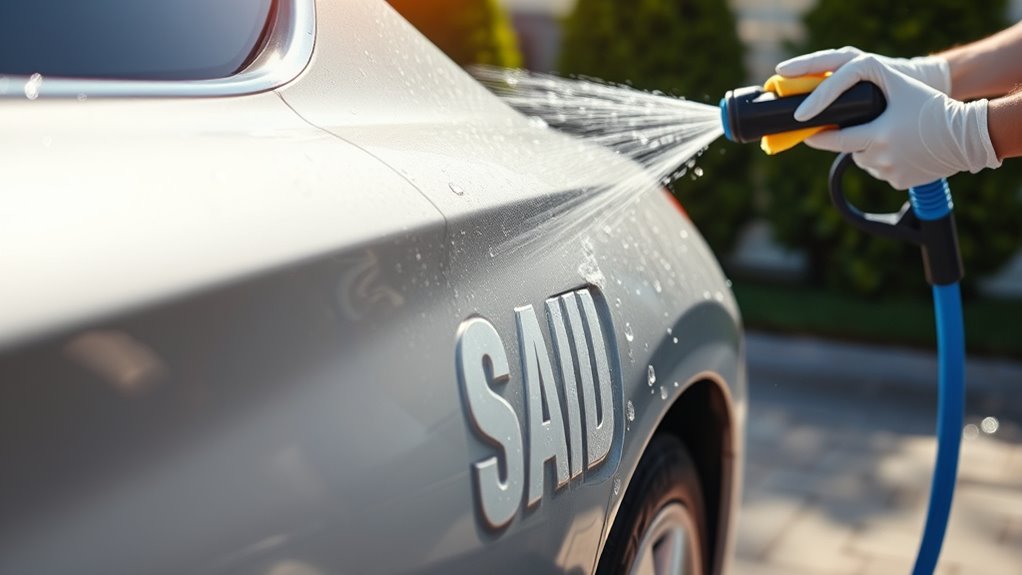
Don’t forget to hold the nozzle at least two feet away from the surface to avoid any mishaps. By choosing the right nozzle and spray pattern, you can guarantee a safe and effective car wash every time.
Prepare Your Car and Area for a Thorough Wash
Before you start washing your car, it’s crucial to prepare both the vehicle and the surrounding area. Check your car condition first; if it’s covered in heavy dirt or grime, you might want to rinse it off with water before using a pressure washer. This step helps prevent scratches during the wash.
Next, choose a suitable location. Make sure you’re in a shaded area to avoid soap drying too quickly, which can leave spots. Consider your wash frequency, too; if you wash your car regularly, you can get away with lighter cleaning methods.
Gather all your supplies, including a pressure washer, hose, and any other tools you’ll need. Finally, verify the area is clear of obstacles and that the ground can handle the water runoff. This preparation will make your washing experience smoother and more effective.
Use the Right Detergent for Pressure Washer Cleaning
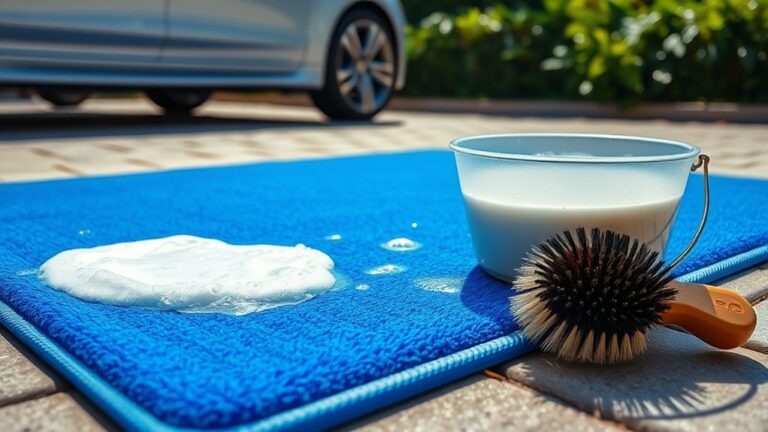
Choosing the right detergent for your pressure washer is essential for achieving a spotless finish. Start by selecting a detergent specifically designed for pressure washing because these products are formulated to work effectively with high-pressure water.
Pay attention to the detergent concentration. A higher concentration can help tackle tougher grime but may require dilution for safe use.
If you’re concerned about the environment, consider eco-friendly options that are biodegradable and non-toxic. These detergents clean effectively without harming your car’s paint or the surrounding area.
Always read the label for instructions on dilution and application to avoid damage to your vehicle.
Master Proper Techniques for Pressure Washing
While mastering proper techniques for pressure washing, it’s essential to start with the right stance and angle. Stand firmly with your feet shoulder-width apart and keep your knees slightly bent. This will give you stability as you maneuver the pressure washer.
Adjust your pressure settings according to the surface you’re cleaning; lower settings work best for delicate areas, while higher settings can tackle tougher grime.
Next, focus on your wash patterns. Begin from the top of the car and work your way down, using overlapping strokes to guarantee even cleaning. Move the nozzle in a sweeping motion, maintaining a consistent distance from the surface.
This will prevent damage and streaks. Always keep the wand at a slight angle to avoid blasting water directly at the car’s finish. By following these techniques, you’ll effectively clean your car while minimizing the risk of damage.
Rinse and Dry Your Car Properly
Once you’ve finished pressure washing, rinsing your car thoroughly is essential to remove any soap residue and dirt. Follow these steps to guarantee a proper rinse and dry:
- Use Warm Water: Opt for water that’s warm but not scalding. This helps dissolve any remaining soap.
- Rinse from Top to Bottom: Start at the roof and work your way down to make sure every surface gets attention.
- Check for Residue: Look at areas like wheel wells and door jams for leftover soap. Give them extra rinsing if needed.
- Choose the Right Drying Technique: Use a microfiber towel or chamois to gently dry your car to avoid scratches.
How to Maintain Your Pressure Washer for Car Washing
To keep your pressure washer in top shape for car washing, regular maintenance is key. Neglecting this can lead to common pressure issues that affect performance. Follow these steps to guarantee your washer runs smoothly:
| Maintenance Task | Frequency |
|---|---|
| Check oil levels | Every 20 uses |
| Inspect hoses | Monthly |
| Clean filters | After each use |
| Replace nozzles | Every season |
| Test pressure output | Monthly |
Make certain to store your pressure washer in a dry area to prevent rust. Regularly inspect the hoses for cracks or leaks, and replace them as needed. Cleaning the filters helps maintain peak performance.
Frequently Asked Questions
Can Pressure Washing Damage My Car’s Paint?
Yes, pressure washing can damage your car’s paint if you’re not careful. If you use too high a pressure setting, it can strip away paint protection and lead to scratches.
Always start with a lower setting and maintain a safe distance to avoid direct contact with the surface. Regularly check your equipment to guarantee it’s suitable for automotive use, and your car’s finish will stay safe and shiny.
How Often Should I Pressure Wash My Car?
You should pressure wash your car every two to four weeks, depending on your driving habits and local conditions. Notably, cars exposed to harsh environments can accumulate dirt faster, up to 40% more grime!
When you do wash it, remember to adjust your pressure settings to avoid damaging the paint. Keeping a regular car washing frequency not only maintains its appearance but also preserves the value, so stay on top of it!
Is It Safe to Pressure Wash Undercarriages?
Yes, it’s safe to pressure wash your car’s undercarriage, but you need to be careful with the pressure settings. Use a lower pressure to prevent damage to sensitive components. Aim for around 1500-2000 PSI, making sure you focus on dirt and grime without risking any parts.
Regular undercarriage cleaning helps prevent rust and corrosion, so make it part of your routine maintenance. Always check for any loose items before you start!
What Should I Do if I Accidentally Scratch My Car?
If you’ve accidentally scratched your car, it’s like a small storm cloud on a sunny day. First, assess the damage. If it’s surface-level, grab some touch-up paint that matches your car’s color.
Clean the area, then apply the paint carefully to blend it in. For deeper scratches, consider a scratch repair kit that can help restore your car’s shine. Don’t forget to let it dry completely before showing off your ride again!
Can I Pressure Wash My Car in Direct Sunlight?
You can pressure wash your car in direct sunlight, but it’s not the best idea. The heat can cause soap to dry too quickly, leaving streaks.
If you choose to do it, use the best pressure settings, around 1,500 to 2,000 PSI, and select a wider nozzle for even coverage. Try to wash your car during cooler parts of the day, like early morning or late afternoon, for a better finish.
Conclusion
By following these seven essential steps, you’ll keep your car looking sharp without the risk of damage. Just like a knight wouldn’t charge into battle without armor, don’t plunge into pressure washing without the right tools and techniques.
Remember to choose your equipment wisely, prep your car, and use the right detergent. With a little care, you’ll have your ride sparkling like new.
And when you stick to these tips, you’ll set yourself up for safe, effective washes every time, making pressure washing your car a breeze.