10 Essential Steps to Do Your Own Car Wash at Home
If you’ve ever tried washing your car at home, you know it can be tricky to get that professional shine without spending a fortune on car washes. You’re not alone—many people struggle with finding the right products and techniques to make their car look spotless.
The good news is, with the right tools and a little know-how, you can achieve impressive results right in your driveway.
Washing your car at home can save you money and keep it looking great. Start by gathering quality cleaning products and tools, then choose a suitable, shaded spot.
Rinse the car to remove loose dirt, clean the wheels and tires thoroughly, and lather up with car soap using a soft wash mitt.
After drying with microfiber towels, apply wax for extra shine. Don’t forget to clean your windows and mirrors for clear visibility.
Want to know more about these steps?
Key Takeaways
- Gather essential cleaning supplies, including high-quality products, microfiber cloths, and a vacuum for effective car maintenance.
- Rinse the car thoroughly from top to bottom, removing dirt and debris before washing.
- Use pH-balanced soap and a soft wash mitt, rinsing thoroughly to avoid streaks or residue.
- Clean windows and mirrors with a dedicated microfiber cloth and glass polish for clarity and visibility.
- Regularly maintain cleanliness by wiping surfaces and adjusting your cleaning routine for seasonal conditions.
What You Need for a DIY Car Wash
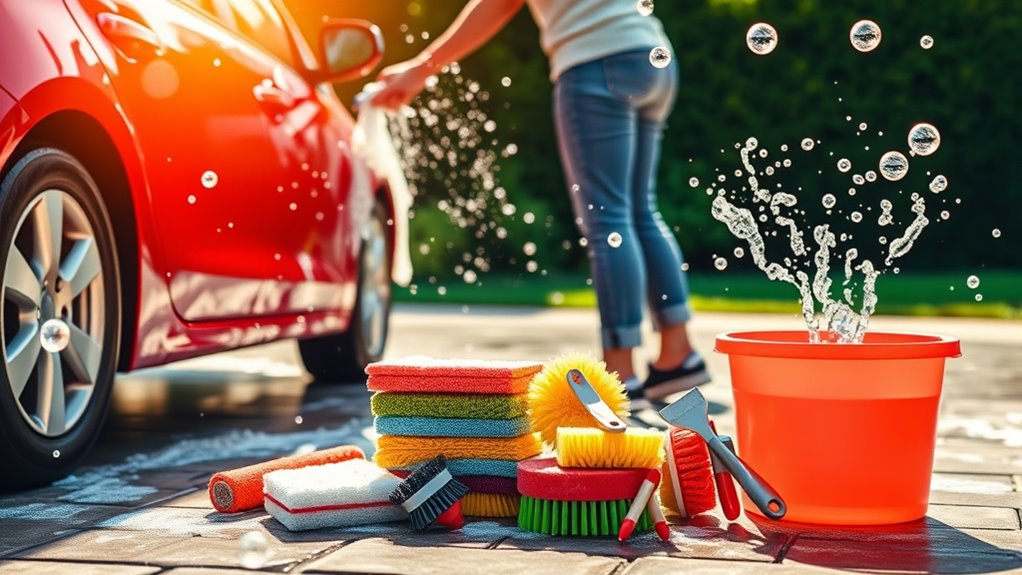
To tackle a DIY car wash, you’ll need a few essential items. Start with high-quality cleaning products designed for vehicles. These help remove dirt and grime without damaging the paint. You’ll also want microfiber cloths and sponges, as they’re gentle on surfaces and effective at picking up debris.
Next, consider your washing techniques. It’s best to wash from the top down, making certain dirt flows downward and doesn’t scratch your car. Don’t forget a bucket and a hose, but be mindful of water conservation. Using a foam cannon or a spray nozzle can help minimize water usage while still getting the job done right.
Lastly, having a vacuum handy is great for interior car maintenance. Cleaning the inside is just as important as the outside, so make sure you’ve got the tools to tackle both. With these essentials, you’ll be well on your way to a sparkling clean car!
Choose the Best Spot for Washing Your Car
Finding the right spot to wash your car is essential for getting the best results. Look for an area that avoids direct sunlight to prevent soap from drying too quickly. Otherwise, it can leave spots on your car.
Also, think about drainage. Washing your car in a sloped area helps water flow away and stops puddles from forming. Here’s a quick guide to help you pick the best spot:
| Factors | Considerations |
|---|---|
| Sunlight Exposure | Choose shaded areas or early/late hours |
| Drainage Concerns | Opt for a slight slope to avoid standing water |
| Surface | Look for a clean, hard surface to prevent mud splashes |
Rinse the Car to Remove Loose Dirt
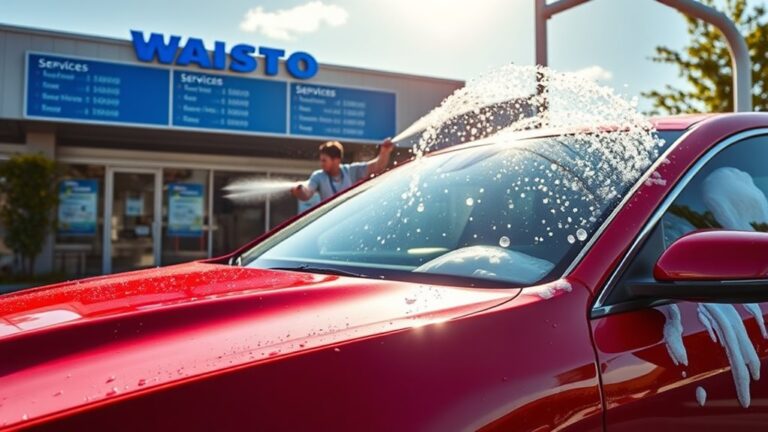
Start by thoroughly rinsing your car to loosen and remove any surface dirt and debris. Before you begin, conduct a quick pre-wash inspection to spot any areas with heavy grime or mud. This will help you focus your efforts where they’re needed most.
Use a hose with a nozzle to control the water flow, and make sure to adjust the water temperature. Warm water can be more effective at loosening dirt. Start at the top of the car and work your way down, ensuring you cover all surfaces, including the sides, hood, and trunk.
Pay special attention to crevices where dirt tends to accumulate. Rinsing your car thoroughly not only makes the washing process easier but also helps protect the paint from scratches. Once you’ve removed the loose dirt, you’re ready to move on to the next step!
Clean the Wheels and Tires Thoroughly
Now that your car’s rinsed, it’s time to tackle those wheels and tires. First, gather your cleaning supplies—you’ll need them ready to go. Use the right technique to get them looking their best. And don’t forget, once you’re done scrubbing, give them a thorough rinse and dry to finish the job!
Gather Necessary Cleaning Supplies
To effectively clean your wheels and tires, gather essential supplies before you begin. Start with a bucket, a wheel brush, and a microfiber cloth. Choose eco-friendly options for your cleaning solution; many brands offer biodegradable products that are tough on grime but gentle on the environment.
You’ll also need a tire cleaner specifically designed to remove built-up dirt and brake dust. Don’t forget a hose or a pressure washer to rinse everything off. Having a separate sponge for the tires helps avoid cross-contamination with your vehicle’s paint.
Use Proper Technique
Cleaning your wheels and tires thoroughly requires a systematic approach. Start by spraying them with a dedicated wheel cleaner to break down dirt and grime. Use a stiff brush to scrub the tires, reaching into the tread for a spotless finish.
Don’t forget to clean the wheel wells, as they collect a lot of debris. Rinse the wheels with a gentle spray, ensuring you conserve water by avoiding excessive runoff.
For a final touch, apply tire shine for an improved look. Remember, the key is to be thorough without wasting water. By following these steps, your wheels and tires will not only look great but also contribute to a more sustainable cleaning process.
Rinse and Dry Effectively
Once you’ve scrubbed your wheels and tires, it’s time to rinse them off thoroughly. Use a hose with a strong spray to guarantee all dirt and soap are washed away. Remember, the water temperature should be warm but not too hot, as extreme heat can damage your tires.
Consider these tips for an effective rinse and drying technique: start from the top and work your way down. Focus on the inner rim and tread for a complete clean. Use a microfiber towel for drying to avoid scratches. Always dry your tires to prevent water spots and maintain shine.
Lather Up: Apply Car Soap With a Soft Wash Mitt
Lather up your car with a rich foam using a soft wash mitt for the best results. Start by choosing the right soap type; a pH-balanced car soap is ideal. Avoid using dish soap, as it can strip your car’s wax and damage the paint.
Fill a bucket with water and mix in the soap according to the instructions on the label. Dip the soft wash mitt into the soapy water, allowing it to absorb the mixture. Begin at the top of your vehicle and work your way down, using gentle, circular motions.
This technique lifts dirt without scratching the surface. Rinse the mitt frequently to avoid dragging grime across the paint. Pay special attention to areas like the wheels and lower panels, which tend to collect more dirt.
Enjoy the satisfaction of seeing your car shine as you thoroughly clean every inch!
Rinse Off Soap and Check for Residue
After thoroughly washing your car, it’s time to rinse off the soap. This step is essential because any leftover soap can leave streaks or residue. Here’s how to guarantee you get it right:
Use a hose with a spray nozzle for better control. Start at the top and work your way down to avoid missing spots. Utilize different rinse techniques, like the “two-bucket method,” to minimize soap residue. Pay extra attention to areas with stubborn soap types, like wax or foam.
As you rinse, check for any remaining bubbles or spots. If you see any, go over those areas again with your hose, making sure all soap is thoroughly washed away. A clean rinse not only improves your car’s appearance but also protects the paintwork. Take your time here; it’ll pay off in the end!
Dry Your Car With Microfiber Towels
To achieve a spotless finish, use microfiber towels to dry your car effectively. These towels absorb more water than traditional fabrics, making them perfect for drying without leaving streaks or lint behind.
Start by folding your microfiber towel into quarters. This helps you use different sections for various areas of your car. When drying, use gentle, straight-line motions instead of circular ones to prevent scratching the surface.
For best results, focus on one section at a time, making sure you soak up all moisture before moving on. This technique not only speeds up the drying process but also helps prevent water spots from forming.
Wax Your Car for Extra Shine and Protection
Apply a high-quality wax to your car for that coveted shine and added protection against the elements. Choosing the right wax type and mastering application techniques can make all the difference. Here’s what you need to know:
Carnauba Wax offers a deep, warm shine but requires more frequent applications. Synthetic Wax provides longer-lasting protection and is easier to apply. Spray Wax is quick and easy for touch-ups between washes, but less durable. Paste Wax gives a high-gloss finish and lasting protection, though it takes more effort to apply.
Before you start, verify your car’s surface is clean and dry. Use a foam applicator to apply the wax in circular motions, working section by section. Let the wax haze over before buffing it off with a microfiber towel.
This simple step improves your car’s appearance and shields it from dirt, UV rays, and moisture.
Clean Windows and Mirrors for Clear Visibility
Cleaning your car’s windows and mirrors is essential for maintaining clear visibility on the road. Start by gathering your supplies: a microfiber cloth, window cleaner, and a glass polish.
First, spray the window cleaner on the glass, focusing on one section at a time. Use your cloth to wipe in a circular motion, ensuring you cover all areas. Don’t forget to clean the edges and corners, where dirt often hides.
Spray the window cleaner section by section, wiping in circular motions to ensure every corner sparkles.
For mirror polishing, use a separate cloth to avoid cross-contamination. Apply a small amount of glass polish to the cloth and gently buff the mirrors until they shine. This not only improves visibility but also boosts your car’s overall appearance.
Finally, check for streaks by viewing the glass from different angles. If you see any, repeat the window cleaning process until you achieve that crystal-clear look. With clean windows and mirrors, you’ll feel safer and more confident on the road.
Keep Your Car Clean Between Washes for a Lasting Shine
While it might seem challenging to keep your car looking pristine between washes, a few simple habits can help maintain that showroom shine. By focusing on both exterior and interior maintenance, you can extend the time between washes and keep your vehicle fresh.
Wipe Down Surfaces: Use a microfiber cloth to quickly clean dust and fingerprints from the dashboard and doors.
Vacuum Regularly: A quick vacuum helps eliminate debris and keeps your interior looking tidy.
Apply Quick Detailer: This spray can improve shine and protect your paint between washes.
Seasonal Cleaning: Adjust your cleaning routine based on the weather; remove salt in winter and pollen in spring.
Frequently Asked Questions
How Often Should I Wash My Car at Home?
You should aim for a car wash frequency of every two weeks, but it can vary based on seasonal considerations. In winter, road salt and grime can build up, so you might want to wash more often.
During summer, pollen and dust can accumulate, too. If you’re in a rainy area, you might find washing less necessary. Keep an eye on your car’s appearance and adjust as needed to maintain its shine.
Can I Use Dish Soap for Washing My Car?
You might be tempted to use dish soap, but it isn’t the best choice for your car. Picture the vibrant paint glistening in the sun; dish soap can strip protective wax and harm your finish over time.
Instead, consider car soap alternatives specifically designed to clean without damaging. These products gently lift dirt while preserving your car’s luster, ensuring it stays as radiant as the day you drove it off the lot.
What Time of Day Is Best for Washing My Car?
The best time of day to wash your car is early morning or late afternoon. This way, you avoid the sun’s harsh rays, which can lead to streaks and quick drying.
You’ll find ideal water temperature helps too; lukewarm water works best for removing grime without damaging the paint. Using the best washing techniques, like a two-bucket method, guarantees your car stays spotless while minimizing scratches. Enjoy your clean ride!
How Do I Remove Stubborn Stains From My Car’s Exterior?
To remove stubborn stains from your car’s exterior, start by rinsing the area with water. Use a dedicated stain removal product or a mix of baking soda and water for tough spots.
Apply it gently with a soft cloth or sponge, letting it sit for a few minutes. Rinse thoroughly and dry the area afterward.
For best results, consider waxing your car to protect against future stains and improve that clean shine.
Is It Safe to Wash My Car in Direct Sunlight?
Washing your car in direct sunlight is like trying to cook an egg on pavement. It’s not ideal! The heat can cause water to evaporate too quickly, leading to streaks and spots.
If you must wash your car outside, use cooler water and gentle washing techniques to minimize damage. Choose early morning or late afternoon for the best results. This way, your car gets the TLC it deserves without the sun’s harsh glare.
Conclusion
As you step back and admire your freshly washed car, it’s more than just a shiny surface; it’s a reflection of your care and commitment. Each droplet of water glistening in the sunlight symbolizes the effort you put in, transforming the mundane into the extraordinary.
By following these steps, you’ve not only cleaned your vehicle but also adopted the art of maintenance, ensuring it stays a faithful companion on life’s journey. Keep shining, and your car will too, thanks to doing your own car wash at home.