10 Factors That Determine How Often You Should Wash Your Car
Trying to figure out how often you should wash your car can be frustrating. You’re not alone—many people struggle with knowing the right balance between keeping their ride clean without wasting time or effort.
The good news is, understanding the key factors that affect car washing frequency can make this task a lot easier.
How often you wash your car depends on several factors. Your location plays a big role; urban and coastal areas need more frequent washes.
Weather conditions like rain, snow, and humidity can increase dirt buildup. Your driving habits, such as short trips, also matter.
If you plan to sell your car, regular washes help maintain its value. Plus, protectants and waxes can extend the time between washes.
Interested in more details? Keep exploring to learn more!
Key Takeaways
- Urban environments require more frequent washes due to increased grime and pollution accumulation.
- Weather conditions like rain, snow, and humidity can necessitate regular washing to protect your vehicle.
- Driving habits, including frequent short trips and road conditions, influence how quickly dirt builds up.
- Ownership duration affects wash frequency; regular cleaning maintains resale value and protects the vehicle’s appearance.
- The quality of wax and protectants can extend the time between washes, allowing for a more personalized washing schedule.
How Often Should You Wash Your Car Based on Location?
When you consider how often to wash your car, your location plays a crucial role. If you live in an urban area with heavy traffic and pollution, you should wash your car more frequently to combat grime and dirt buildup. In contrast, if you’re in a rural area, you might get away with washing your car less often, especially if you’re not driving on unpaved roads.
Location specifics also matter. For instance, coastal regions expose your vehicle to salt air, which can accelerate corrosion. In these areas, consider washing your car every two weeks. If you’re in a dry, desert climate, you might only need to wash your car once a month unless dust storms occur. Ultimately, keeping an eye on your local environment will help you determine the best car wash frequency to maintain your vehicle’s appearance and longevity.
What Weather Conditions Require More Frequent Car Washing?
While it may seem like a minor detail, weather conditions greatly impact how often you should wash your car. If you live in rainy conditions, you might think the rain cleans your car, but it can actually leave dirt and grime behind.
Snowy weather can also create a mess, as road salt and slush accumulate, leading to corrosion if not washed away promptly. In muddy environments, it’s vital to clean off any residue to avoid damage to your paint.
Snowy conditions can lead to corrosion from road salt, while muddy environments demand prompt cleaning to protect your car’s paint.
High humidity can cause mold and mildew to develop, necessitating more frequent washes. If you’re near the coast, coastal salt from the air can corrode your vehicle’s exterior, so washing often is critical.
Finally, extreme temperatures can cause dirt to stick more firmly, making regular washes important to maintain your car’s appearance and longevity. Keep these conditions in mind to guarantee your vehicle stays in top shape.
How Road Conditions Change How Often You Should Wash Your Car
When you think about washing your car, road conditions really affect how often it needs a scrub. In the city, urban roads tend to expose your vehicle to more grime. On the other hand, if you’re driving through rural routes, you’re likely to get mud and dust buildup.
Plus, seasonal weather plays a part too. Winter salt and summer pollen can create messes that make you want to wash your car more often. So, depending on where you drive and the time of year, your car might need a good wash more frequently than you think.
Urban Vs. Rural Roads
Road conditions greatly influence how often you should wash your car, as urban and rural environments present distinct challenges. In urban areas, you’re likely dealing with urban pollution, including grime, soot, and chemical residues that can accumulate quickly. This buildup not only affects your car’s appearance but can also damage the finish if left unattended. You might find yourself washing your car more frequently to combat these pollutants.
On the other hand, rural roads bring their own issues, primarily rural dust. If you live in a dusty area or frequently drive on unpaved roads, your car can get dirty fast. While you might not face urban pollution, the dust can still make your vehicle look neglected, prompting regular washes to keep it clean.
Seasonal Weather Effects
As seasons change, so do the conditions that affect your car’s cleanliness. During periods of seasonal rainfall, dirt and grime can accumulate quickly, making it essential to wash your car more frequently.
Rain can mix with road debris, leading to stubborn stains that are harder to remove if left untreated. In winter, temperature fluctuations can cause road salt and ice melt to cling to your vehicle, which can damage the paint and undercarriage over time.
Keeping an eye on these factors, you’ll find that adjusting your washing routine based on the weather not only maintains your car’s appearance but also protects its value. So, pay attention to seasonal changes and adjust your washing schedule accordingly.
How Driving Habits Affect Your Car Washing Frequency
Your driving habits play an essential role in determining how often you should wash your car. If you’re driving frequently, especially in urban areas or on dusty roads, your car will accumulate dirt and grime faster. This means you’ll need to wash it more often to maintain both its appearance and its resale value. Regular washing is a key part of car maintenance, helping to protect the paint and prevent rust.
On the other hand, if you mostly drive on well-maintained highways or in less polluted areas, your car might not need washing as often. Keep in mind that frequent short trips can lead to a buildup of grime, too. Assess your driving frequency and the conditions you encounter to set a washing schedule that keeps your car looking great and performing well.
How Car Color Influences Washing Frequency
While you might think all car colors require the same washing frequency, the reality is that color can greatly influence how often you need to clean your vehicle. Darker colors, like black and navy, tend to show dirt and grime more prominently, increasing their visibility and prompting more frequent washes.
On the other hand, lighter colors, such as white or silver, can mask dirt better, potentially allowing you to wait longer between washes.
However, don’t forget about paint maintenance. Regular washing helps protect your car’s finish, regardless of color. If you own a vibrant car, like red or yellow, you might want to wash it more often to keep that color visibility sharp and prevent fading.
Ultimately, your vehicle’s color plays a significant role in how often it needs attention, so choose your washing schedule wisely!
How Seasonal Changes Impact Your Car Washing Frequency
Seasonal changes can really affect how often you need to wash your car. For example, in winter, the salt from roads can build up and damage your paint. Then, when spring rolls around, pollen and debris start clinging to your vehicle. And don’t forget summer— the heat and sun can cause fading if you don’t keep your car clean. So, depending on the season, you might find yourself washing your car more or less often.
Winter Salt Accumulation Effects
As winter approaches, the accumulation of road salt can greatly impact your car’s appearance and longevity. Salt damage isn’t just cosmetic; it can lead to serious corrosion if left unchecked.
To prevent this, you should prioritize regular washes during winter months. Focus on undercarriage cleaning, where salt tends to settle and cause the most harm.
Use effective wash techniques, like a high-pressure rinse, to remove stubborn salt residues. It’s wise to wash your car every two weeks, or more often if you notice heavy salt buildup.
Spring Pollen and Debris
With spring’s arrival, the increase in pollen and debris can quickly turn your car into a less-than-attractive sight. To keep it looking sharp, you’ll want to wash it more frequently. Here are some factors to evaluate regarding pollen accumulation and debris buildup:
- Pollen Count: Check local forecasts because high counts mean you’ll need to wash your car more often.
- Weather Conditions: Rain can wash away some debris but might also leave spots behind.
- Parking Location: If you park under trees, expect more debris and pollen on your car.
- Driving Habits: Frequent short trips expose your car to more environmental factors.
Stay proactive this spring, and you’ll enjoy a cleaner ride while protecting your car’s paint and finish from the seasonal onslaught.
Summer Heat and Sun
While the summer sun brings warmth and joy, it also poses a challenge for your car’s appearance. UV damage can cause paint fading, making regular washes essential.
The intense heat can lead to increased interior temperatures, so don’t forget to clean your windows to reduce glare. It’s also a great time to check your tire care; hot pavement can wear them down faster.
Protect your leather by applying conditioner after washes to prevent cracking. Regular cleaning will help avoid stubborn water spots that form from evaporated water.
Don’t overlook engine maintenance either; summer heat can be tough on components. With these factors in mind, adjust your washing frequency to keep your car looking and performing its best.
How Long You Plan to Keep Your Car Affects Washing Frequency
How long you plan to keep your car can greatly influence how often you wash it. If you’re aiming for car longevity, regular washing is essential to prevent dirt and grime from causing damage. Keeping your car clean not only improves its appearance but also reduces maintenance costs over time.
Here are some factors to evaluate:
- Short-term ownership: If you plan to sell soon, wash it regularly to maintain value.
- Long-term ownership: Frequent washes help protect the paint and undercarriage from corrosion.
- Location: If you live in a harsh environment, more frequent washes can safeguard against elements.
- Usage: For daily drivers, establish a routine washing schedule to keep it in top shape.
How Protectants and Waxes Affect Car Washing Frequency
When you apply wax or protectants to your car, their durability can really affect how often you need to wash it. Some protectants last longer than others, which means less frequent washing.
Also, different types of protectants can change how well your car resists dirt and grime. So, depending on what you use, your car might stay cleaner for a longer time.
And don’t forget, environmental factors like the weather and road conditions play a big role too. These can influence the best washing schedule for your vehicle, so it’s good to keep them in mind.
Wax Durability Impact
As you apply wax or protectants to your car, you’re not just enhancing its shine; you’re also influencing how often it needs a wash. The durability of the wax affects your maintenance schedule considerably. Longer-lasting wax means less frequent washing, saving you time and effort.
Consider these factors:
- Wax Longevity: Quality wax can last weeks or months, reducing wash frequency.
- Environmental Conditions: Dirt and pollutants in your area may require more frequent cleaning.
- Driving Habits: If you drive daily or off-road, your car may get dirty faster.
- Type of Protectant: Some protectants repel dirt better, extending time between washes.
Protectant Types Influence
While the type of protectant you choose plays a significant role in your car’s maintenance, it also directly impacts how often you need to wash it. Different wax types offer various protectant benefits.
For instance, a high-quality sealant can repel dirt and grime more effectively than a basic wax, meaning you won’t need to wash your car as frequently. If you opt for a ceramic coating, you’ll enjoy longer-lasting protection, which further reduces your washing schedule.
On the other hand, natural waxes might require more frequent washing due to their less durable nature. Ultimately, choosing the right protectant can save you time and effort while keeping your car looking its best.
Environmental Factors Consideration
Choosing the right protectant not only affects your car’s shine but also how often you need to wash it, especially when environmental factors come into play. Environmental pollutants can vary depending on where you live, which influences your washing schedule.
Here are some key considerations:
- Urban Areas: Higher pollution levels mean you’ll need to wash your car more often to get rid of grime.
- Coastal Regions: Salt and moisture speed up corrosion, so waxes and sealants become really important.
- Rural Settings: Dust and dirt can build up, requiring regular cleaning, but good protectants usually help manage this.
- Climate Conditions: Rain, snow, or extreme heat can wear down your wax faster, which affects how often you should wash your car.
How Often Should You Wash Your Car for Resale Value?
When’s the best time to wash your car if you’re aiming to improve its resale value? Regular washes can elevate your vehicle’s resale benefits considerably. Aim for a wash frequency of every two weeks, especially if you’re driving in harsh conditions.
This keeps the paint pristine and prevents rust from forming.
| Wash Frequency | Resale Benefits |
|---|---|
| Weekly | Maintains showroom shine |
| Bi-weekly | Prevents dirt build-up |
| Monthly | Keeps paint protected |
| Every 3 months | Good for moderate use |
| Before selling | Maximizes potential price |
Tips for Creating a Personalized Car Washing Schedule
Creating a personalized car washing schedule can simplify maintenance and keep your vehicle looking its best. To tailor your routine, consider the following tips:
- Assess Your Driving Habits: If you frequently drive on dirt roads or in harsh weather, you might need to wash more often.
- Determine Personal Preferences: Decide how clean you want your car to be. If you love a spotless vehicle, schedule washes more frequently.
- Factor in Budget Considerations: Determine how much you’re willing to spend on washes. This will guide you in choosing between DIY or professional services.
- Seasonal Changes: Adjust your schedule based on the seasons. For instance, winter may require more washes due to salt and grime, while summer might focus on dust and pollen.
Frequently Asked Questions
Does Washing My Car Affect Its Paint Warranty?
Yes, washing your car can affect its paint warranty, especially if you don’t follow warranty guidelines. Regular cleaning helps maintain paint protection, but using harsh chemicals or abrasive methods can void your warranty.
Always check the specific guidelines from your manufacturer to confirm you’re washing it properly. By doing so, you’ll keep your car looking great while also protecting your investment and making sure you don’t lose out on warranty coverage.
Can I Wash My Car Too Often?
Yes, you can wash your car too often. Overwashing can lead to paint damage and remove protective wax, causing your vehicle’s finish to deteriorate.
If you wash your car frequently, consider the washing frequency based on your environment and driving conditions. Using a gentle soap and soft cloth helps minimize overwashing effects.
Aim for a balance, washing when necessary to keep your car clean while protecting its paint and finish.
What Time of Day Is Best to Wash My Car?
Washing your car is like tending to a garden; timing matters. You’ll find that morning sunlight is ideal for a wash, as it warms the surface, helping soap glide effortlessly. Avoid the harsh midday sun, which can leave streaks.
Alternatively, evening shade offers a calm hug, preventing water from drying too quickly. So, whether you rise with the sun or unwind at dusk, choose your moment wisely for the best results.
Are Automatic Car Washes Safe for All Vehicles?
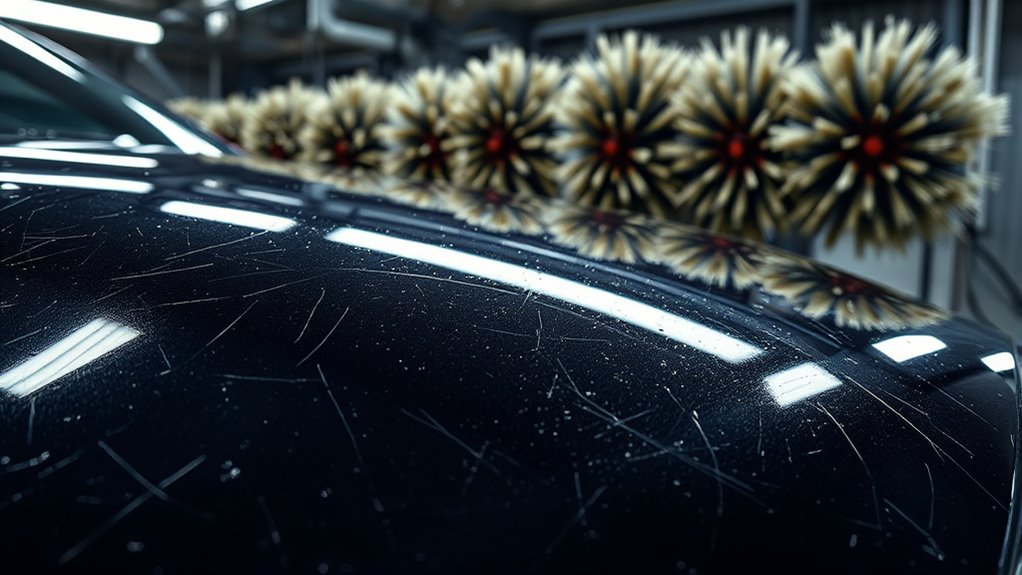
Yes, automatic car washes are generally safe for most vehicles, but it depends on your car wash types and vehicle materials. If your car has a soft top or delicate paint, be cautious; some automatic washes might be too rough. Always check for brushes versus touchless options.
If you’ve got a high-end or classic vehicle, hand washing might be better to avoid potential damage. Inspect your car regularly to guarantee it stays in great shape.
How Do I Choose the Right Car Shampoo?
Choosing the right car shampoo is like picking the perfect outfit for a special occasion. You want something that balances pH, ensuring your paint stays as radiant as ever.
Look for a shampoo that produces a rich foam type; it helps lift dirt and grime while being gentle on your vehicle. Always check labels to find a formula that suits your car’s needs, and your ride will thank you for it!
Conclusion
To sum up, washing your car isn’t just about keeping it shiny; it’s essential for its longevity and value. With so many factors influencing how often you should wash your car, you can tailor a schedule that suits your lifestyle.
Whether you’re battling dirt roads or love that showroom shine, a little care goes a long way. So, get ready to make your car sparkle like a diamond in the sun and drive with pride!