DIY Guide to Make Car Window Washer Fluid
If you’ve ever struggled with streaky or empty car window washer fluid, you’re not alone. Many people find it frustrating to constantly buy expensive bottles that run out quickly or don’t work well in all weather conditions.
The good news is, there’s a simple and affordable solution you can make yourself at home.
Making your own car window washer fluid is easy and cost-effective! Just mix 1 cup of distilled water, 1 cup of vinegar, and a few drops of dish soap in a clean container.
Adjust the vinegar for colder weather or add more dish soap for tough grime. This DIY solution is eco-friendly and reduces plastic waste. Plus, you can customize it for your needs.
Keep going to uncover essential tips for perfecting your washer fluid!
Key Takeaways
- Mix 1 cup of distilled water, 1 cup of vinegar, and a few drops of dish soap for an effective DIY washer fluid.
- Adjust vinegar concentration for colder climates to prevent freezing and enhance cleaning power in colder weather.
- Use distilled water, rubbing alcohol, or Castile soap as alternatives for a customizable formula based on your needs.
- Test small amounts before full use to avoid streaks and ensure compatibility with your vehicle’s system.
- Reuse old containers to minimize plastic waste and save money on commercial washer fluids.
The Benefits of DIY Car Washer Fluid
Creating your own car window washer fluid can save you time and money while ensuring you get a formula tailored to your needs. One of the key benefits is cost-effectiveness; store-bought fluids can add up quickly. By making your own, you stretch your budget further.
Additionally, DIY washer fluid offers eco-friendly advantages. You can choose natural ingredients, reducing harmful chemicals that could impact the environment. This not only benefits your vehicle but also contributes to a cleaner planet.
Furthermore, you can customize the fluid’s scent or cleaning strength to match your preferences, ensuring peak performance for your specific driving conditions. You’ll find it rewarding to know exactly what goes into your washer fluid, enhancing safety while driving. Altogether, making your own car window washer fluid is a smart choice that combines practicality with environmental consciousness.
Essential Ingredients for DIY Washer Fluid
To make effective DIY washer fluid, you’ll need just a few essential ingredients that are easy to find. The main components are water, vinegar, and dish soap. You can adjust the mixing ratios based on your preferences and the conditions you’re facing.
For instance, if you’re in a colder climate, adding more vinegar can help prevent freezing.
Here’s a quick reference table for your ingredients and possible alternatives:
| Ingredient | Common Use | Ingredient Alternatives |
|---|---|---|
| Water | Base for the solution | Distilled water |
| Vinegar | Cleans and de-ices | Rubbing alcohol or lemon juice |
| Dish Soap | Breaks down grime | Castile soap |
Experiment with different ingredient alternatives to find the perfect blend that suits your needs!
Step-by-Step Instructions for Making DIY Washer Fluid
Once you’ve gathered your ingredients, making your DIY washer fluid is a straightforward process. Follow these steps to whip up an effective solution:
- Mix together 1 cup of distilled water.
- Add 1 cup of vinegar for cleaning power.
- Include a few drops of dish soap to cut through grime.
- Stir the mixture thoroughly until combined.
- Pour your solution into a clean, empty washer fluid container.
For best results, remember these car maintenance tips: always label your fluid storage solutions to avoid confusion. If you’re using an old container, make sure it’s thoroughly cleaned. This DIY washer fluid not only saves you money but also guarantees your windshield stays clear and streak-free. Plus, it’s a great way to maintain your vehicle efficiently. Now, you’re ready to hit the road with confidence!
How to Adjust Your Washer Fluid for Different Weather Conditions
Adjusting your washer fluid for different weather conditions can make a significant difference in your visibility and safety while driving. Weather variations can impact how well your washer fluid performs, so seasonal adjustments are essential.
| Weather Condition | Recommended Fluid Adjustments |
|---|---|
| Rainy | Increase water and add vinegar for streak-free cleaning. |
| Snowy/Icy | Use a higher concentration of alcohol to prevent freezing. |
| Dusty/Dirty | Add a few drops of dish soap to help break down grime. |
| Hot/Sunny | A mixture with more water can help cool and clean your windshield. |
Avoid These Common DIY Washer Fluid Mistakes
While crafting your own washer fluid can save money, it’s crucial to steer clear of common mistakes that could harm your vehicle’s system. Many DIYers fall victim to misconceptions and preparation errors that lead to ineffective or damaging solutions.
Here are five pitfalls to avoid:
- Using the wrong ingredients: Avoid household cleaners that can damage your car’s glass or paint.
- Inaccurate measurements: Too much concentrate can clog your system; stick to the recipe.
- Ignoring temperature: Not considering winter formulas can cause freezing issues.
- Neglecting to test: Always test a small amount before full use to ensure compatibility.
- Improper mixing: Not mixing thoroughly can result in uneven distribution.
Storing Your DIY Washer Fluid: What You Need to Know
Even if you’ve avoided common DIY washer fluid mistakes, proper storage is essential for maintaining its effectiveness. Start by choosing suitable storage containers, preferably opaque and tightly sealed. Clear containers can let in light, which may degrade the fluid’s quality over time.
When you make your washer fluid, label your containers with the date. This way, you can keep track of the fluid shelf life. Generally, homemade washer fluid can last about a month, but this can vary based on ingredients.
Store your fluid in a cool, dry place away from direct sunlight and extreme temperatures. Avoid leaving it in your vehicle, as fluctuating temperatures can affect its performance.
Homemade vs. Store-Bought Washer Fluid
When you’re deciding between homemade and store-bought washer fluid, it really comes down to cost-effectiveness and ingredient safety. Homemade options can save you some money, which is always nice. But you’ve got to make sure they’re safe for your car, too.
On the flip side, store-bought fluids usually have specific formulas made for different conditions. So, they might work better depending on where and when you’re driving.
Cost-Effectiveness Comparison
Although many drivers opt for store-bought washer fluid for convenience, making your own can be a surprisingly cost-effective choice. A quick cost analysis reveals that homemade solutions often outperform store-bought options regarding savings. Consider this budget comparison:
- Lower cost per gallon: Homemade fluids can be made for a fraction of the price.
- Fewer trips to the store: You can whip up a batch at home when you need it.
- Customizable ingredients: You control what’s in your fluid, potentially saving even more.
- Less waste: You can make only what you need.
- Eco-friendly options: Use ingredients you already have, reducing your carbon footprint.
In the end, DIY washer fluid could keep your wallet happy while keeping your windshield clear.
Ingredients and Safety Factors
Making your own car window washer fluid not only saves money but also gives you control over the ingredients. You can choose from simple components like distilled water, vinegar, or isopropyl alcohol, guaranteeing they meet your needs. When sourcing these ingredients, opt for high-quality options to avoid potential damage to your vehicle’s system.
However, safety precautions are essential. Always wear gloves and goggles when handling chemicals, even household ones. Make sure your workspace is properly ventilated to avoid inhaling any fumes. Homemade solutions can be effective, but they might not perform as well in extreme weather conditions compared to store-bought options. So, weigh your choices carefully to find the right balance between safety and efficiency for your vehicle.
Eco-Friendly Benefits of Making Your Own Washer Fluid
Making your own washer fluid isn’t just cost-effective—it’s also a step toward a greener planet. When you use simple, natural ingredients, you cut down on chemical pollution. It’s pretty amazing how a small change can make a big difference.
And there’s more! You’ll also help minimize plastic waste since you’re not constantly buying new bottles. Plus, saving money while doing your part for the environment feels like a win-win. It’s a simple way to make your car care routine a little kinder to the Earth.
Reduce Chemical Pollution
While many commercial washer fluids contain harmful chemicals that can contaminate water sources, creating your own eco-friendly version greatly reduces this chemical pollution. By adopting this DIY approach, you’re not just saving money; you’re also embracing sustainability practices that positively affect the environment.
Here are some key benefits:
- Less Toxic Waste: Your homemade fluid avoids harmful substances.
- Protects Water Sources: Reduces the risk of chemical runoff.
- Natural Ingredients: Use common household items like vinegar and water.
- Customizable: Tailor the solution to your needs and preferences.
- Promotes Awareness: Encourages you to think about your environmental impact.
Making your washer fluid at home is a simple yet effective way to contribute to a cleaner planet.
Minimize Plastic Waste
By choosing to create your own car window washer fluid, you considerably cut down on plastic waste associated with commercial products. Many store-bought options come in single-use plastic bottles that often end up in landfills.
By using sustainable materials like vinegar and water, you not only make an eco-friendly solution but also avoid unnecessary packaging. Consider repurposing old containers to store your homemade fluid; this aligns with recycling tips that encourage reducing plastic use.
Each time you refill, you’re contributing to a greener planet. Plus, you’ll feel good knowing you’re making a conscious choice for the environment, minimizing your carbon footprint while keeping your windshield clean.
Adopt this simple change for a more sustainable lifestyle!
Save Money Efficiently
Creating your own car window washer fluid can save you a surprising amount of money over time. By following these budget-friendly tips, you’ll not only cut costs but also contribute to a more sustainable environment.
Here are some effective cost-saving strategies:
- Use common household ingredients like vinegar and water.
- Make larger batches to reduce the frequency of purchases.
- Reuse old containers instead of buying new ones.
- Customize your fluid with essential oils for a fresh scent.
- Avoid overpriced commercial products that often contain unnecessary chemicals.
Troubleshooting Common Washer Fluid Issues
When you’re dealing with washer fluid issues, identifying the problem quickly can save you time and frustration. Start by checking for fluid leaks; if your reservoir’s empty, you might have a leak.
If the fluid isn’t spraying, nozzle clogs could be the culprit. Clean those nozzles to restore function.
Streaky residue on your windshield indicates improper dilution of your washer fluid. Adjust the mixture accordingly.
Streaky residue on your windshield means your washer fluid is improperly diluted; adjust the mixture for clearer visibility.
In colder months, freezing issues can occur. Switch to a winter formula to prevent this.
If you notice low visibility despite using the fluid, it could be due to pump malfunctions. Verify your pump’s working properly by listening for sounds when you engage the washer.
Finally, don’t forget seasonal adjustments. Your washer fluid needs may change with the weather, so stay proactive to keep your visibility clear.
How Can You Keep Your Windshield Clean Between Washes?
- Use a microfiber cloth. It’s gentle and won’t scratch the glass.
- Keep a spray bottle of water handy. A quick spritz can remove light dirt and grime.
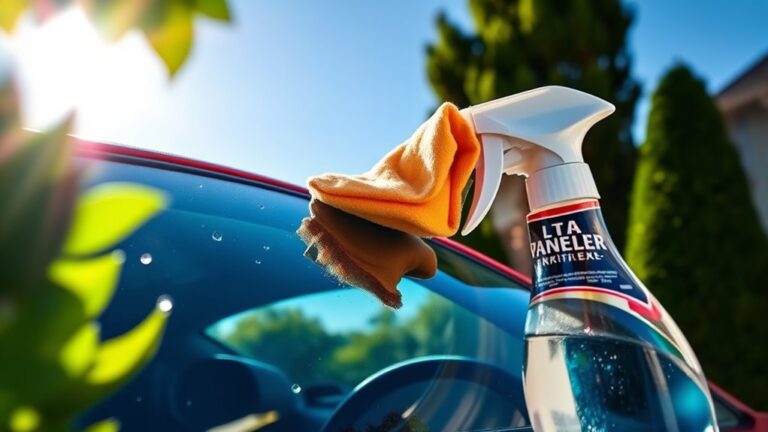
- Wipe with a vinegar solution. Mix equal parts water and vinegar for a natural cleaner.
- Park in shaded areas. This helps prevent dirt from baking onto the glass.
- Check wiper blades. Confirm they’re clean and free from debris for peak performance.
Frequently Asked Questions
Can I Use Vinegar in My DIY Washer Fluid?
Yes, you can use vinegar in your DIY washer fluid! Vinegar benefits include being affordable and effective at cutting through grime.
However, there are some vinegar drawbacks; it can potentially damage your car’s paint if used in high concentrations and might not work as well in extremely cold temperatures.
To get the best results, mix it with water and consider adding a bit of dish soap for extra cleaning power.
How Often Should I Replace My DIY Washer Fluid?
You should replace your DIY washer fluid every few months, but seasonal considerations can change that. In winter, when road salt and grime are more prevalent, you might need to refill it more often.
Follow frequency guidelines based on your driving habits and local weather conditions. Keep an eye on fluid levels, and if you notice reduced performance or clarity, it’s definitely time for a fresh batch.
Is Homemade Washer Fluid Safe for All Car Types?
Homemade washer fluid might seem like the easy answer to all your car troubles, but it’s not always safe for every vehicle type. You need to take into account the specific requirements of your car’s system.
While it can be effective, improper ingredients could damage sensitive components. So, when you whip up that concoction, don’t skip those safety precautions. Your car will thank you for it! Always test on a small area first.
What Containers Are Best for Storing Washer Fluid?
For storing washer fluid, both glass containers and plastic bottles work well. Glass containers are durable and won’t leach chemicals, but they can break easily.
Plastic bottles are lightweight and less prone to damage, making them a practical choice for your car. Just verify the bottle is opaque to protect the fluid from sunlight.
Whatever you choose, make certain it’s sealed tightly to avoid spills and contamination.
Can I Add Scent to My DIY Washer Fluid?
Yes, you can definitely add scent to your DIY washer fluid! In fact, using essential oils can elevate your driving experience.
Did you know that studies show pleasant scents can improve mood and focus by up to 30%? For scent options, consider lavender for relaxation or lemon for a fresh, clean smell.
Just remember to use a few drops, as too much can affect the fluid’s cleaning properties. Enjoy the ride!
Conclusion
Making your own car window washer fluid not only saves you money but also guarantees you know exactly what’s going on your windshield. Did you know that the average driver uses about 50 gallons of washer fluid each year?
By crafting your own, you can customize it for any weather and reduce waste from store-bought bottles. So give it a try. Your wallet and your windshield will thank you for making your own car window washer fluid!